CM Dhami honours police martyrs on Smriti Divas, vows modernisation
Synopsis
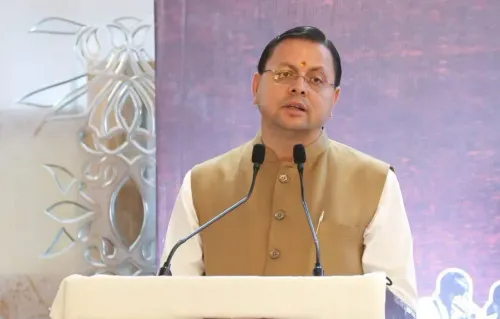
Uttarakhand Chief Minister Pushkar Singh Dhami on Police Smriti Divas — observed every 21 October — honoured officers who died in the line of duty and reaffirmed his government's commitment to equipping Uttarakhand Police with modern technology and resources.
Key Takeaways
Police Smriti Divas is observed every year on 21 October to honour Indian police personnel who sacrificed their lives in the line of duty.
CM Pushkar Singh Dhami paid tribute to fallen officers on behalf of the Uttarakhand government on 21 October 2026 .
Dhami pledged to make Uttarakhand Police more capable and people-oriented through modern technology and resources.
The Government of India's Modernisation of Police Forces scheme has provided states with funding for police upgrades since 1969 .
Uttarakhand Police operates across challenging high-altitude terrain, including border districts, making modernisation operationally critical.
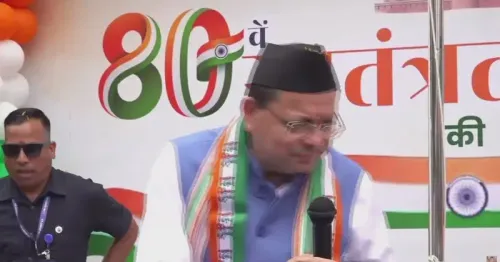
On a day India pauses to remember its fallen guardians, Uttarakhand Chief Minister Pushkar Singh Dhami paid tribute on Wednesday, 21 October 2026 to every police officer who gave their life protecting the country's internal security, law and order, and the people they served — marking Police Smriti Divas with both homage and a statement of intent.
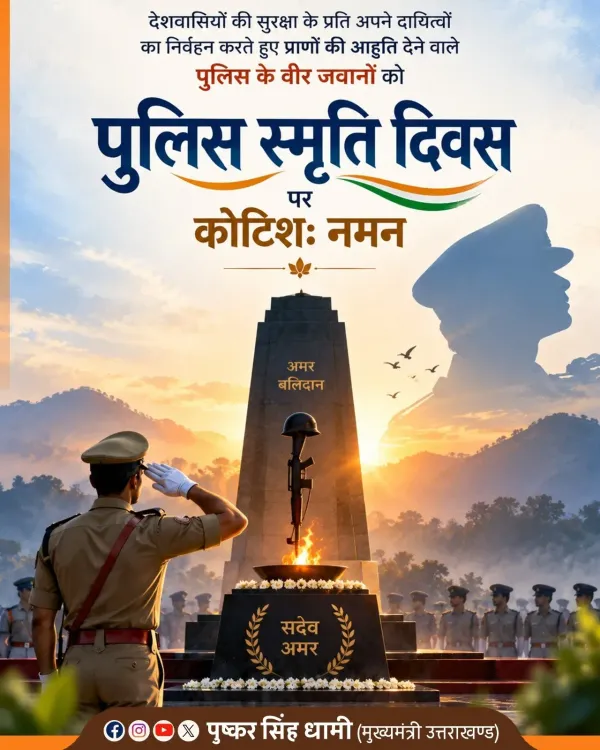
In his post, CM Dhami wrote: 'भारत की आंतरिक सुरक्षा, कानून-व्यवस्था और जनसेवा के प्रति अपने कर्तव्यों का निर्वहन करते हुए अपने प्राणों की आहुति देने वाले वीर पुलिसकर्मियों को पुलिस स्मृति दिवस पर कोटिशः नमन।' — ('Countless salutes on Police Smriti Divas to the brave police personnel who sacrificed their lives while discharging their duties towards India's internal security, law and order, and public service.')
A day of remembrance, observed every 21 October
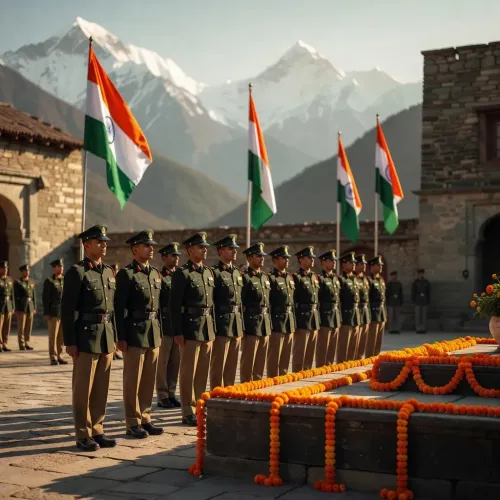
Police Smriti Divas — Police Martyrs' Day — is observed every year on 21 October across India to honour officers who fell in the line of duty. The date traces back to 1959, when a unit of the Central Reserve Police Force was ambushed at Hot Springs in Ladakh, then the deadliest single attack on Indian police personnel. Since then, the day has grown into a national moment of collective remembrance, with state governments, central forces, and civil society holding solemn ceremonies at police memorials.
For Uttarakhand Police — a force that operates across difficult high-altitude terrain, manages border districts, and handles internal security alongside disaster response — the day carries particular weight. Officers routinely work in conditions that combine the hazards of geography with the demands of law enforcement.
Dhami's pledge: technology, resources, and a people-first force
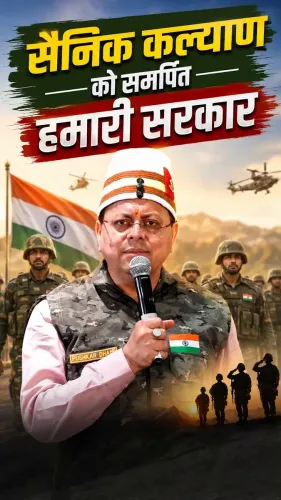
Beyond the tribute, CM Dhami used the occasion to restate his government's commitment to transformation. 'Our government,' he said, 'is continuously working to make the police force more capable, empowered, and people-oriented by equipping it with modern technology and resources.'
The modernisation of state police forces has been a long-running national policy agenda. The Government of India's Modernisation of Police Forces scheme, running in various forms since 1969, provides states with central funding for equipment, training, and technology upgrades. States are expected to co-invest and implement. How much of that commitment translates into specific, measurable upgrades for Uttarakhand Police in the coming budget cycle will be the real measure of this pledge.
Across BJP-governed states, Police Smriti Divas has become an occasion to link remembrance with reform — honouring sacrifice while publicly committing to better-equipped, better-trained forces. Dhami's message fits squarely within that pattern, but the specifics — which technologies, what timeline, how much funding — remain the open questions.
The martyrs have been saluted. Now comes the accountability of the promise made in their name.
Point of View
Using a high-visibility national commemoration to signal administrative seriousness on internal security. For Uttarakhand, a state with sensitive borders and demanding terrain, police modernisation is not merely symbolic — it has genuine operational stakes. The pledge's credibility will ultimately be tested by state budget allocations and the actual rollout of technology programmes for the force, details that remain to be announced.
NationPress
21 Oct 2026
Frequently Asked Questions
Why is Police Smriti Divas observed on 21 October?
21 October marks the anniversary of a 1959 ambush at Hot Springs in Ladakh in which Central Reserve Police Force personnel were killed — the deadliest single attack on Indian police at the time — making it the chosen date for annual national remembrance.
What did CM Dhami say on Police Smriti Divas 2026?
CM Pushkar Singh Dhami paid tribute to police martyrs and stated his government is continuously working to equip Uttarakhand Police with modern technology and resources to make the force more capable, empowered, and people-oriented.
What is the Modernisation of Police Forces scheme?
The Modernisation of Police Forces scheme is a central government programme running since 1969 that provides states with funding for police equipment, training, and technology upgrades.
What are the challenges facing Uttarakhand Police?
Uttarakhand Police operates across difficult high-altitude terrain, manages sensitive border districts, handles internal security, and supports disaster response — conditions that make access to modern technology and resources operationally critical.
Who is Pushkar Singh Dhami?
Pushkar Singh Dhami is the Chief Minister of Uttarakhand and a BJP leader who has been in office since 2021 .