CM Dhami joins PM-KISAN Utsav as ₹18,880 cr disbursed to 9.44 cr farmers
Synopsis
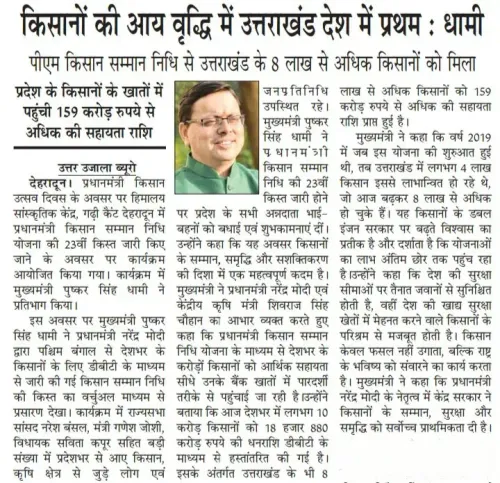
Prime Minister Narendra Modi transferred over ₹18,880 crore to more than 9.44 crore farmers under PM-KISAN on 20 June 2026 at Tarakeshwar, Hooghly. Uttarakhand CM Pushkar Singh Dhami joined from Dehradun, noting that 8 lakh state farmers received ₹159.63 crore, and urged adoption of science-based farming.
Key Takeaways
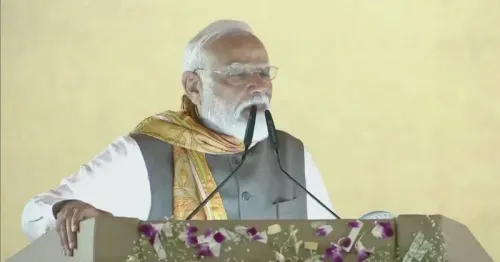
PM Modi disbursed over ₹18,880 crore to more than 9.44 crore farmers nationwide via DBT under PM Kisan Samman Nidhi on 20 June 2026 .
The central event was held at Tarakeshwar, Hooghly, West Bengal ; CM Dhami participated from Dehradun and addressed local attendees.
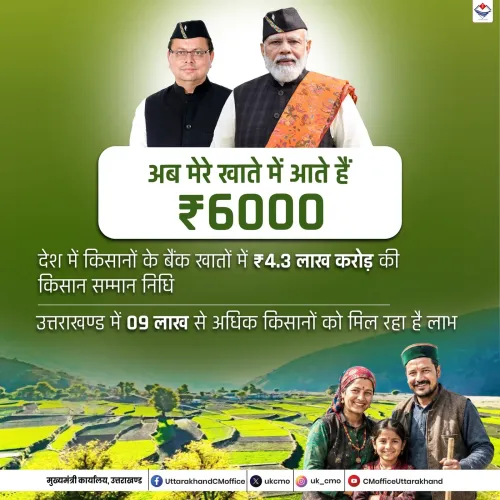
Uttarakhand's 8 lakh PM-KISAN beneficiaries received a combined ₹159.63 crore in this installment.
CM Dhami called on farmers to adopt science- and technology-based agriculture to boost productivity and profitability.
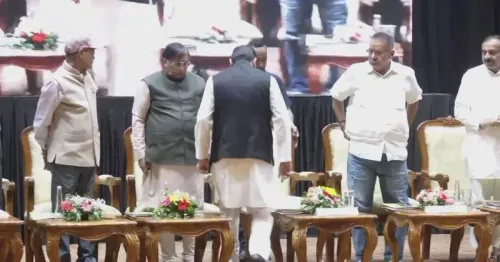
The event was attended by MP Naresh Bansal , Cabinet Minister Ganesh Joshi , and MLA Savita Kapoor in Dehradun.
PM-KISAN, launched in February 2019 , provides ₹6,000 per year per eligible farmer family in three equal DBT installments.
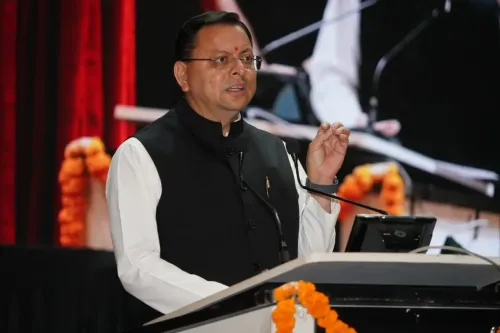
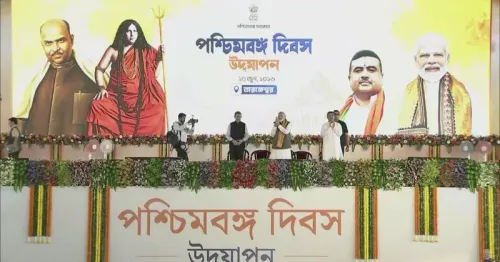
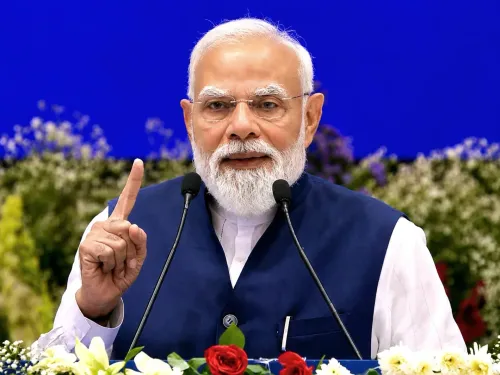
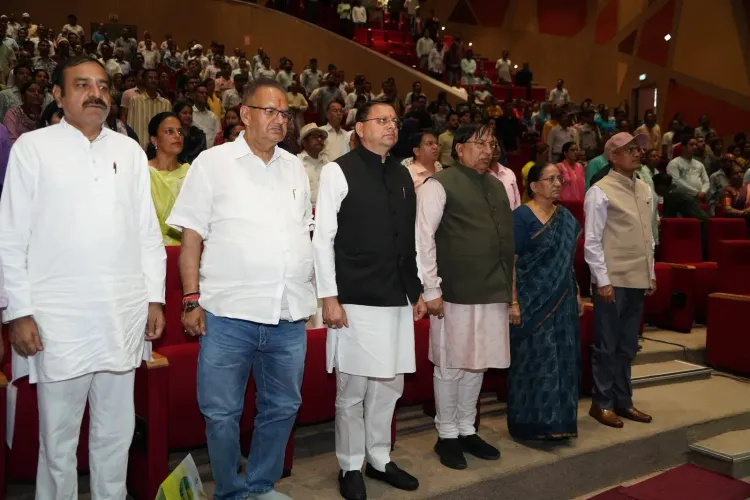
Uttarakhand Chief Minister Pushkar Singh Dhami participated in the PM Kisan Utsav Diwas event on Saturday, 20 June 2026, joining from Dehradun as Prime Minister Narendra Modi transferred more than ₹18,880 crore to over 9.44 crore farmers across India through Direct Benefit Transfer under the PM Kisan Samman Nidhi scheme. The central event was held at Tarakeshwar, Hooghly, West Bengal, with state capitals connected virtually to mark the installment release.
Context
Addressing those gathered in Dehradun, CM Dhami confirmed that approximately 8 lakh farmers in Uttarakhand received a combined ₹159.63 crore as part of this installment. Posting on X in Hindi, Dhami described the transfer as a direct expression of dूरदर्शी नेतृत्व ('visionary leadership') by PM Modi, crediting the scheme for economically empowering the farming community.
The funds were routed entirely through the Direct Benefit Transfer (DBT) mechanism, which deposits money directly into beneficiary bank accounts without intermediaries, reducing leakage and ensuring timely delivery.
Policy Backdrop
The PM Kisan Samman Nidhi (PM-KISAN) scheme was launched in February 2019 as a central sector programme providing ₹6,000 per year in income support to eligible landholding farmer families, disbursed in three equal installments of ₹2,000 each. The scheme operates entirely through DBT, with beneficiary lists maintained by state governments and verified against land records.
Periodic installment releases are typically marked by national-level events where the Prime Minister formally initiates the transfer, with state chief ministers and local elected representatives joining simultaneously from their respective capitals. This format underscores the coordinated centre-state delivery architecture of the programme.
Uttarakhand has consistently aligned its state agricultural policy with PM-KISAN, emphasising natural and organic farming alongside modern agricultural technology adoption — priorities that CM Dhami reiterated in his address, urging farmers to adopt वैज्ञानिक एवं तकनीक आधारित खेती ('science- and technology-based farming') to raise productivity and profitability.
Stakeholders and Impact
At the national level, the 9.44 crore-plus beneficiaries span small and marginal farmer families across all states and union territories. The ₹18,880 crore-plus disbursed in this single installment represents one of the largest single-day direct welfare transfers in the country's agricultural sector.
In Uttarakhand specifically, the 8 lakh beneficiary farmers receiving ₹159.63 crore include smallholders in both the hill districts and the Terai belt. The state government has been promoting organic and natural farming as a value-addition strategy for hill farmers, and the PM-KISAN income support provides a financial floor that makes such transitions more feasible.
The Dehradun event was attended by Member of Parliament Naresh Bansal, Cabinet Minister Ganesh Joshi, and MLA Savita Kapoor, reflecting the BJP's coordinated mobilisation of elected representatives at the local level to amplify the scheme's visibility among beneficiaries.
What's Next
The next PM-KISAN installment cycle will be watched for any revision in beneficiary counts or per-family amounts, as the government periodically updates eligibility lists. For Uttarakhand, attention will turn to state budget allocations for organic farming promotion and whether new guidelines emerge to incentivise technology adoption among hill farmers. CM Dhami's public call for science-based agriculture signals that the state intends to build on the income-support foundation of PM-KISAN with targeted productivity interventions.
Point of View
And his explicit appeal to farmers to embrace technology-driven agriculture, positions Uttarakhand as a model state for layering state-level agri-tech ambitions atop the central income-support floor. The ₹159.63 crore disbursed to 8 lakh Uttarakhand farmers is modest in absolute terms but politically significant in a hill state where smallholder agriculture dominates livelihoods. Dhami's emphasis on organic and natural farming also signals a longer-term state strategy to differentiate Uttarakhand's agricultural produce in premium markets.
NationPress
19 Sept 2026
Frequently Asked Questions
What is PM Kisan Samman Nidhi and how much do farmers get?
PM Kisan Samman Nidhi (PM-KISAN) is a central government scheme launched in February 2019 that provides ₹6,000 per year in income support to eligible landholding farmer families, paid in three installments of ₹2,000 each directly into their bank accounts via DBT.
How many farmers received PM-KISAN installment on 20 June 2026?
More than 9.44 crore farmers across India received the PM-KISAN installment on 20 June 2026, with over ₹18,880 crore transferred via Direct Benefit Transfer during the PM Kisan Utsav Diwas event at Tarakeshwar, Hooghly, West Bengal.
How many Uttarakhand farmers benefited from the June 2026 PM-KISAN installment?
Approximately 8 lakh farmers in Uttarakhand received a combined ₹159.63 crore under the June 2026 PM-KISAN installment, as confirmed by Chief Minister Pushkar Singh Dhami during the PM Kisan Utsav Diwas event.
Where was the PM Kisan Utsav Diwas 2026 event held?
The central PM Kisan Utsav Diwas event was held at Tarakeshwar in Hooghly district, West Bengal, where Prime Minister Narendra Modi formally initiated the nationwide fund transfer. State capitals, including Dehradun, were connected to the event.
What did CM Dhami say about farming at the PM-KISAN event?
CM Pushkar Singh Dhami urged farmers to adopt science- and technology-based farming methods to increase production and make agriculture more profitable, while reaffirming the Uttarakhand government's commitment to promoting natural and organic farming alongside modern agricultural techniques.