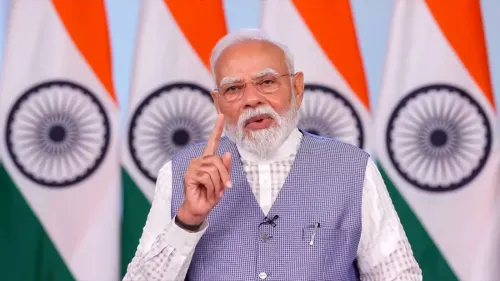
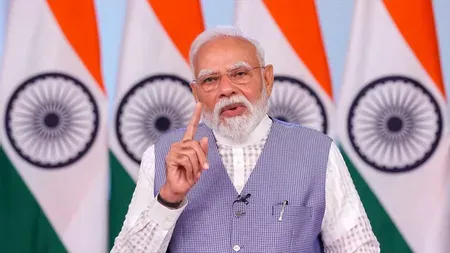
CM Dhami Joins PM Modi's Anti-Drug Youth Campaign Launch
Synopsis
Prime Minister Narendra Modi launched the 'Nasha Mukt Yuva, Viksit Bharat Sankalp Abhiyan' on 2 August 2026, linking drug-free youth to India's Viksit Bharat 2047 vision. Uttarakhand CM Pushkar Singh Dhami amplified the live rollout, signalling active state-level alignment with the central welfare drive.
Key Takeaways
PM Narendra Modi launched the 'Nasha Mukt Yuva, Viksit Bharat Sankalp Abhiyan' on 2 August 2026 via a live national broadcast.
Uttarakhand CM Pushkar Singh Dhami participated and publicly amplified the launch, indicating state-level coordination.
The campaign extends the Nasha Mukt Bharat Abhiyan , first launched in 2020 by the Ministry of Social Justice and Empowerment.
The initiative explicitly ties youth drug-freedom to the Viksit Bharat 2047 national development goal.
Uttarakhand's border geography and known drug transit challenges make the campaign especially relevant for the state.
State-level implementation — de-addiction infrastructure, school outreach, district targets — will determine whether the launch translates into measurable impact.
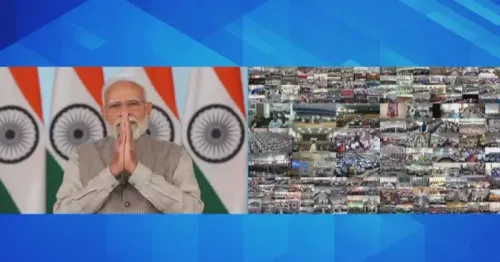
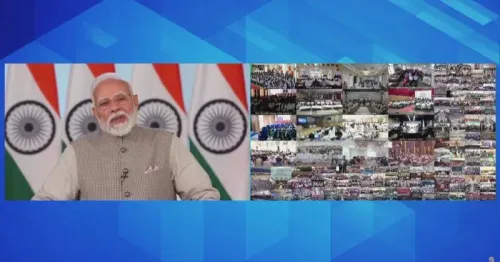
A national pledge against substance abuse went live on Sunday, 2 August 2026, as Prime Minister Narendra Modi launched the 'Nasha Mukt Yuva, Viksit Bharat Sankalp Abhiyan' — the 'Drug-Free Youth, Developed India Resolve Campaign' — with Uttarakhand Chief Minister Pushkar Singh Dhami amplifying the moment in real time from the state.
A Campaign Born from a Larger Vision
The launch builds directly on the Nasha Mukt Bharat Abhiyan, the central government's flagship anti-narcotics awareness drive first rolled out in 2020 by the Ministry of Social Justice and Empowerment. That programme targeted substance abuse awareness across districts with high drug vulnerability, combining community outreach, de-addiction counselling networks, and youth engagement. Sunday's new campaign sharpens that focus, weaving the anti-drug message explicitly into the Viksit Bharat 2047 vision — the government's long-horizon goal of a fully developed India by its centenary of independence. The naming is deliberate: a drug-free youth is positioned not merely as a social good but as a prerequisite for a developed nation. That framing ties welfare policy to economic aspiration in a single headline.Dhami's Role and Uttarakhand's Stakes
Chief Minister Dhami joined the live broadcast and flagged the launch publicly, signalling active state-level participation. Uttarakhand, which shares long borders with Nepal and sits along known transit routes, has faced persistent challenges with drug trafficking and youth substance abuse — making the campaign particularly resonant for the hill state. For BJP-governed states, visible alignment with a Prime Ministerial launch carries both administrative and political weight: it demonstrates federal coordination while anchoring the state government's welfare credentials ahead of any future electoral cycle.Live Broadcast as Governance Theatre
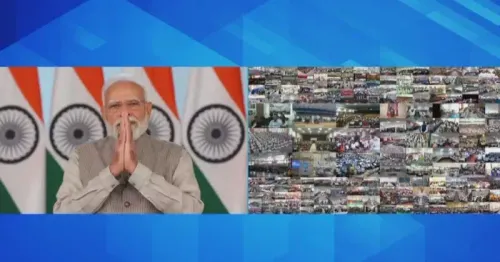
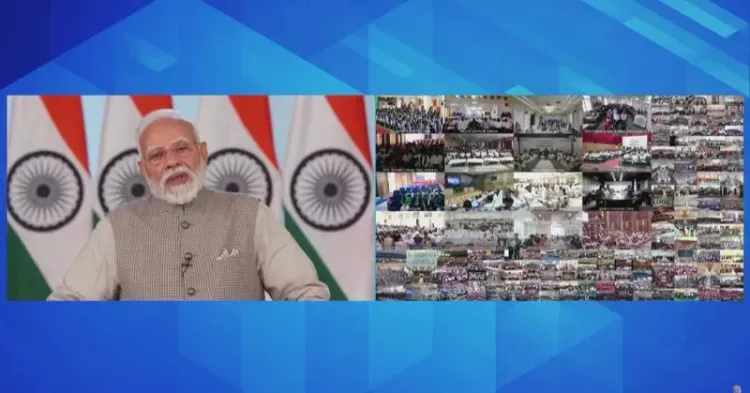
The event was streamed live — a format PM Modi has used repeatedly for major scheme rollouts, allowing simultaneous reach across states without requiring physical travel. State chief ministers and district officials tune in and amplify in parallel, creating a cascade of official endorsement that extends the campaign's first-day footprint far beyond Delhi. With the launch now public, the next pressure point is implementation: whether state governments translate the central signal into on-ground de-addiction infrastructure, school outreach programmes, and measurable district-level targets — or whether the campaign remains a well-branded broadcast moment.Point of View
Making it harder for state governments to deprioritise. CM Dhami's visible participation reflects the standard BJP federal playbook: states amplify central launches to demonstrate alignment and share political credit. The live-broadcast format compresses the gap between announcement and public awareness, but it also sets a high expectations bar — the campaign's credibility will ultimately rest on district-level de-addiction outcomes, not the launch-day viewership numbers. For Uttarakhand specifically, with its porous northern borders, the programme lands in terrain where the policy need is genuine and measurable.
NationPress
2 Aug 2026
Frequently Asked Questions
What is the Nasha Mukt Yuva Viksit Bharat Sankalp Abhiyan?
It is a national campaign launched by Prime Minister Narendra Modi on 2 August 2026 aimed at making India's youth drug-free, framed as a core condition for achieving the Viksit Bharat 2047 development vision.
What is the Nasha Mukt Bharat Abhiyan and how is it related?
The Nasha Mukt Bharat Abhiyan is a flagship anti-narcotics awareness programme launched in 2020 by the Ministry of Social Justice and Empowerment. The new 2026 campaign builds on that foundation, sharpening its focus on youth and linking it to India's long-term development goals.
Why did Uttarakhand CM Dhami join the launch?
CM Pushkar Singh Dhami joined the live broadcast to signal Uttarakhand's active participation. The state faces particular challenges with drug trafficking due to its border geography, making the campaign directly relevant to state-level governance priorities.
How is the campaign being rolled out across India?
The launch used a live national broadcast format, allowing state governments, chief ministers, and district officials to participate simultaneously and amplify the campaign in their respective regions without requiring a single physical venue.
What will determine the success of this anti-drug campaign?
Analysts point to state-level implementation as the key test — specifically whether governments build de-addiction infrastructure, run school outreach programmes, and set measurable district-level targets beyond the visibility of the launch-day broadcast.