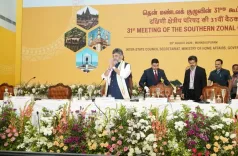
CM Dhami joins VP, Governor for IFS probationers' dialogue in Dehradun

Synopsis
Chief Minister Pushkar Singh Dhami participated in a dialogue programme for Indian Foreign Service probationers in Dehradun, held in the presence of Vice President C.P. Radhakrishnan and Governor Lt Gen Gurmeet Singh (Retd.), reinforcing Uttarakhand's role as a hub for civil service training.
Key Takeaways
Chief Minister Pushkar Singh Dhami participated in a dialogue programme for IFS probationers in Dehradun on 20 August 2026 .
Radhakrishnan and Governor Lt Gen Gurmeet Singh (Retd.) were also present at the event.
The programme is part of the standard civil service training curriculum that exposes probationers to state governance and federal structures.
Uttarakhand is a frequent host for such training interactions due to its proximity to LBSNAA, Mussoorie .
The event brought together three senior constitutional offices in a single forum — an unusual convergence for a training session.
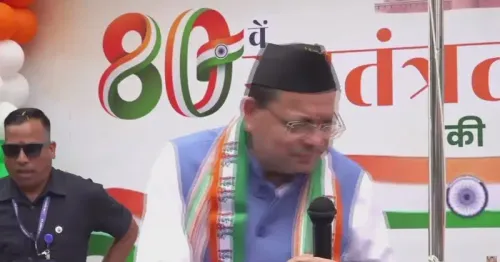
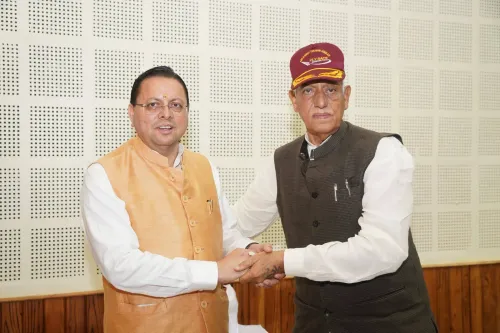
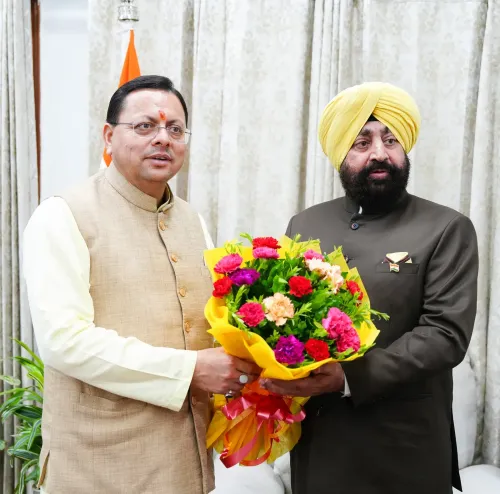
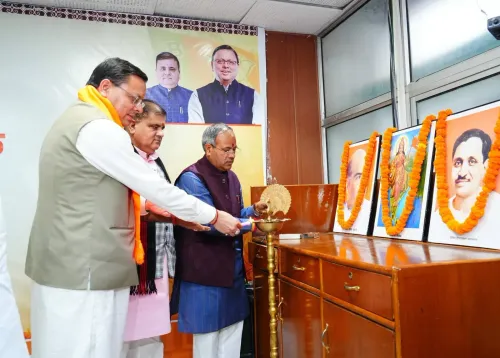
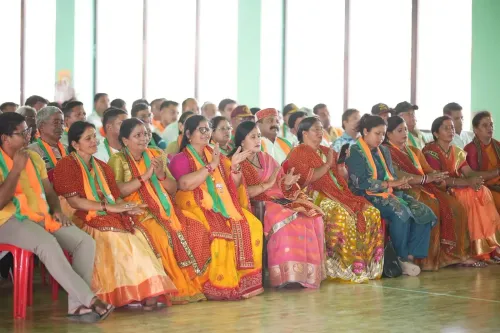
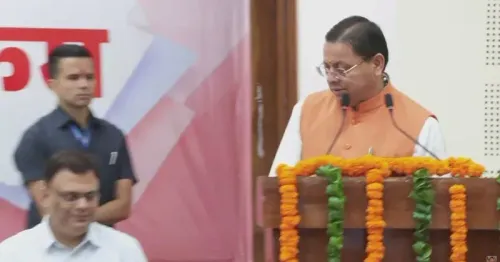
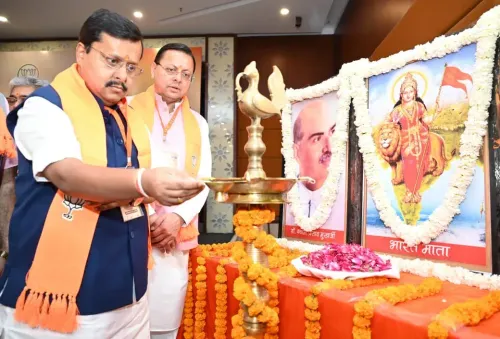
In the shadow of the Himalayas, where India's future diplomats come to learn the art of governance, Dehradun hosted a landmark interaction on Thursday, 20 August 2026 — bringing together the highest constitutional offices of the land and the newest entrants to India's foreign service. The Chief Minister's Office of Uttarakhand confirmed that Chief Minister Pushkar Singh Dhami participated in a structured dialogue programme organised for Indian Foreign Service (IFS) probationers, held in the dignified presence of Vice President C.P. Radhakrishnan and Governor Lieutenant General Gurmeet Singh (Retd.).
Where diplomats learn to govern
The gathering was no routine formality. IFS probationers — fresh recruits to India's diplomatic cadre — receive a training curriculum that deliberately takes them beyond the classroom and into the corridors of actual state power. Uttarakhand occupies a special place in this tradition: the state is home to the Lal Bahadur Shastri National Academy of Administration (LBSNAA) in Mussoorie, the apex institution that administers foundational training for All India Services officers. Proximity to that academy makes Dehradun a natural venue for such exposure visits, administered under the Department of Personnel and Training.
Three offices, one room
The presence of both the Vice President and the Governor alongside the Chief Minister elevated the programme well beyond a standard training interaction. For probationers still calibrating India's complex federal architecture, a room containing the second-highest constitutional office of the Union, the constitutional head of the state, and the elected head of the state government is itself a lesson in how power is distributed — and coordinated — across the republic. These interactions are designed precisely to bridge the gap between textbook federalism and lived governance.
Why Uttarakhand, why now
Civil service training in India has long embedded state-capital visits into its orientation calendar. The logic is straightforward: diplomats who will one day represent India abroad must first understand what India looks like from within — its district administration, its state finances, its ground-level delivery machinery. Uttarakhand, with its distinctive governance challenges spanning hill terrain, border districts, and a large migrant workforce, offers probationers a compressed but revealing window into the country's federal complexity.
For CM Dhami, the engagement is also an opportunity to project Uttarakhand's governance priorities to a cohort that will, within a few years, occupy key positions in Indian missions worldwide — a quiet form of diplomatic soft power that rarely makes headlines but shapes perceptions for decades.
Point of View
And CM Dhami's participation continues a pattern of state leadership engaging directly with All India Services cohorts. For the Dhami government, such visibility before a nationally recruited cadre also carries a soft-power dividend: probationers carry impressions of state governance into careers that span decades and continents.
NationPress
20 Aug 2026
Frequently Asked Questions
What was the IFS probationers dialogue programme in Dehradun about?
It was a structured interaction programme organised for Indian Foreign Service probationers as part of their training curriculum, designed to expose them to state-level governance and federal coordination. The event was held in Dehradun on 20 August 2026.
Who attended the IFS probationers event in Dehradun on 20 August 2026?
Vice President C.P. Radhakrishnan, Governor Lieutenant General Gurmeet Singh (Retd.), and Chief Minister Pushkar Singh Dhami all participated in the dialogue programme alongside IFS probationers.
Why does Uttarakhand host IFS and IAS training programmes?
Uttarakhand is home to the Lal Bahadur Shastri National Academy of Administration (LBSNAA) in Mussoorie, the premier training institution for All India Services officers, making the state a natural venue for probationer interactions with state leadership.
What is the role of state visits in IFS probationer training?
State visits are a standard component of All India Services training, managed by the Department of Personnel and Training. They give probationers direct exposure to regional governance, district administration, and how federal coordination works in practice.
Who is Pushkar Singh Dhami?
Pushkar Singh Dhami is the Chief Minister of Uttarakhand, serving in the role since 2021. He is responsible for the state's administration and development programmes.