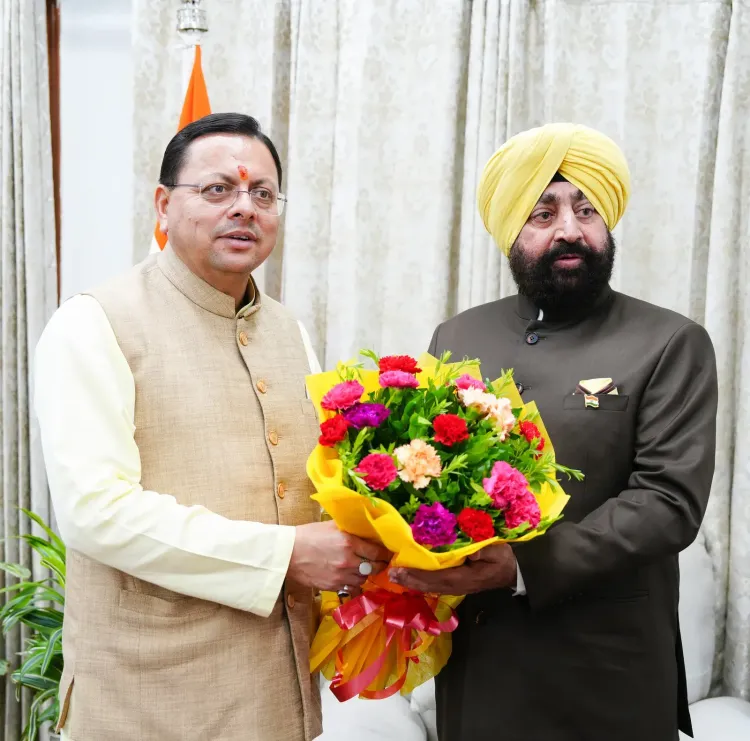
CM Dhami Calls on Governor Gurmeet Singh at Lok Bhavan
Synopsis
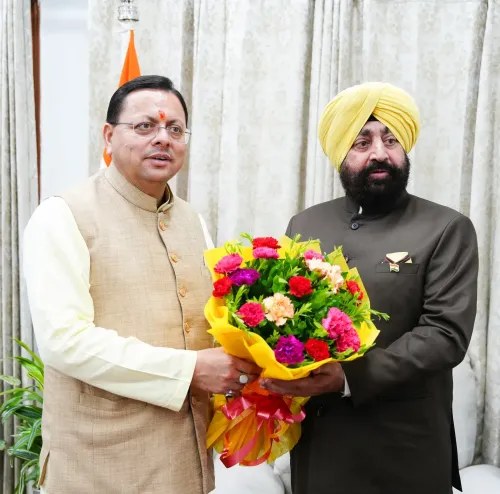
Chief Minister Pushkar Singh Dhami paid a courtesy call on Governor Lt Gen Gurmeet Singh (Retd) at Lok Bhavan in Dehradun on 2 July 2026, discussing Uttarakhand's developmental plans and contemporary state affairs in a routine but constitutionally significant interaction.
Key Takeaways
CM Pushkar Singh Dhami met Governor Lt Gen Gurmeet Singh (Retd) at Lok Bhavan, Dehradun on 2 July 2026 .
The meeting was a formal courtesy call covering various developmental schemes and current affairs of Uttarakhand.
Both officials have been in their respective roles since 2021 , making this part of an ongoing constitutional working relationship.
Such CM-Governor interactions are a standard feature of India's federal system, facilitating legislative and administrative coordination.
With monsoon season underway, disaster preparedness is among the likely contemporary issues on the state's agenda.
Chief Minister Pushkar Singh Dhami paid a courtesy call on Uttarakhand Governor Lieutenant General Gurmeet Singh (Retd) at Lok Bhavan on Thursday, 2 July 2026. The meeting served as a constitutional interaction between the state's elected head of government and its constitutional head, with discussions covering developmental schemes and contemporary issues facing the state.
Context
The Chief Minister's Office confirmed that during the meeting — described in Hindi as a shishṭāchār bheṇṭ (courtesy call) — the two leaders discussed various developmental plans and current affairs pertaining to Uttarakhand. Such interactions are a routine but constitutionally significant feature of India's federal governance architecture, providing a formal channel for the Chief Minister to brief the Governor on the state's administrative and policy priorities.
Lok Bhavan, the official secretariat complex in Dehradun, is the seat of the state government and the venue for most high-level official engagements in Uttarakhand.
Policy Backdrop
Governor Gurmeet Singh, a retired Lieutenant General, has served as Uttarakhand's constitutional head since 2021, representing the President of India in the state. CM Dhami, also in office since 2021, leads a BJP government that has prioritised infrastructure development, pilgrimage tourism — particularly around the Char Dham circuit — hydropower expansion, and disaster resilience in the ecologically sensitive Himalayan state.
Courtesy calls between Chief Ministers and Governors in Indian states are a standard constitutional practice, offering an opportunity to review ongoing schemes, discuss legislative matters, and align on administrative priorities outside formal cabinet proceedings. In Uttarakhand, formed in 2000, these meetings also often touch on the state's unique challenges: seasonal floods, landslides, and the management of high-altitude infrastructure.
Stakeholders and Impact
The immediate stakeholders in such constitutional interactions are the state bureaucracy and, ultimately, Uttarakhand's residents, who benefit when the Governor and Chief Minister maintain a coordinated understanding of developmental priorities. Smooth CM-Governor relations facilitate quicker assent to state legislation and more effective implementation of centrally sponsored schemes at the ground level.
With monsoon season active in July, discussions on contemporary issues would logically encompass disaster preparedness and relief coordination — areas where the Governor's constitutional role as the state's nominal executive head carries practical significance in authorising emergency measures.
What's Next
Observers will watch for follow-through on state budget execution in the second half of the financial year and the government's response to any monsoon-related emergencies across Uttarakhand's hill districts. Continued coordination between Raj Bhavan and the Chief Minister's Office will be essential as the state navigates seasonal natural hazards and advances its infrastructure agenda through the remainder of 2026.
Point of View
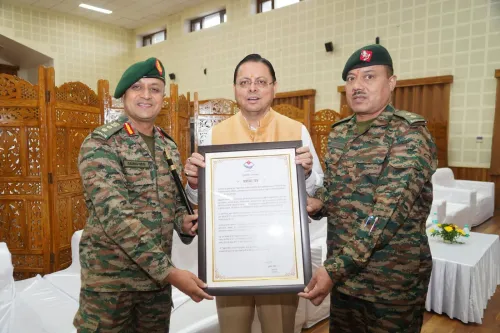
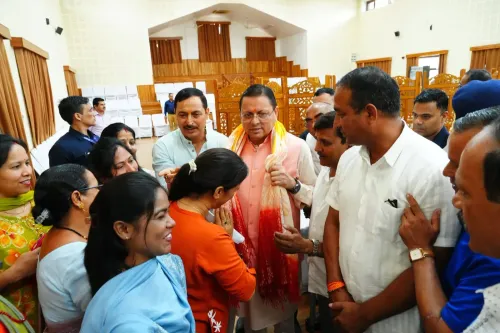
And Uttarakhand's mid-year position — with monsoon risks and infrastructure projects in progress — gives this meeting practical relevance beyond ceremony. The BJP government's emphasis on developmental optics means such interactions are also used to signal administrative momentum to the public. The fact that the Chief Minister's Office chose to publicise the meeting with three images underscores the value the Dhami administration places on visible executive coordination. In a state where Centre-state alignment is crucial for funding Himalayan infrastructure, a harmonious CM-Governor relationship is a governance asset worth projecting.
NationPress
1 Oct 2026
Frequently Asked Questions
Why did CM Dhami meet the Governor of Uttarakhand?
CM Pushkar Singh Dhami paid a courtesy call on Governor Lt Gen Gurmeet Singh (Retd) at Lok Bhavan on 2 July 2026 to discuss the state's developmental schemes and current affairs, a routine constitutional interaction between the head of government and the constitutional head of the state.
Who is the Governor of Uttarakhand in 2026?
Lieutenant General Gurmeet Singh (Retd) is the Governor of Uttarakhand, appointed in 2021 to serve as the constitutional head of the state representing the President of India.
What is Lok Bhavan in Uttarakhand?
Lok Bhavan is the official government secretariat complex in Dehradun, the capital of Uttarakhand, and the primary venue for high-level state government meetings and official engagements.
What topics were discussed in the CM-Governor meeting on 2 July 2026?
According to the Chief Minister's Office, discussions covered various developmental plans and contemporary issues concerning Uttarakhand, though the specific details of the agenda were not disclosed.
How often do Chief Ministers meet Governors in Indian states?
Courtesy calls between Chief Ministers and Governors are a regular constitutional practice in Indian states, with no fixed schedule, typically occurring to review legislative matters, developmental programmes, and administrative priorities.