CM Dhami Launches ₹52.55 Cr Projects at Jaunpur Mahotsav
Synopsis
Chief Minister Pushkar Singh Dhami inaugurated the 9th Jaunpur Mahotsav in Tehri Garhwal on November 12, announcing ₹52.55 crore in 26 development schemes, a ₹1,300 crore Tehri Lake tourism zone, and measures to curb hill migration through local employment initiatives.
Key Takeaways
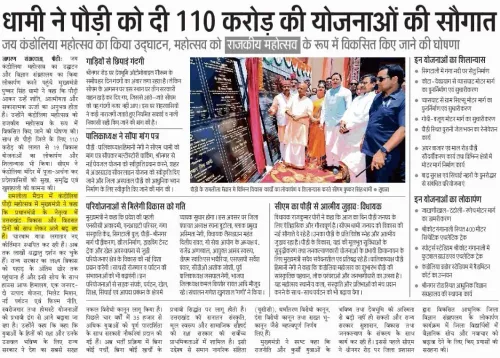
26 development schemes worth ₹52.55 crore were inaugurated or had foundation stones laid at Thatyud, Dhanaulti, covering roads, education, irrigation, parking, and animal husbandry.
CM Dhami announced a ₹1,300 crore special tourist zone around Tehri Lake , anchored by a ring road to boost tourism and local employment.
Infrastructure work already completed includes ₹6 crore landslide protection on Kempty-Chadogi road and over ₹10 crore road black-topping on the same corridor.
The House of Himalayas brand has crossed ₹6 crore in cumulative sales , marketing local and GI-tagged Uttarakhand products nationally and internationally.
The government claimed a 44 percent rise in reverse migration , attributing it to schemes like One District Two Products, homestays, and the State Millet Mission.
Dhami stated more than 35,000 youth have received government jobs under a recruitment process strengthened by a strict anti-copying law.
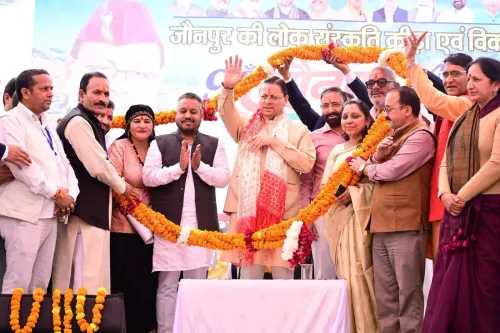
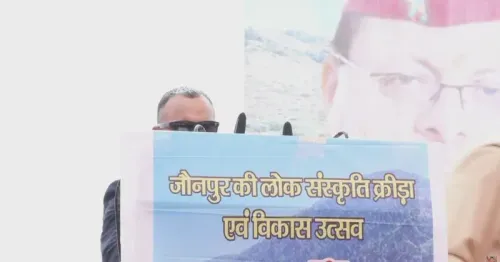
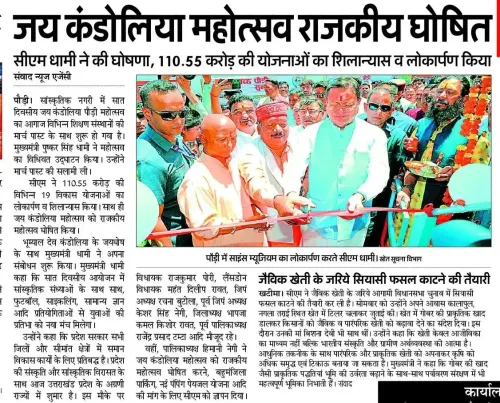
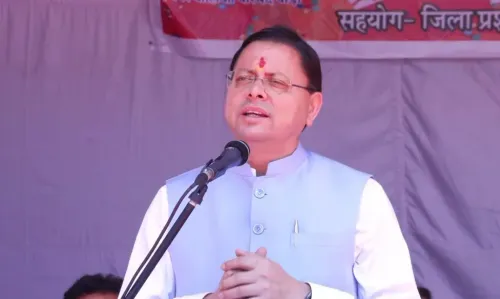
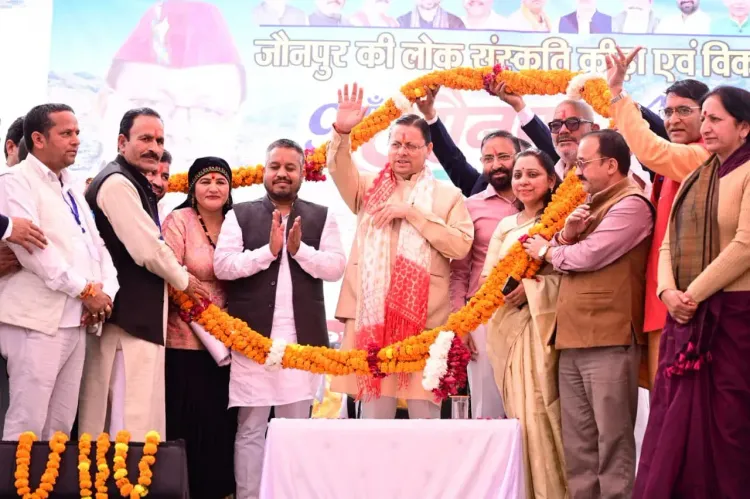
A mountain festival became a policy platform on Thursday, November 12, 2026, as Chief Minister Pushkar Singh Dhami travelled to Thatyud in Dhanaulti assembly constituency, Tehri Garhwal, to inaugurate the ninth Jaunpur Mahotsav — and left behind a package of ₹52.55 crore worth of 26 development projects for the region.
26 Schemes Across Roads, Schools, and Irrigation
Of the 26 schemes announced, 11 projects worth ₹3,050.63 lakh were formally inaugurated, while 15 projects worth ₹2,204.62 lakh had their foundation stones laid. The schemes span road construction and upgradation, education, irrigation, parking, animal husbandry, and other basic infrastructure — a broad sweep of the gap areas that persistently afflict Himalayan hill districts.
Dhami also made several additional on-the-spot announcements: approval for the Dhanaulti-Moriyana-Nagtibba motor road; ₹273 lakh for a flood-protection scheme from Paligad to Thatyud Bazaar in Jaunpur development block; and ₹4.72 crore for protection of the populated areas of Bhawan Bazaar.
₹1,300 Crore Tehri Tourism Zone and the Ring Road Push
The Chief Minister used the occasion to put a price tag on the state's most ambitious tourism bet in the region: a special tourist zone around Tehri Lake, budgeted at approximately ₹1,300 crore. At the heart of this plan is a ring road encircling Tehri Lake, which the government says will both expand tourism activity and generate fresh employment for local communities.
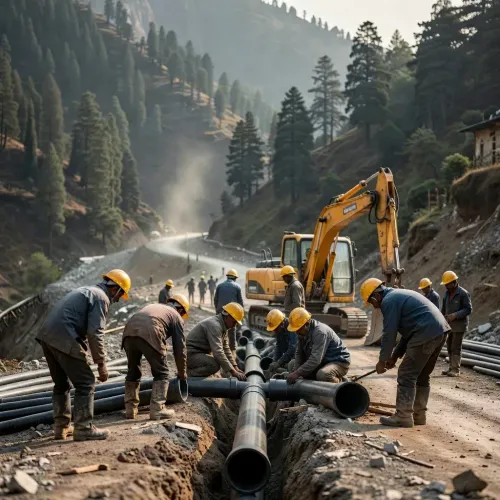
Smaller but already-progressing infrastructure pieces were also cited. A landslide-protection treatment on the Kempty-Chadogi motor route — a persistent hazard for the popular Kempty Falls corridor — has been completed at a cost of approximately ₹6 crore. The conversion and black-topping of the Kempty-Chadogi light vehicle road has been completed at a cost of over ₹10 crore. And a vehicle parking facility at Kaddukhal is under construction at a cost of over ₹8 crore to ease tourist congestion.
Reverse Migration: The 44 Percent Claim and What Drives It
Stopping the exodus of people from Uttarakhand's hills has been a defining political promise for the Dhami government. The Chief Minister cited a 44 percent increase in reverse migration — people returning to villages — as evidence that the strategy is working, attributing it to initiatives including the 'One District, Two Products' programme, the House of Himalayas brand, homestays, the State Millet Mission, a Farm Machinery Bank, the Apple Mission, a new tourism policy, and the 'Wed in Uttarakhand' scheme.
The House of Himalayas brand — which markets Uttarakhand's locally produced and GI-tagged goods in national and international markets — has crossed ₹6 crore in cumulative sales since its launch, Dhami said, crediting the state's women, farmers, and artisans.
Khelo India, Jobs, and Cultural Heritage in One Address
Dhami invoked Prime Minister Narendra Modi's Khelo India and Fit India campaigns — the former launched in 2017 to build grassroots sports culture — as a framework within which Uttarakhand's youth are excelling in competitive sports and bringing recognition to the state. The government, he said, is continuously working to encourage sports talent and create better opportunities for young people.
On jobs, Dhami stated that more than 35,000 youth have been given government employment in the state, underpinned by a strict anti-copying law that he said has brought transparency to recruitment processes. He also pointed to ongoing renovation and beautification of key temples in the Kedarkhand and Manskhand corridors as part of a broader push to protect and promote the state's religious and cultural heritage.
Speaking on the Jaunpur Mahotsav itself, Dhami said events like these are 'important vehicles for the preservation and promotion of our rich folk culture, traditions, folk art, and folk music,' and give the younger generation a chance to connect with their cultural inheritance — a pointed reminder that in Uttarakhand, development spending and cultural identity are increasingly marketed as a single package.
The festival grounds at Thatyud offered a vivid illustration of exactly that pitch — a sports and cultural programme as the backdrop, a cheque book as the centrepiece. Whether the ₹1,300 crore Tehri tourism vision and the smaller schemes translate into the sustained local employment that keeps villages alive is the question the hills are waiting for the plains to answer.
Point of View
The Dhami government is executing a well-worn but politically effective playbook: tying Garhwali folk identity to concrete development optics ahead of an election cycle. The ₹1,300 crore Tehri Lake tourism corridor is the centrepiece of Uttarakhand's larger bet that adventure and heritage tourism can substitute for the industrial investment the mountains cannot easily attract. The reverse-migration narrative, underpinned by the House of Himalayas brand and ODOP-style schemes, positions the BJP state government as having found a home-grown answer to the hill exodus — a claim whose credibility will ultimately rest on whether the announced schemes are implemented on schedule and whether the new tourism economy generates year-round rather than seasonal livelihoods.
NationPress
12 Nov 2026
Frequently Asked Questions
What is the Jaunpur Mahotsav and where was it held in 2026?
The Jaunpur Mahotsav is an annual sports and cultural festival celebrating the folk traditions of the Jaunpur region. The ninth edition was held at Thatyud in the Dhanaulti assembly constituency of Tehri Garhwal district on November 12, 2026.
What development projects did CM Dhami announce at Jaunpur Mahotsav 2026?
CM Pushkar Singh Dhami announced 26 development schemes worth ₹52.55 crore, covering roads, education, irrigation, parking, and animal husbandry. He also approved the Dhanaulti-Moriyana-Nagtibba road, flood-protection works worth ₹273 lakh and ₹4.72 crore, and reiterated the ₹1,300 crore Tehri Lake tourism zone plan.
What is the Tehri Lake tourism project announced by the Uttarakhand government?
The Uttarakhand government is developing a special tourist zone around Tehri Lake at a cost of approximately ₹1,300 crore. A ring road around the lake is under construction to expand tourism activities and create new employment opportunities for local residents.
What is the House of Himalayas brand?
House of Himalayas is an Uttarakhand government brand that markets the state's locally produced, GI-tagged, and artisan products in national and international markets. CM Dhami stated it has crossed ₹6 crore in cumulative sales since its launch.
What is Uttarakhand's reverse migration policy and how is it working?
Uttarakhand's anti-migration strategy promotes local livelihoods through tourism, homestays, the One District Two Products scheme, the State Millet Mission, Apple Mission, and the House of Himalayas brand. The state government has claimed a 44 percent increase in reverse migration as a result of these combined efforts.