Goyal pitches India as world's most trusted trade partner at CII Summit
Synopsis
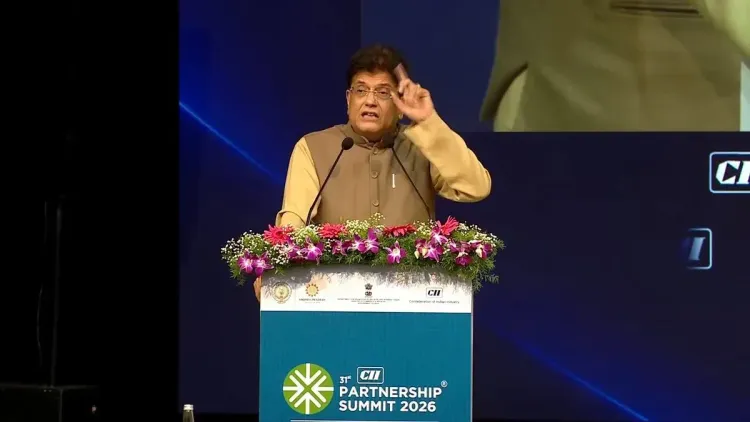
Commerce Minister Piyush Goyal invoked the Baahubali pop culture riddle at the CII Partnership Summit 2026 to make a pointed case for India as the world's most trustworthy trade and supply chain partner amid global geopolitical uncertainty.
Key Takeaways
Goyal used the famous 'Why did Kattappa kill Baahubali?' reference to frame India's global trade trust narrative at the CII Partnership Summit 2026 .
India positioned itself as a reliable supply chain alternative following pandemic era disruptions and rising geopolitical tensions.
India concluded a Comprehensive Economic Partnership Agreement with the UAE and an Economic Cooperation and Trade Agreement with Australia , both in 2022 .
Production Linked Incentive (PLI) schemes launched from 2020 across multiple sectors underpin India's manufacturing credibility pitch.
The CII Partnership Summit is a key annual forum targeting global investors and trade partners.
Goyal's message — 'a partner who keeps its word' — is a direct counter to supply chain opacity concerns about competing destinations.
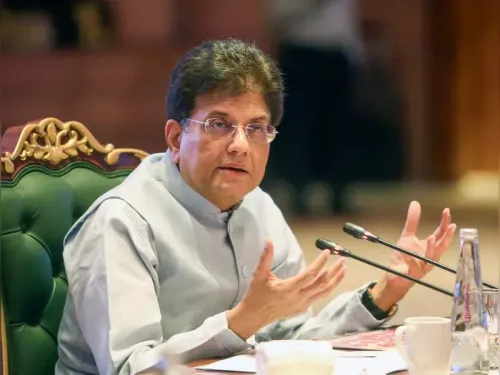
When the whole country once obsessed over why Kattappa killed Baahubali, nobody expected that question to resurface in a trade minister's speech — but Union Commerce and Industry Minister Piyush Goyal did exactly that at the CII Partnership Summit 2026 on Thursday, November 12, turning a decade old pop culture riddle into a razor sharp argument for India's credibility in global commerce.
Invoking the iconic cliffhanger from the blockbuster Baahubali franchise, Goyal framed the defining question of today's fractured global trade order not as a mystery of loyalty but as a test of trust. 'In global trade today, partners are asking a different one: "Who can we trust?" The answer is India,' he declared, drawing a direct line between geopolitical anxiety and India's pitch to become the partner of choice for supply chain diversification.
The trust deficit driving supply chain rewiring
The rhetorical flourish lands against a very real backdrop. Since 2020, pandemic era shocks and escalating geopolitical tensions — particularly in the Indo Pacific — have forced multinationals to rethink decade long dependencies on single source manufacturing hubs. India has consistently positioned itself as the democratic, contract honouring alternative. Goyal's framing — 'a partner who keeps its word, a partner who will never stab you in the back' — is a direct, deliberate counter narrative to concerns about supply chain opacity and rule of law uncertainty elsewhere.
FTAs, PLI, and the architecture of reliability
The pitch is not without structural scaffolding. India inked a Comprehensive Economic Partnership Agreement with the UAE in 2022 and brought an Economic Cooperation and Trade Agreement with Australia into force the same year — the first bilateral trade deals India concluded in roughly a decade. The Production Linked Incentive (PLI) schemes, launched from 2020 onwards across more than a dozen sectors, have been designed precisely to signal long term manufacturing intent to global investors.
Together, these moves form the institutional argument behind Goyal's cultural one: India is not just rhetorically trustworthy — it has been building the legal, diplomatic, and industrial architecture to back that claim.
Why the CII Partnership Summit is the right stage
The Confederation of Indian Industry's annual Partnership Summit is one of India's most prominent forums for drawing global capital and trade commitments. Hosting the trust narrative here — in front of international investors and industry leaders — means Goyal's message is aimed squarely at boardrooms weighing their next supply chain pivot. The Baahubali reference is not mere nostalgia; it is a calculated hook designed to cut through the noise of competing investment destinations and lodge India's value proposition in the memory of every delegate in the room.
With further FTA negotiations on the horizon and global supply chain rewiring still accelerating, New Delhi is betting that soft power and hard policy, delivered together, can close the deal.
Point of View
Contract sanctity, FTA momentum — into a single cultural shorthand the room will remember long after the summit ends. It reflects a broader BJP era playbook of deploying soft power resonance (cinema, mythology, civilisational pride) in service of hard economic diplomacy. The timing is deliberate: as the United States and the European Union each accelerate their own friend shoring strategies, India is competing to be first choice, and trust is the differentiator Goyal is betting on. Whether the pitch translates into signed agreements and committed investment flows is the test that will follow this headline.
NationPress
12 Nov 2026
Frequently Asked Questions
What did Piyush Goyal say at the CII Partnership Summit 2026?
Goyal used the famous Baahubali pop culture question to argue that the defining question in global trade today is 'Who can we trust?' — and that the answer is India, describing the country as a partner that keeps its word and 'will never stab you in the back.'
What is the CII Partnership Summit?
The CII Partnership Summit is an annual flagship forum organised by the Confederation of Indian Industry to attract global investment and promote trade partnerships with India.
What trade agreements has India signed recently to back its reliability claim?
India signed a Comprehensive Economic Partnership Agreement with the UAE and brought an Economic Cooperation and Trade Agreement with Australia into force, both in 2022 — its first major bilateral trade deals in roughly a decade.
What are India's Production Linked Incentive schemes?
PLI schemes, launched from 2020 onwards across more than a dozen sectors, offer financial incentives to manufacturers who set up or expand production in India, aimed at attracting both domestic and global industrial investment.
Why is India pitching itself as a trusted supply chain alternative?
Following pandemic era disruptions and rising geopolitical tensions — particularly in the Indo Pacific — multinationals have been diversifying away from single source manufacturing hubs, and India has positioned itself as the democratic, rule of law based alternative.