Goyal: 'Trust is the New Rare Earth' in India-EU FTA
Synopsis
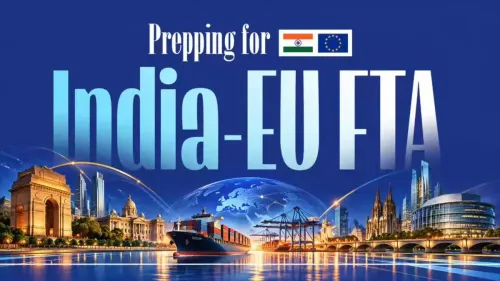
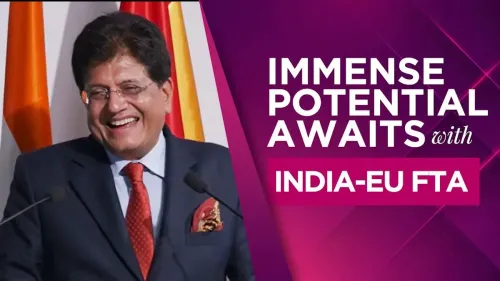
Commerce Minister Piyush Goyal on 22 October 2026 declared 'Trust is the NEW RARE EARTH' as the defining principle of the India-EU FTA — framing the long-pending trade deal not as a tariff exercise but as a strategic credibility test between two of the world's largest economies.
Key Takeaways
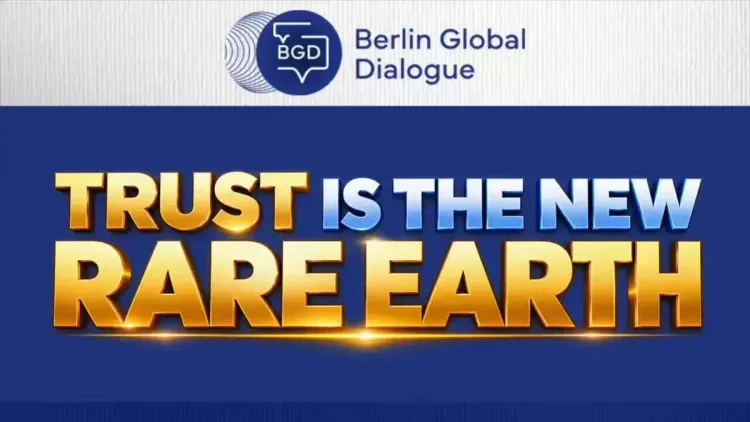
On 22 October 2026 , Commerce Minister Piyush Goyal posted on X that 'Trust is the NEW RARE EARTH' — the defining quality of the India-EU FTA .
The India-EU BTIA was first launched in 2007 , suspended after 2013 , and formally resumed in June 2022 .
The deal covers goods tariffs, services liberalisation, investment protection, and regulatory cooperation — India's largest pending trade negotiation.
India has concluded FTAs with Australia , the UAE , and the EFTA bloc since 2022, with the EU deal remaining the most consequential.
Goyal's framing positions the FTA as a strategic partnership instrument amid global competition for critical minerals and supply-chain reliability.
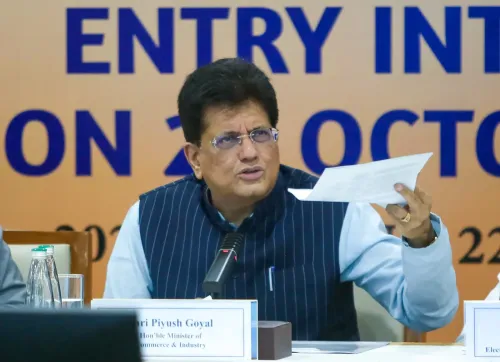
In four words, Union Commerce and Industry Minister Piyush Goyal reframed the entire stakes of the India-EU Free Trade Agreement on Thursday, 22 October 2026 — not as a tariff negotiation, but as a test of something far harder to mine: trust.
Posting on X, Goyal declared: 'Trust is the NEW RARE EARTH. It is what defines the India-EU FTA.' The statement is brief, but the subtext is enormous. At a moment when the global scramble for critical minerals — lithium, cobalt, rare earth elements — is reshaping alliances and supply chains, the Minister chose to place strategic credibility on the same plane as physical resources. The message: access to the Indian market, and Indian access to Europe's, is only as good as the political confidence underpinning the deal.
A deal two decades in the making
The India-EU Broad-based Trade and Investment Agreement (BTIA) has one of the more tortured histories in global trade diplomacy. Negotiations were first launched in 2007, ground to a halt after 2013 over disputes on tariffs, data protection, and market access for services, and sat dormant for nearly a decade. They were formally revived in June 2022, riding a wave of post-pandemic supply-chain anxiety and a shared unease about strategic dependence on single suppliers.
The resumed talks cover goods tariffs, services liberalisation, investment protection, and regulatory cooperation — making it the single largest pending trade deal in India's current diplomatic queue. For context, India has since 2022 concluded agreements with Australia, the UAE, and the EFTA bloc, using each to sharpen its negotiating template. The EU deal, however, is the heavyweight — the one that would vault India directly into the world's largest single-market consumer base.
Why 'trust' lands harder than 'tariffs' right now
Goyal's framing is strategically pointed. The global competition for rare earths and critical minerals has made supply-chain reliability a foreign-policy issue, not merely a trade one. Countries — and blocs — are no longer just asking 'what is the tariff rate?' They are asking 'can we count on this partner when the next disruption hits?'
By equating trust with rare earths, the Minister signals that India views the FTA as a strategic partnership instrument, not a transactional customs schedule. It also subtly raises the bar: if trust is the defining currency, then the deal's durability — and its depth on services, digital trade, and investment — matters more than any single headline tariff cut.
Indian exporters in textiles, pharmaceuticals, and IT services have long eyed the EU's 450 million-consumer market. European manufacturers, in turn, see India as a counterweight in diversified supply chains. The political will on both sides has never been louder. Whether the technical negotiating gaps — on geographical indications, data flows, and government procurement — can be bridged remains the central question.
Goyal's post does not signal a breakthrough. What it signals is a doctrine: that this government sees the India-EU FTA as something built on relationship equity, not just exchange-rate arithmetic. That is a negotiating posture — and a political one — worth watching closely as the next formal round approaches.
Point of View
A posture consistent with India's broader push to position itself as a reliable, rules-based economic partner for Western-aligned blocs. It also applies quiet pressure on EU negotiators: if trust is the benchmark, the onus falls equally on Brussels to match India's stated seriousness. The statement arrives as the India-EU FTA faces its most consequential phase, where differences on services, data, and geographic indications must be resolved, and political will must translate into binding text. Watchers should read this less as a negotiating update and more as a doctrine statement ahead of the next formal round.
NationPress
22 Oct 2026
Frequently Asked Questions
What is the India-EU FTA and where do negotiations stand?
The India-EU Free Trade Agreement, formally called the Broad-based Trade and Investment Agreement (BTIA), is a comprehensive deal covering goods, services, investment and regulatory issues. Negotiations launched in 2007 were suspended in 2013 and formally resumed in June 2022. As of late 2026, talks are ongoing with key gaps remaining on tariffs, data flows, and geographical indications.
What did Piyush Goyal mean by 'Trust is the new rare earth'?
Goyal used the phrase to position strategic credibility and reliability — not just tariff concessions — as the defining value in the India-EU FTA. By comparing trust to rare earth minerals, which are critical and scarce, he framed the deal as a strategic partnership rather than a routine trade exercise.
Why did India-EU FTA negotiations stall for nearly a decade?
Talks launched in 2007 stalled after 2013 due to disputes over tariff reductions on automobiles and wines, market access for Indian professionals in the EU, data protection standards, and EU demands on government procurement. Negotiations were formally resumed in June 2022 amid renewed strategic interest on both sides.
What other trade deals has India signed recently?
Since 2022, India has concluded free trade agreements with Australia, the United Arab Emirates, and the European Free Trade Association (EFTA) bloc, which includes Switzerland, Norway, Iceland, and Liechtenstein. The India-EU FTA remains the largest and most complex pending deal.
How would the India-EU FTA benefit Indian exporters?
Indian exporters in sectors like pharmaceuticals, textiles, information technology, and professional services stand to gain preferential access to the EU's market of roughly 450 million consumers. Reduced tariffs and clearer regulatory frameworks would also make Indian goods more competitive against rivals in European markets.