India-EU FTA a 'force multiplier built on trust': Piyush Goyal
Synopsis
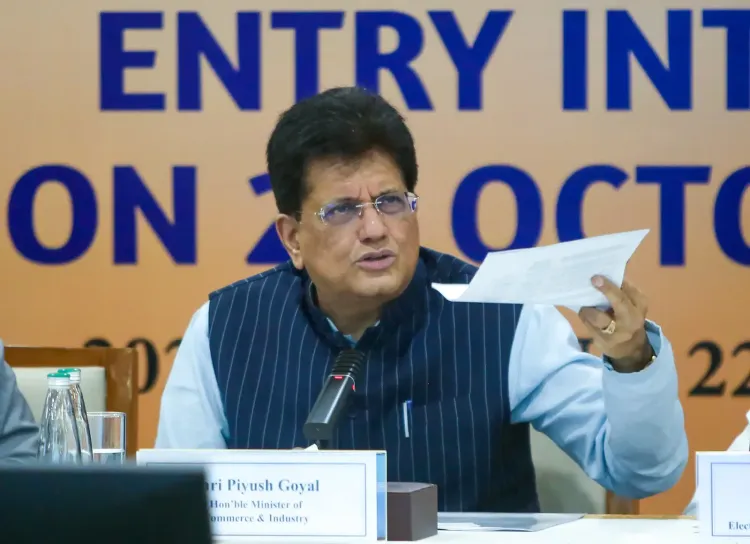
Commerce Minister Piyush Goyal didn't just pitch the India-EU FTA as a trade deal — he framed trust itself as a geopolitical weapon. At a New Delhi panel on global alliances, Goyal argued that the shared democratic values of India and the EU make their proposed agreement a 'force multiplier' at a moment when the world is scrambling for reliable economic partners outside the US-China axis.
Key Takeaways
Commerce Minister Piyush Goyal on 22 October 2026 called the India-EU FTA a potential 'force multiplier' anchored in trust.
Goyal described trust as a 'scarce commodity' that India and the EU can 'weaponize' to mutual advantage.
The proposed deal covers the 27-nation EU and India, the world's most populous country with a young, digitally connected workforce.
India-EU FTA negotiations were relaunched in June 2022 after stalling in 2013 ; key differences on data localisation and market access remain.
Goyal framed the agreement as a values-driven partnership, not merely a commercial transaction, citing shared democratic credentials and rule of law.
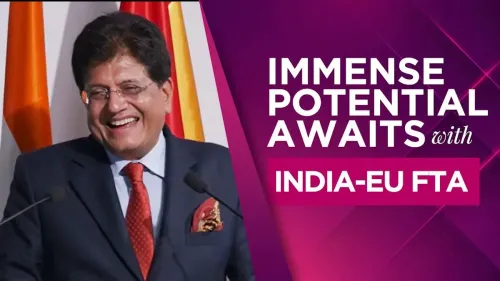
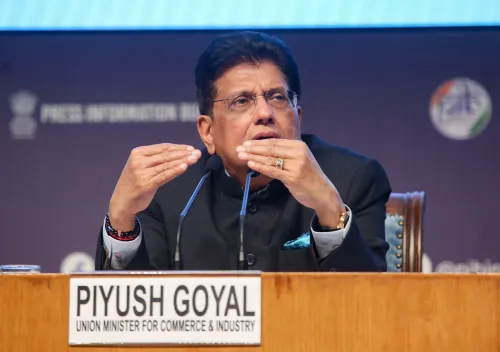
Union Commerce and Industry Minister Piyush Goyal on Thursday, 22 October 2026, called the proposed India-European Union Free Trade Agreement (FTA) a potential 'force multiplier' grounded in mutual trust, competitiveness, and complementary economic strengths. Speaking at a panel discussion in New Delhi titled 'New Era, New Alliances: The Third Path?', Goyal framed trust as the defining currency of global commerce — one that India and the EU are uniquely positioned to weaponise in each other's favour.
What Goyal Said
'Trust is a scarce commodity. We could actually weaponize it. Yes. And that is what the EU-India free trade deal is all about,' Goyal said during the panel. He described the proposed agreement as a meeting of two formidable democratic blocs — the 27-nation European Union, where the rule of law prevails, and India, the world's most populous nation with a young, aspirational, and digitally connected workforce.
'It's between the 27 nation block of EU, democracies where the rule of law prevails, between India, the world's largest population, youngest country, full of talent, full of aspiration. The youthful India is digitally connected with the world,' Goyal noted. He added that 'the defining word in this relationship is going to be trust.'
Complementary Strengths on Both Sides
Goyal argued that India's scale, its talent pool, and its deepening global integration, when combined with Europe's technological capabilities and advanced industrial economies, could unlock significant growth opportunities for both sides. He emphasised that India offers a fair and transparent environment for investors and remains committed to equitable opportunities for global businesses operating on Indian soil.
The minister also contrasted India's current outward-looking economic model with the state-led, inward approach that followed Independence — arguing that excessive government control had historically constrained the country's growth potential. This framing is consistent with the Narendra Modi government's broader pitch to position India as a rules-based, market-friendly destination amid shifting global supply chains.
India-EU FTA: Where Negotiations Stand
Negotiations for a comprehensive India-EU trade deal were relaunched in June 2022 after nearly a decade-long hiatus, with both sides having suspended talks in 2013 over stalled progress on tariffs and market access. The deal, if concluded, would cover goods, services, investment, and geographical indications — making it one of the most ambitious bilateral trade agreements either side has pursued. This comes amid a broader global realignment, as major economies seek trusted partners outside of geopolitically fraught supply chains.
Strategic Context: India's 'Third Path' Pitch
Notably, the panel's title — 'New Era, New Alliances: The Third Path?' — reflects a wider diplomatic debate about whether democracies can forge a distinct economic architecture independent of US-China rivalry. India has increasingly positioned itself as a credible anchor in such a framework, pointing to its democratic credentials, its large domestic market, and its growing role in global value chains. Goyal's remarks reinforce that framing, presenting the India-EU FTA not merely as a trade deal but as a statement of shared values and systemic alignment.
Whether the deal can be concluded in the near term remains an open question, with outstanding differences on data localisation, government procurement, and agricultural market access still to be bridged. Both sides are expected to continue technical-level talks in the coming months.
Point of View
But the India-EU FTA has been in negotiation, on and off, for nearly two decades — a timeline that itself raises questions about how deep that trust runs. The deal's most contentious issues — data localisation, government procurement, and farm market access — are structural disagreements, not ones that goodwill alone can resolve. India's push to cast itself as the democratic world's preferred manufacturing and services partner is strategically sound given the US-China decoupling, but the EU has its own protectionist constituencies to manage. The real test of this 'third path' will be whether both sides can move from high-minded panel rhetoric to a concluded agreement with concrete, verifiable market-opening commitments.
NationPress
22 Oct 2026
Frequently Asked Questions
What is the India-EU Free Trade Agreement?
The India-EU Free Trade Agreement is a proposed comprehensive bilateral trade deal covering goods, services, investment, and geographical indications between India and the 27-nation European Union. Negotiations were relaunched in June 2022 after being suspended in 2013 over disagreements on tariffs and market access.
What did Piyush Goyal say about the India-EU FTA?
Commerce Minister Piyush Goyal said the India-EU FTA is a 'force multiplier' built on trust, calling trust a 'scarce commodity' that the two sides can 'weaponize' to create mutual economic advantage. He argued that shared democratic values and the rule of law make India and the EU natural partners in global trade.
Why does the India-EU trade deal matter right now?
The deal is being negotiated against the backdrop of a global economic realignment, as major democracies seek to build trusted supply chains outside the US-China geopolitical axis. A concluded India-EU FTA would be one of the largest bilateral trade agreements for either side, with significant implications for manufacturing, services, and investment flows.
What are the main hurdles in India-EU FTA negotiations?
Key outstanding differences include data localisation requirements, government procurement norms, and agricultural market access. Both sides have different regulatory approaches to these areas, and bridging them has proven difficult through multiple rounds of negotiations since 2007.
Who is affected by the India-EU Free Trade Agreement?
The deal would affect exporters and importers across both economies, particularly in sectors like pharmaceuticals, textiles, automobiles, IT services, and agriculture. Businesses in both India and EU member states stand to gain from reduced tariffs and improved market access if the agreement is finalised.