White House: Hormuz oil flow up, Iran must never get nukes
Synopsis
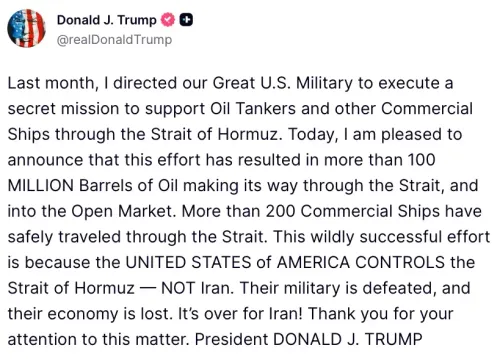
The White House declared on 22 October 2026 that oil transit through the Strait of Hormuz has risen above pre-conflict levels, accused Iran of killing tens of thousands of protesters, and issued an unambiguous warning that Tehran must never be allowed to acquire a nuclear weapon.
Key Takeaways
The White House stated on 22 October 2026 that oil volumes through the Strait of Hormuz now exceed pre-conflict levels.
The post accuses the Iranian regime of fabricating protest casualty data while killing 'tens of thousands' of demonstrators.
Washington issued a direct warning: Iran 'must never be allowed to have a nuclear weapon.' The US withdrew from the JCPOA in 2018 and reimposed sanctions aimed at blocking Iran's nuclear path.
The Strait of Hormuz handles roughly a fifth of globally traded oil, making its stability critical for markets from India to Europe.
Future IAEA inspection reports on Iran's enrichment levels will be the key metric to watch.
Even as a regional conflict reshapes Middle East security calculus, oil tankers are moving through the Strait of Hormuz in greater volumes than before the fighting began — and the White House wants the world to know it. In a post on 22 October 2026, the official White House account delivered a blunt three-part message: energy markets are holding, Iran's government is lying about protest casualties while killing tens of thousands of its own people, and Tehran will never be permitted to acquire a nuclear weapon.
The Hormuz chokepoint and what the numbers mean
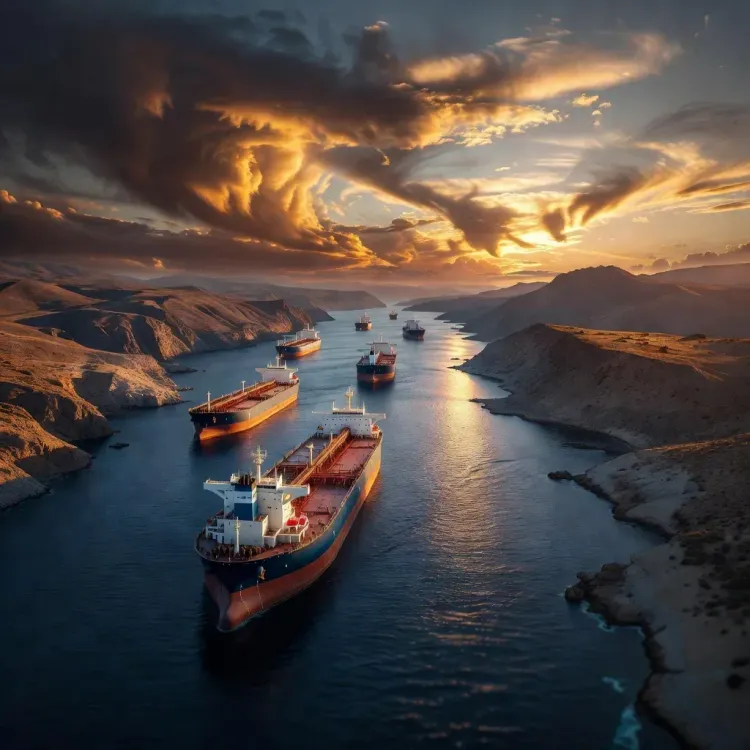
The Strait of Hormuz, the narrow channel between Iran and Oman, is the world's single most critical oil transit corridor. Roughly a fifth of globally traded petroleum passes through it — tankers heading for Asia, Europe, and beyond. Any disruption there does not merely rattle commodity desks; it reverberates through fuel prices from Mumbai to Munich. The White House's claim that transit volumes now exceed pre-conflict levels is a direct counter-narrative to fears that the conflict had throttled supply. The research cautions that the precise figures are unverified, but the political signal is unmistakable: Washington is projecting stability in the waterway despite Iranian threats.
Iran has periodically threatened to close the strait during periods of maximum pressure with the United States. Those threats have so far not materialised into a sustained blockade, and the White House's framing — 'more oil is coming through than before' — is designed to reinforce that deterrence is working.
The protest crackdown charge
The post's sharpest accusation is domestic: the White House accuses the Iranian regime of fabricating the results of protests while killing 'tens of thousands of protestors.' The backdrop here stretches back to the death of Mahsa Amini in custody in 2022, which ignited nationwide demonstrations that Iranian security forces met with lethal force. The crackdown drew sweeping international condemnation. The White House's reference to fake hit-counts and mass killings signals that Washington regards the current episode of unrest — and Iran's handling of it — as a continuation and escalation of that pattern. NationPress cannot independently verify the specific death-toll figures cited in the post.
The nuclear red line — again, but louder
The post's closing line — 'They must never be allowed to have a nuclear weapon' — is the clearest statement of policy intent. It is not new language; successive US administrations have maintained it since well before 2018, when Washington withdrew from the Joint Comprehensive Plan of Action (JCPOA) and reimposed sweeping sanctions. What gives the line extra weight in October 2026 is the context of active conflict. When the region is already volatile, a nuclear-armed Iran would transform the threat calculus for every state in the Persian Gulf — and for India, which depends heavily on Gulf energy and maintains significant diaspora and trade ties there.
The IAEA has been the primary international watchdog on Iran's enrichment levels. Future inspection reports will be the clearest signal of whether Tehran is moving toward weapons-grade material and whether the White House's red line is being tested in practice, not just in rhetoric.
The energy arteries of the world run through a strait barely 33 kilometres wide at its narrowest — and right now, Washington is betting that keeping those arteries open is itself the most powerful argument against letting Iran hold them at gunpoint with a bomb.
Point of View
Moral pressure on Iran's domestic repression, and a nuclear deterrence signal aimed at both Tehran and regional partners. By bundling Hormuz transit data with protest deaths and the nuclear red line, Washington is framing its Iran posture as simultaneously economic, humanitarian, and strategic — a trio that has defined US policy since the JCPOA collapse in 2018. For India, which imports substantial Gulf energy and has historically tried to balance ties with both Washington and Tehran, the hardening of US rhetoric raises the cost of any continued economic engagement with Iran. The nuclear warning also lands at a moment when IAEA findings on enrichment levels carry outsized geopolitical weight.
NationPress
22 Oct 2026
Frequently Asked Questions
Why is the Strait of Hormuz important for oil supply?
The Strait of Hormuz is a narrow waterway between Iran and Oman through which roughly a fifth of globally traded oil passes, making it the world's most critical energy chokepoint. Any sustained closure would cause immediate spikes in global crude prices.
What is the US position on Iran's nuclear programme?
The United States maintains that Iran must never be allowed to develop a nuclear weapon. Washington withdrew from the JCPOA nuclear deal in 2018 and reimposed heavy sanctions; successive administrations have upheld the same red line.
What happened to protesters in Iran after the Mahsa Amini death?
Following Mahsa Amini's death in custody in 2022, Iranian security forces conducted a violent crackdown on nationwide protests that drew widespread international condemnation. The White House has now alleged tens of thousands of protesters have been killed.
What is the JCPOA and why did the US leave it?
The Joint Comprehensive Plan of Action was a 2015 multilateral agreement under which Iran agreed to limit its nuclear activities in exchange for sanctions relief. The United States withdrew in 2018 under the argument that the deal did not permanently block Iran's path to a nuclear weapon.
How does Iran-US tension affect India?
India depends heavily on Persian Gulf energy imports that transit the Strait of Hormuz, and hosts a large diaspora in the region. Heightened US-Iran tensions raise energy-security risks for India and increase pressure on New Delhi to align more closely with Washington's Iran sanctions regime.