White House Asserts US Controls Strait of Hormuz, Not Iran
Synopsis
The White House declared on 10 June 2026 that the United States controls the Strait of Hormuz, not Iran. The blunt assertion reinforces decades of U.S. naval dominance over the waterway carrying roughly 20 per cent of global oil trade, with direct implications for India's energy imports and regional stability.
Key Takeaways
The White House posted on 10 June 2026 asserting the United States — not Iran — controls the Strait of Hormuz .
The Strait of Hormuz carries approximately 20 per cent of global daily oil trade and is the sole maritime exit for major Gulf oil exporters.
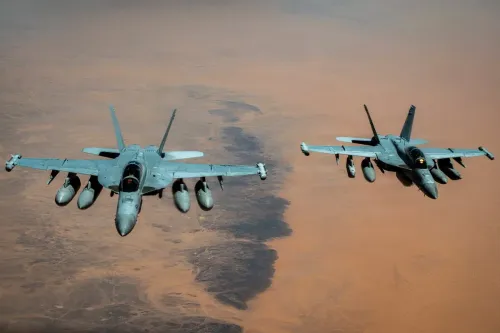
Fifth Fleet , based in Bahrain , maintains a permanent naval presence to enforce freedom of navigation in the strait.
The Carter Doctrine (1980) and Operation Earnest Will (1987–1988) established the long-standing U.S. commitment to securing the waterway.
India relies heavily on the strait for crude oil imports from the Gulf, making any escalation a direct energy-security concern for New Delhi.
Markets, shipping firms, and Gulf Cooperation Council states will watch for follow-up signals from U.S.
Central Command and Fifth Fleet .
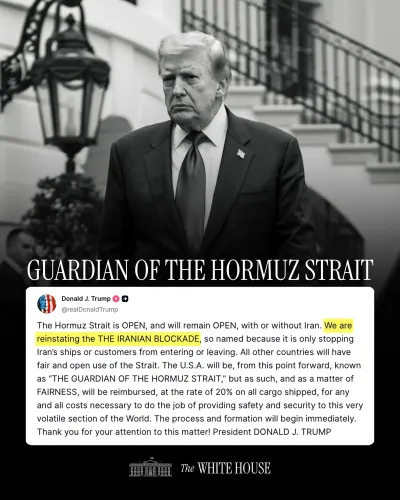
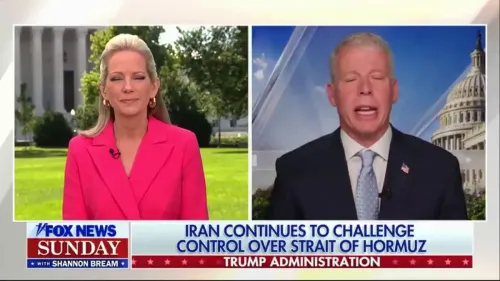
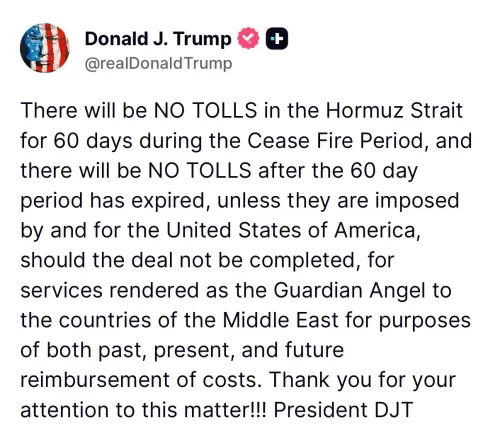
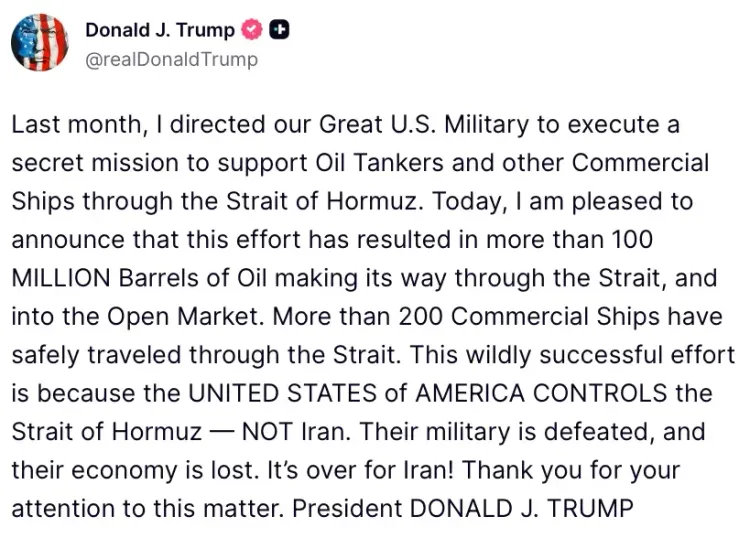
The White House, the official communications account of the Executive Office of the President of the United States, posted a blunt assertion on Wednesday, 10 June 2026, declaring that the United States of America — not Iran — controls the Strait of Hormuz, the critical waterway through which roughly 20 per cent of global oil trade passes daily.
Context
The post, in stark capitalised language, stated: 'The UNITED STATES of AMERICA CONTROLS the Strait of Hormuz — NOT Iran.' The emphatic phrasing signals a deliberate, high-visibility assertion of American naval dominance over one of the world's most strategically vital chokepoints. The Strait of Hormuz connects the Persian Gulf to the Gulf of Oman and is the sole maritime exit for oil exports from Saudi Arabia, Iraq, Kuwait, the UAE, and Iran itself.
The United States maintains a permanent naval presence in the region through the U.S. Fifth Fleet, headquartered in Bahrain, which is responsible for freedom-of-navigation operations across the Persian Gulf and the strait. Washington has long held that unimpeded transit through international waterways is a cornerstone of global maritime law.
Policy Backdrop
American commitment to securing the strait dates back decades. The Carter Doctrine of 1980 declared that any attempt by an outside force to seize control of the Persian Gulf region would be treated as an assault on vital U.S. interests and repelled by any means necessary, including military force. This doctrine has been reaffirmed, implicitly or explicitly, by every subsequent administration.
During the Iran-Iraq War, the U.S. Navy conducted Operation Earnest Will (1987–1988), escorting reflagged Kuwaiti tankers through the strait to protect them from Iranian attacks — a direct precedent for the current posture. After Washington withdrew from the Joint Comprehensive Plan of Action (JCPOA) in 2018, Iranian officials repeatedly warned that Tehran could close the strait in retaliation for tightening sanctions, threats that the U.S. consistently dismissed as militarily unviable.
Stakeholders and Impact
The assertion carries immediate relevance for a wide range of global actors. Gulf Cooperation Council (GCC) states — whose oil revenues depend entirely on unobstructed passage through the strait — watch U.S. posture signals closely as a barometer of regional security guarantees. Major oil importers, including India, China, Japan, and South Korea, collectively move tens of millions of barrels through the strait each month, making any disruption scenario a direct threat to their energy security.
For India in particular, the Strait of Hormuz is the primary conduit for crude oil imports from the Gulf, which account for a substantial share of the country's total energy needs. Any escalation between Washington and Tehran in these waters would translate rapidly into freight-rate spikes and crude price volatility affecting Indian consumers and the broader economy.
Maritime shipping firms and insurance underwriters also calibrate war-risk premiums based on the perceived stability of the strait. A firm public statement from the White House asserting U.S. control can, in itself, function as a de-escalatory signal to markets even as it sharpens the diplomatic confrontation with Iran.
What's Next
Attention will now turn to U.S. Central Command and Fifth Fleet for any follow-up announcements regarding naval exercises, escort operations, or responses to Iranian statements. Tehran's official reaction — whether through the Islamic Revolutionary Guard Corps Navy, the foreign ministry, or state media — will set the immediate tone for how this rhetorical escalation translates into operational reality on the water.
The White House's unusually direct language suggests a deliberate effort to project resolve at a moment of sustained pressure on Iran. How the international community, particularly European partners and Gulf allies, responds to the framing will shape the diplomatic fallout in the days ahead.
Point of View
Unambiguous declaration is a classic example of public deterrence signalling — using an official social media post as a force-multiplier for naval posture. By framing control of the strait as an established fact rather than a contested claim, Washington seeks to pre-empt Iranian leverage narratives before they gain traction in energy markets or regional diplomacy. For India, which sits downstream of any Hormuz disruption both literally and economically, the statement is a double-edged signal: reassurance that the U.S. intends to keep the lane open, but also a reminder that New Delhi's energy security remains contingent on the stability of a rivalry it has no direct role in managing. The post fits a decades-long pattern of U.S. administrations using declaratory policy to substitute for or reinforce kinetic deterrence in the Gulf.
NationPress
19 Sept 2026
Frequently Asked Questions
Does the United States really control the Strait of Hormuz?
The U.S. maintains dominant naval presence in the strait through the Fifth Fleet and conducts regular freedom-of-navigation operations, which Washington says ensures open access under international law; Iran, however, disputes this characterisation and has repeatedly threatened to close the waterway.
Why is the Strait of Hormuz important for India?
The Strait of Hormuz is the primary route for India's crude oil imports from Gulf countries, meaning any blockade or conflict there would directly raise fuel prices and threaten India's energy security.
What is the U.S. Fifth Fleet and where is it based?
The U.S. Fifth Fleet is the American naval command responsible for the Persian Gulf, Red Sea, and surrounding waters, headquartered in Manama, Bahrain, and it oversees all U.S. naval operations near the Strait of Hormuz.
Can Iran close the Strait of Hormuz?
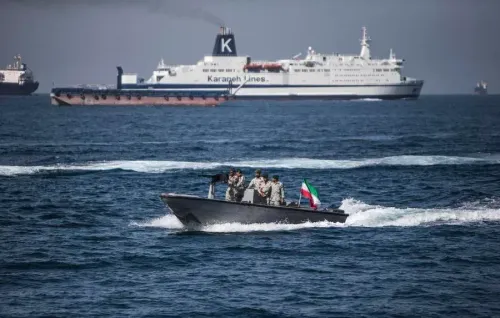
Iran has the capability to attempt to disrupt traffic through mining, fast-boat swarms, and missile threats, but military analysts and U.S. officials consistently argue that sustained closure is not feasible given the American naval presence and the economic damage it would cause Iran itself.
What is the Carter Doctrine and how does it relate to the Strait of Hormuz?
The Carter Doctrine, announced in 1980, declared that any attempt to seize control of the Persian Gulf would be treated as an attack on U.S. vital interests; it forms the foundational legal and strategic basis for America's permanent military presence near the Strait of Hormuz.