Goyal Calls Businesses to Act Ahead of India-EU FTA
Synopsis
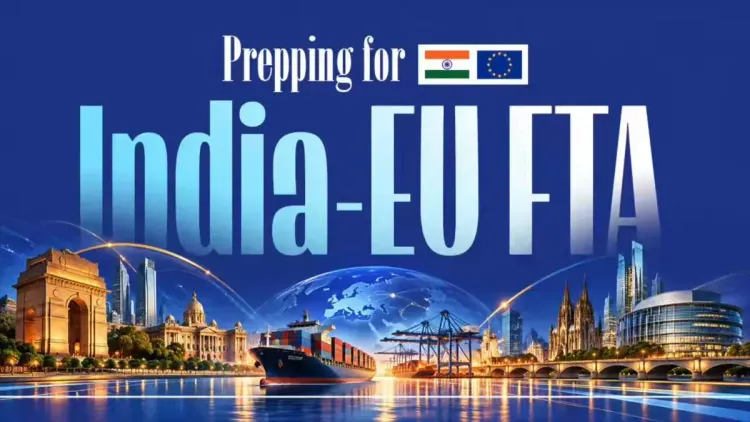
Commerce Minister Piyush Goyal called on businesses, investors, and innovators in India and the EU to begin building partnerships now — ahead of the long-negotiated India-EU Free Trade Agreement entering into force — signalling strong confidence that the landmark deal is nearing conclusion.
Key Takeaways
Piyush Goyal on 22 October 2026 publicly urged Indian and EU businesses to start forming partnerships before the India-EU FTA comes into force.
The India-EU Broad-based Trade and Investment Agreement (BTIA) was first launched in 2007 , suspended in 2013 , and formally revived at the India-EU Summit in 2022 .
The European Union is India's largest trading partner bloc, with substantial ties across goods, services, and investment.
Goyal's call specifically targeted 'businesses, investors and innovators' — flagging both commercial and technology partnership opportunities.
India has concluded FTAs with Australia, UAE, UK, and EFTA as part of a post-pandemic trade diversification drive; the EU deal is the most consequential outstanding agreement.
Key milestones to watch include upcoming negotiating rounds and joint ministerial statements on a target ratification timeline.
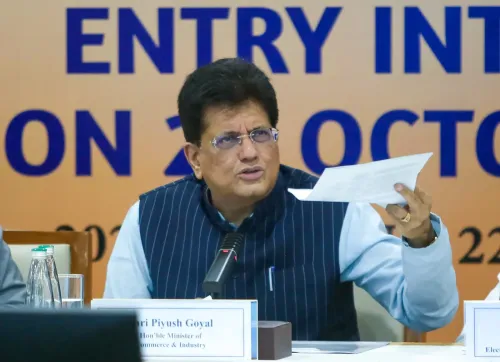
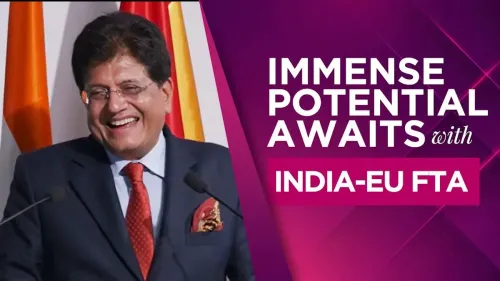
Before the ink is dry on a deal nearly two decades in the making, Union Commerce and Industry Minister Piyush Goyal is already firing the starting gun. On Thursday, 22 October 2026, Goyal took to X to issue a direct call to action to businesses, investors, and innovators on both sides — urging them to begin forging partnerships now, so they are ready to sprint the moment the India-EU Free Trade Agreement enters into force.
A Negotiation Two Decades in the Making
The agreement Goyal is signalling about has one of the longest origin stories in modern trade diplomacy. Formally known as the Broad-based Trade and Investment Agreement (BTIA), negotiations between India and the European Union were first launched in 2007 — then stalled, then suspended entirely in 2013 as both sides hit an impasse over tariffs, intellectual property, and market access. It took nearly a decade and a landmark India-EU Summit in 2022 to formally restart the talks. That the minister is now openly encouraging the private sector to 'explore opportunities and build partnerships' ahead of ratification signals real confidence that the finish line is within sight.
The stakes are considerable. The European Union is India's largest trading partner bloc, with deep interlocking ties across goods, services, and investment flows. An FTA at this scale — covering tariff reductions, investment protections, and potentially services — would reshape supply chains and open corridors that have long been discussed but never formalised.
Why 'Now Is the Time' — Goyal's Message to the Private Sector
Goyal's post, addressed specifically to 'businesses, investors and innovators in India and the EU,' is a deliberate pre-ratification nudge. The strategic logic is straightforward: companies that begin mapping joint ventures, identifying distribution networks, and aligning regulatory compliance today will hold a first-mover advantage the moment the agreement is enacted. Waiting for the final gazette notification before starting that work is how opportunities get missed.
This posture fits a broader pattern in India's trade strategy. Since the pandemic, New Delhi has moved aggressively to diversify its trade relationships — closing deals with Australia, the , the UK, and the EFTA bloc in quick succession. The EU deal, given its sheer size and complexity, has always been the prize. Goyal's public call to the business community suggests the political will on the Indian side is firm.
What Investors and Innovators Should Watch
For companies in sectors such as pharmaceuticals, textiles, automotive components, and digital services — areas where India and EU economies are both competitive and complementary — the FTA could unlock significant preferential access. The minister's specific mention of 'innovators' is also notable, pointing to a growing emphasis on technology partnerships and the knowledge economy as pillars of the emerging trade architecture.
The next critical milestones will be the upcoming rounds of formal negotiating sessions and any joint ministerial statements setting a target timeline for conclusion or ratification. When those dates are announced, businesses that have already done their groundwork will be ready to move fast.
Two decades of talks, multiple false starts, and a full diplomatic reset — and now a minister telling the market: get ready. The India-EU FTA is no longer a distant ambition. It is a live countdown.
Point of View
UAE, UK, EFTA — the EU deal represents the capstone of a post-pandemic trade architecture designed to reduce dependence on any single partner. The minister's emphasis on 'innovators' alongside traditional investors suggests the government is deliberately positioning the FTA as a technology and knowledge-economy agreement, not just a tariff reduction exercise.
NationPress
22 Oct 2026
Frequently Asked Questions
What is the India-EU FTA and where do negotiations stand?
The India-EU Free Trade Agreement, formally called the Broad-based Trade and Investment Agreement (BTIA), is a comprehensive trade deal being negotiated between India and the European Union. Negotiations began in 2007, were suspended in 2013, and were formally resumed at the India-EU Summit in 2022. As of October 2026, Minister Piyush Goyal's call to businesses suggests the deal is advancing toward conclusion.
Why is Piyush Goyal asking businesses to prepare for the India-EU FTA now?
Goyal wants businesses and investors on both sides to begin building partnerships and mapping opportunities before the deal officially enters into force, so they can capture first-mover advantages and reduce the lag between ratification and real commercial activity.
Which sectors would benefit most from an India-EU Free Trade Agreement?
Sectors such as pharmaceuticals, textiles, automotive components, and digital services are widely expected to benefit significantly, as they represent areas where Indian and EU economies are both competitive and complementary.
Why did India-EU FTA negotiations fail the first time?
The original round of talks, launched in 2007, broke down by 2013 over disagreements on tariffs, intellectual property rights, and market access for goods and services. The two sides formally restarted negotiations at the India-EU Summit in 2022.
What other FTAs has India signed recently?
As part of a post-pandemic trade diversification strategy, India has concluded free trade agreements with Australia, the UAE, the UK, and the EFTA bloc. The EU deal is considered the most consequential remaining agreement given the size and depth of the bilateral relationship.