CM Dhami Launches 'Beej Sanjivani Abhiyan' in Haridwar
Synopsis
Uttarakhand CM Pushkar Singh Dhami launched the 'Beej Sanjivani Abhiyan' at Haridwar's Aam Mahotsav on 21 July 2026, planting mango, jamun, jackfruit, neem and bael seeds. The citizen-driven campaign urges residents to plant fruit seeds rather than discard them, aiming to expand green cover statewide as a people's movement.
Key Takeaways
CM Pushkar Singh Dhami launched the Beej Sanjivani Abhiyan in Haridwar on 21 July 2026 at the Aam Mahotsav event.
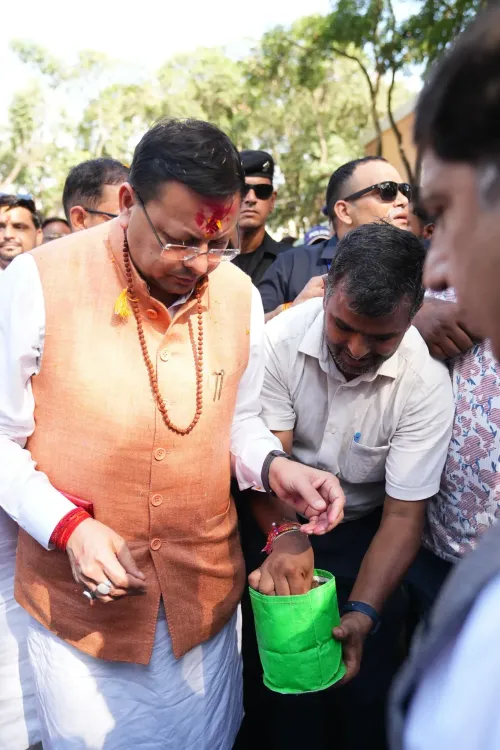
The Chief Minister personally planted seeds of mango, jamun, jackfruit, neem, and bael to inaugurate the campaign.
The campaign calls on citizens to plant fruit seeds in safe locations rather than discarding them, enabling natural tree growth.
The initiative is linked to the Harit Haridwar Abhiyan and aims to promote biodiversity conservation and environmental balance .
The campaign was started in Haridwar and will be expanded across all of Uttarakhand as a statewide people's movement ( janaandolan ).
Youth, students, voluntary organisations, and institutions have been specifically urged to participate actively.
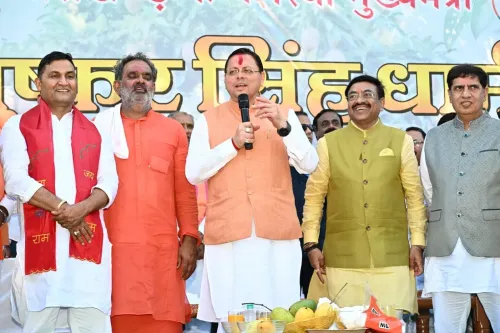
Uttarakhand Chief Minister Pushkar Singh Dhami launched the 'Beej Sanjivani Abhiyan' (Seed Revival Campaign) in Haridwar on Tuesday, 21 July 2026, on the occasion of the Aam Mahotsav (Mango Festival), calling on citizens across the state to plant fruit seeds instead of discarding them.
Context
The Chief Minister's Office of Uttarakhand announced the launch via an official post, stating that CM Dhami personally planted seeds of mango, jamun (Indian blackberry), jackfruit, neem, and bael to mark the beginning of the campaign. The initiative was unveiled at the Aam Mahotsav event in Haridwar, a city with deep ecological and cultural significance along the banks of the Ganga.
The Chief Minister appealed directly to residents: 'Anyone who eats mango, jamun, jackfruit, bael, or any other fruit should plant the seeds in a safe place rather than throwing them away, so that more trees can grow in the future and environmental conservation can be promoted.'
Policy Backdrop
The Beej Sanjivani Abhiyan is framed as a people's movement (janaandolan) rooted in public participation (janbhagidari), with the stated goal of expanding the state's green cover through natural seed propagation rather than top-down plantation drives alone. The campaign is positioned as a complement to the Harit Haridwar Abhiyan (Green Haridwar Campaign), which the state government has been advancing as part of its broader environmental agenda.
Uttarakhand, a Himalayan state, is ecologically sensitive and has faced recurring concerns around deforestation, forest fires, and biodiversity loss. Citizen-led greening efforts have historically been part of the state's identity, tracing back to the Chipko Movement of the 1970s, which originated in the region and became a landmark in Indian environmental history.
Stakeholders and Impact
CM Dhami specifically called upon residents, youth, students, voluntary organisations, and various institutions across Uttarakhand to actively participate and plant as many seeds as possible. The campaign is designed to be low-barrier — requiring no special equipment or funding, only the habit of saving and planting seeds from everyday fruit consumption.
The initiative is expected to contribute to biodiversity conservation, environmental balance, and the creation of a cleaner, greener environment for future generations, according to the official statement. By starting in Haridwar — a high-footfall pilgrimage city — the campaign gains immediate visibility and the potential to reach a large, diverse cross-section of the population.
What's Next
The Chief Minister confirmed that the Beej Sanjivani Abhiyan, launched from Haridwar, will be extended as a janaandolan (people's movement) across the entire state of Uttarakhand. He expressed confidence that the campaign, driven by public participation, will take the form of an effective mass movement in the direction of environmental protection.
If the campaign achieves broad uptake among the state's citizens and institutions, it could serve as a replicable model for other Himalayan and hill states grappling with similar ecological pressures — establishing Uttarakhand as a reference point for community-driven afforestation.
Point of View
During a high-visibility event like the Aam Mahotsav, is a deliberate framing choice. By anchoring the campaign in everyday citizen behaviour (saving fruit seeds) rather than state expenditure, the Dhami government sidesteps resource constraints while generating participatory optics. The invocation of Harit Haridwar and the call to youth and civil society signals an intent to build a durable green brand for Uttarakhand, though the campaign's long-term impact will depend entirely on whether institutional follow-through — monitoring, community mobilisation, and school-level integration — materialises beyond the launch event.
NationPress
22 Jul 2026
Frequently Asked Questions
What is the Beej Sanjivani Abhiyan launched by CM Dhami?
The Beej Sanjivani Abhiyan is a seed revival campaign launched by Uttarakhand Chief Minister Pushkar Singh Dhami in Haridwar on 21 July 2026. It urges citizens to plant seeds of fruits like mango, jamun, jackfruit, bael, and neem in safe locations rather than discarding them, with the aim of increasing green cover across Uttarakhand through natural tree growth.
Where was the Beej Sanjivani Abhiyan launched?
The campaign was launched in Haridwar on the occasion of the Aam Mahotsav (Mango Festival). CM Dhami confirmed it will be expanded as a people's movement across the entire state of Uttarakhand.
What seeds did CM Dhami plant at the Beej Sanjivani Abhiyan launch?
CM Pushkar Singh Dhami personally planted seeds of mango, jamun (Indian blackberry), jackfruit, neem, and bael to mark the official launch of the Beej Sanjivani Abhiyan in Haridwar.
What is the Harit Haridwar Abhiyan and how is it related to this campaign?
The Harit Haridwar Abhiyan is the Uttarakhand government's Green Haridwar Campaign aimed at increasing the city's green cover. The Beej Sanjivani Abhiyan is positioned as a citizen-driven initiative that will give new momentum to the Harit Haridwar effort through natural seed propagation.
Who has been asked to participate in the Beej Sanjivani Abhiyan?
CM Dhami has specifically called upon all residents of Uttarakhand, youth, students, voluntary organisations, and various institutions to actively participate in the campaign by planting as many seeds as possible to help make Uttarakhand greener.