White House Demands Congress Pass Save America Act to Secure Elections
Synopsis
The White House invoked intelligence warnings about foreign states undermining US elections and demanded Congress immediately pass the Save America Act. The call comes as 2026 midterm elections approach and longstanding partisan divisions over federal election security legislation persist.
Key Takeaways
The White House posted an urgent demand on 21 July 2026 calling on Congress to pass the Save America Act .
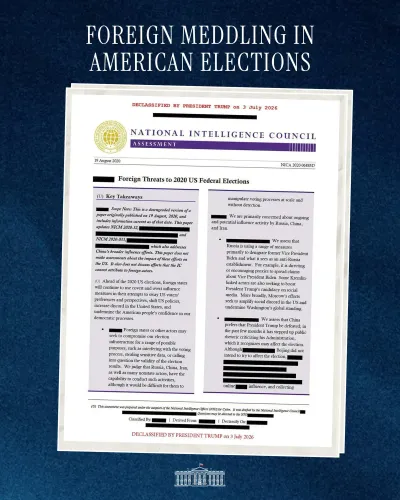
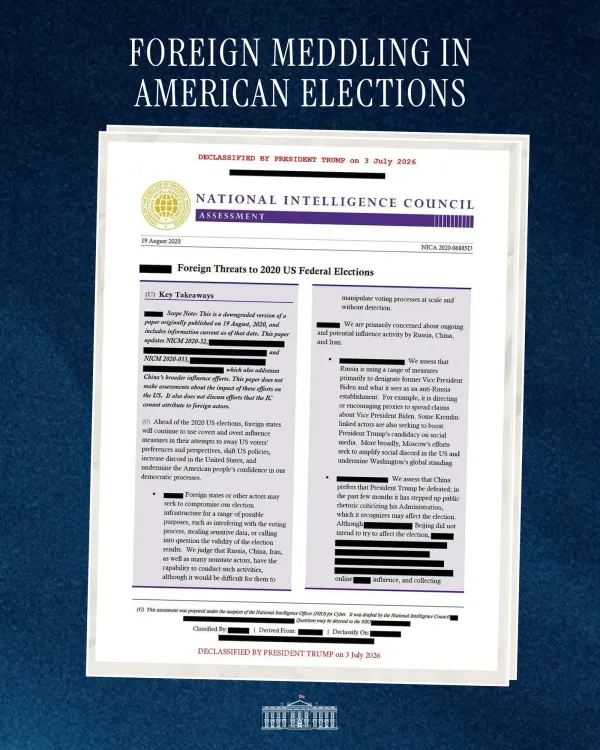
The post quoted an intelligence assessment warning that foreign states use 'covert and overt influence measures' to undermine confidence in US democratic processes.
The Department of Homeland Security designated election infrastructure as critical infrastructure in January 2017 following documented 2016 interference.
The Help America Vote Act of 2002 remains the primary federal law setting minimum standards for voting systems and established the Election Assistance Commission .
Partisan divisions in Congress have repeatedly blocked stronger federal election security legislation since 2016 .
The push comes ahead of the 2026 US midterm elections , raising the political stakes for Congressional action.
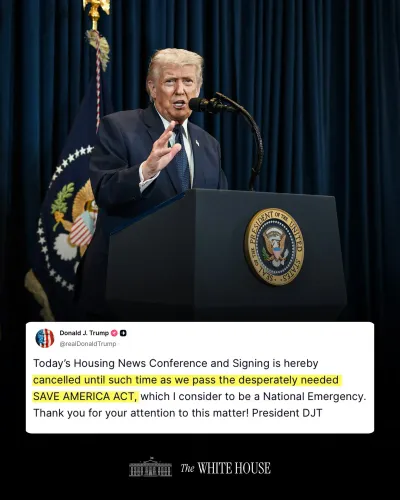
The White House on Tuesday, 21 July 2026 issued a sharp call to Congress, citing intelligence warnings about ongoing foreign interference in American elections and demanding passage of a bill it called the Save America Act to protect democratic processes.
Context
The White House post quoted directly from what appears to be an intelligence or government assessment warning that 'ahead of the 2020 US elections, foreign states will continue to use covert and overt influence measures... and undermine the American people's confidence in our democratic processes.' The administration labelled this situation 'UNACCEPTABLE' and called on Congress to act immediately.
The framing is notable: the reference to the 2020 elections suggests the quoted passage is drawn from a pre-2020 assessment, which the White House is now invoking to build urgency around current legislative action. The post included a link directing readers to further details on the proposed legislation.
Policy Backdrop
Concerns about foreign interference in US elections have shaped federal policy for nearly a decade. Following documented influence operations targeting the 2016 presidential election, the Department of Homeland Security designated election infrastructure as critical national infrastructure in January 2017.
The legislative foundation for federal election standards dates to the Help America Vote Act of 2002, enacted after the contested 2000 presidential election. That law created minimum standards for voting systems and established the Election Assistance Commission. Subsequent efforts to strengthen election security have repeatedly stalled along partisan lines in Congress.
US government assessments since 2016 have consistently identified covert influence operations by foreign states — including disinformation campaigns and attempts to sow division — as a persistent threat aimed at eroding public trust in electoral outcomes.
Stakeholders and Impact
American voters and state election officials are the primary stakeholders in any federal election security legislation. States administer their own elections under the US constitutional framework, making federal-state coordination a recurring tension in this policy space.
The White House's public pressure campaign, conducted via an official social media post, signals an effort to build political momentum for the Save America Act outside the traditional legislative process. By invoking intelligence language about foreign threats, the administration is attempting to reframe what has often been a partisan debate as a matter of national security consensus.
What's Next
Congressional consideration of the Save America Act will be the immediate focus. With 2026 midterm elections approaching, the White House appears to be using the timing to intensify pressure on lawmakers. Updated intelligence assessments on foreign interference threats ahead of the midterms are also expected to shape the legislative debate.
Whether the bill can attract bipartisan support in a divided Congress remains the central question. Past election security measures have struggled to pass precisely because of disagreements over federal versus state authority and the scope of permissible countermeasures.
Point of View
The administration is attempting to shift the legislative debate from partisan turf to shared national interest. This mirrors a pattern seen since 2017, where executive branches have used declassified or publicised intelligence findings to pressure Congress on election security. Whether this framing succeeds will depend on whether enough legislators in the opposing bloc accept the security frame or continue to view federal election legislation as an encroachment on state authority.
NationPress
22 Jul 2026
Frequently Asked Questions
What is the Save America Act?
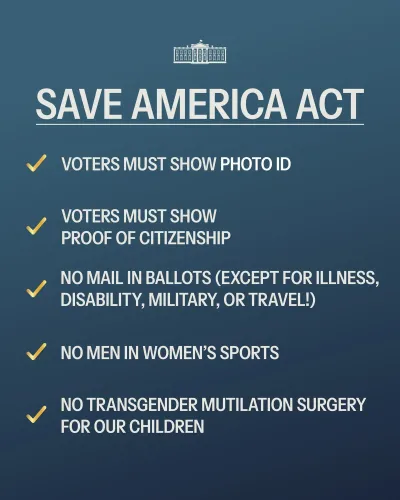
The Save America Act is a piece of US federal legislation that the White House is urging Congress to pass in order to strengthen election security against foreign interference. The specific provisions of the bill have not been detailed in the White House post, but the administration has linked to further information.
What foreign interference in US elections has been documented?
US intelligence agencies have documented covert influence operations by foreign states targeting US elections since at least 2016, including disinformation campaigns and efforts to sow division among voters. These findings have been reflected in multiple government assessments and led to the designation of election infrastructure as critical national infrastructure in January 2017.
Why is the White House pushing election security legislation in 2026?
With the 2026 US midterm elections approaching, the White House is citing persistent foreign interference threats to build urgency around passing new election security legislation. Midterm election cycles have historically prompted renewed focus on electoral vulnerabilities.
What is the Help America Vote Act and is it enough?
The Help America Vote Act of 2002 established federal minimum standards for voting systems and created the Election Assistance Commission after the disputed 2000 presidential election. Critics and security officials have argued that the law does not adequately address modern threats such as foreign cyber operations and disinformation campaigns.
Has Congress passed election security bills before?
Congress has considered multiple election security measures since 2016, but significant legislation has frequently stalled due to partisan disagreements over the scope of federal authority versus state control over elections. Funding for state election systems has been approved in some cases, but comprehensive reform bills have faced repeated obstacles.