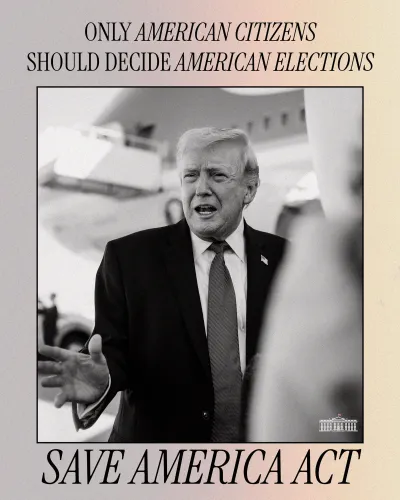
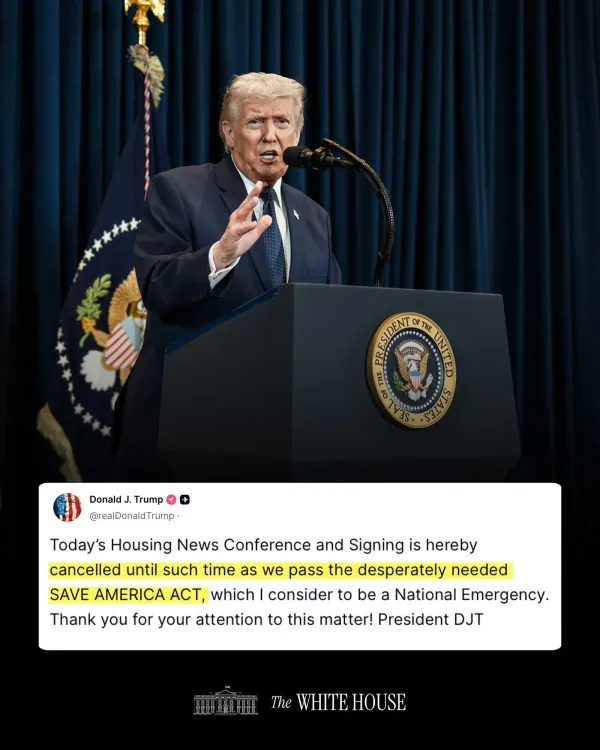
White House Pushes Congress to Pass Save America Act
Synopsis
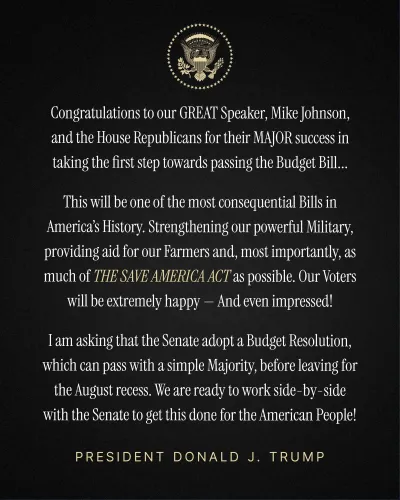
The White House on June 24, 2026 posted a stark, all-caps demand on X urging Congress to pass the Save America Act, signalling the administration is mobilising public pressure behind a key domestic legislative priority ahead of an expected vote.
Key Takeaways
The White House posted on June 24, 2026 demanding Congress pass the Save America Act .
The message was published in all capitals, indicating an urgent, high-priority legislative push.
White House social media has historically been used to apply public pressure on Congress ahead of major votes.
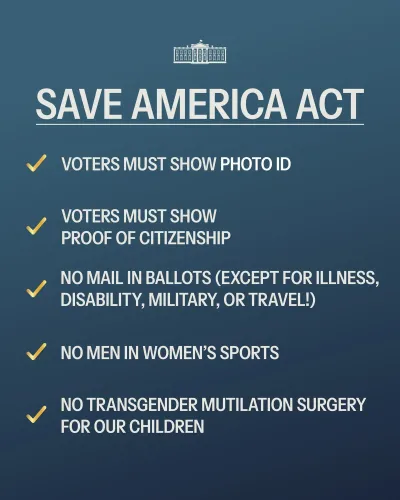
The bill's specific provisions have not been detailed in the post; the Save America Act title has not been independently verified in available legislative records.
Key next steps include committee markups, floor scheduling, and whip counts in both the House and Senate .
The White House issued a direct legislative call on Wednesday, June 24, 2026, urging the United States Congress to pass the Save America Act, in a terse but pointed post on X that signals the administration is mobilising public pressure behind the measure.
Context
The post — reading simply 'PASS THE SAVE AMERICA ACT' in all capitals — is a deliberate use of the official White House communications channel to amplify a domestic legislative priority. The all-caps phrasing and absence of elaboration suggest an urgent, rally-style appeal directed as much at the public as at lawmakers on Capitol Hill.
White House social media accounts have historically been deployed to spotlight legislation and build grassroots pressure ahead of critical floor votes or committee markups. The brevity of the message is itself a rhetorical choice, designed to cut through and generate shares rather than explain policy detail.
Policy Backdrop
The phrase 'Save America' has carried significant political weight in recent American discourse, associated closely with populist-conservative messaging. Bills bearing patriotic titles are common in the United States Congress, often introduced to signal ideological positioning as much as immediate legislative intent.
The 119th and 120th Congress have seen a wave of executive-aligned domestic policy legislation, with the White House routinely using public pressure campaigns — including social media posts — to move bills through a closely divided legislature. Committee markups and floor scheduling remain the key procedural hurdles any such measure must clear before reaching the President's desk.
Stakeholders and Impact
The immediate audience is members of Congress — both in the House and the Senate — whose votes will determine the bill's fate. By posting publicly, the White House is also signalling to voters and advocacy groups that this legislation is a priority, creating constituent pressure that can influence hesitant lawmakers.
The broader American public stands as the ultimate stakeholder: if enacted, any legislation of this scope would have direct implications for domestic governance, though the specific provisions of the Save America Act have not been detailed in the post. Indian observers and diaspora communities in the United States will also be watching, given the legislation's potential downstream effects on immigration, trade, and bilateral policy.
What's Next
The next indicators to watch are committee markups and floor scheduling in both chambers of Congress. A public call of this nature from the White House typically precedes or coincides with active legislative manoeuvring — whether a whip count, a procedural vote, or a leadership push to bring the bill to the floor.
If the administration sustains this public pressure campaign across multiple posts and official statements, it would signal that the Save America Act is central to the White House's near-term domestic agenda — and that a vote may be imminent.
Point of View
All-caps post is a textbook example of using the bully pulpit of official social media to generate constituent pressure on Congress — a tactic that has grown more aggressive in the social-media era. The absence of any policy detail in the post suggests the administration is prioritising political mobilisation over public education, betting that the 'Save America' brand carries enough emotional resonance to move votes. This fits a broader pattern of executive-branch communication that treats legislative lobbying and public campaigning as inseparable. Whether the gambit works will depend on the bill's current position in the legislative pipeline and the administration's ability to hold its caucus together.
NationPress
23 Sept 2026
Frequently Asked Questions
What is the Save America Act?
The Save America Act is a piece of legislation the White House is urging Congress to pass as of June 2026. The specific provisions of the bill have not been publicly detailed in the post, and its full text and sponsors are not yet confirmed in available records.
Why did the White House post about the Save America Act on X?
The White House used its official X account to apply public pressure on Congress, a well-established tactic to mobilise voters and advocacy groups to contact their representatives ahead of a critical legislative vote.
Has the Save America Act been passed?
As of the date of the White House post on June 24, 2026, there is no confirmed record of the Save America Act having been passed. The post itself is a call to action for Congress to pass it, indicating it had not yet cleared both chambers.
What does 'Save America' mean in US politics?
'Save America' is a phrase associated with populist-conservative political messaging in the United States. It has been used as a political slogan and has appeared in the names of political action committees and legislative proposals aligned with that movement.
What happens after the White House calls on Congress to pass a bill?
After a public White House call, the next steps typically involve committee markups, floor scheduling, and vote counts in both the House of Representatives and the Senate. Leadership in both chambers must agree to bring the bill to a vote for it to advance.