CM Dhami Launches Devbhoomi Parivar Portal and Viksit Uttarakhand Vision-2047

Synopsis
Chief Minister Pushkar Singh Dhami launched the Devbhoomi Parivar Portal for citizen services and released the Viksit Uttarakhand Vision-2047 document on November 3, 2026, aligning the hill state with India's national development goals for the country's centenary.
Key Takeaways
CM Pushkar Singh Dhami launched the Devbhoomi Parivar Portal on November 3, 2026 , aimed at delivering citizen and family-related services digitally.
The Viksit Uttarakhand Vision-2047 document was released simultaneously as a long-term state development roadmap.
The Vision-2047 framework mirrors the national Viksit Bharat @2047 goal articulated by the Centre in 2022-23 .
Uttarakhand's difficult mountain terrain makes a centralised digital portal especially significant for remote residents.
Specific targets, budget allocations, and portal adoption metrics remain to be made public and will determine real impact.
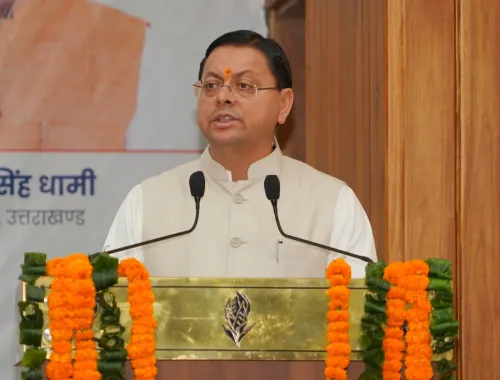
Two instruments — one digital, one documentary — arrived together in Uttarakhand on Tuesday, November 3, 2026, signalling the state's intent to govern smarter and plan longer. Chief Minister Pushkar Singh Dhami launched the 'Devbhoomi Parivar Portal' and simultaneously released the 'Viksit Uttarakhand Vision-2047' document, anchoring the hill state's ambitions to a 21-year horizon.
What the Devbhoomi Parivar Portal brings to citizens
The Devbhoomi Parivar Portal is Uttarakhand's latest push into e-governance — a single digital interface designed to deliver citizen and family-related services to residents of the state. For a geography defined by difficult terrain and dispersed mountain settlements, a centralised digital portal carries practical weight: a villager in a remote valley should, in principle, access the same services as a resident of Dehradun without enduring a multi-hour journey to a district office.
The move fits a clear national pattern. Across India, state governments have accelerated the rollout of citizen-facing portals as the Centre's push for e-governance has moved from aspiration to expectation. Uttarakhand, a Himalayan state with a resident population of roughly 11 million and a large diaspora, has particular incentive: out-migration from villages has made remote service delivery not a convenience but a necessity.
Vision-2047 and its alignment with the national development roadmap
The 'Viksit Uttarakhand Vision-2047' document released alongside the portal is the state's formal articulation of where it wants to be by India's centenary of independence. It directly echoes the Viksit Bharat @2047 framework that Prime Minister Narendra Modi's government set in motion in 2022-23 — a national target for developed-nation status by the country's 100th year as a republic.
State-level vision documents aligned to that national goal have multiplied across India. What distinguishes or differentiates each one is the specificity of its sectoral targets, budget commitments, and accountability timelines — details that will determine whether Uttarakhand's document becomes a governing compass or a ceremonial shelf piece. Those specifics are yet to be made fully public.
CM Dhami, who has helmed the state since 2021 under the BJP, has framed his tenure around governance modernisation and infrastructure build-out, including proposals for a logistics hub and year-round connectivity to high-altitude areas. The Vision-2047 release formalises that framing into a long-arc commitment.
The stakes for a mountain state with a 21-year clock
Uttarakhand faces a structural challenge that no portal or document resolves overnight: chronic out-migration, a revenue base heavily dependent on tourism and hydropower, and the governance complexity of administering 13 districts across rugged Himalayan terrain. Against that backdrop, the twin launches matter less as events and more as signals — that the state intends to compete digitally and plan deliberately.
The real test arrives in the rollout. Adoption rates for the Devbhoomi Parivar Portal, the tangible targets embedded in Vision-2047, and the budget allocations that follow will tell the fuller story. Uttarakhand has set a clock. The ticking starts now.
Point of View
The portal is the more concrete test — its adoption in remote districts will be an early indicator of whether this governance push reaches those who need it most.
NationPress
3 Nov 2026
Frequently Asked Questions
What is the Devbhoomi Parivar Portal?
The Devbhoomi Parivar Portal is a digital platform launched by the Uttarakhand government to provide citizen and family-related services online, reducing the need for residents to visit government offices in person.
What is Viksit Uttarakhand Vision-2047?
Viksit Uttarakhand Vision-2047 is a state-level long-term development document released by CM Pushkar Singh Dhami that outlines Uttarakhand's development goals aligned with the national Viksit Bharat @2047 framework.
When did CM Dhami launch the Devbhoomi Parivar Portal?
CM Pushkar Singh Dhami launched the Devbhoomi Parivar Portal on Tuesday, November 3, 2026.
How does Viksit Uttarakhand Vision-2047 relate to Viksit Bharat @2047?
Viksit Uttarakhand Vision-2047 is Uttarakhand's state-level articulation of the national Viksit Bharat @2047 goal, which aims for India to achieve developed-nation status by the country's centenary of independence in 2047.
Who is Pushkar Singh Dhami?
Pushkar Singh Dhami is the Chief Minister of Uttarakhand, representing the BJP, and has held the position since 2021 with a focus on governance modernisation and state development.