CM Dhami launches Devbhoomi Parivar Portal and Vision-2047 roadmap
Synopsis
Uttarakhand CM Pushkar Singh Dhami launched the Devbhoomi Parivar Portal — assigning unique family IDs for transparent welfare delivery — alongside the Viksit Uttarakhand Vision-2047 development roadmap at Mukhya Sewak Sadan on November 2, 2026.
Key Takeaways
CM Pushkar Singh Dhami launched the Devbhoomi Parivar Portal at Mukhya Sewak Sadan, Dehradun, on November 2, 2026 .
The portal assigns a unique Devbhoomi Parivar ID to every family in Uttarakhand under the 'one family, one identity, one platform' concept.
The system aims to identify eligible welfare beneficiaries and deliver government scheme benefits transparently and with ease.
The Viksit Uttarakhand Vision-2047 document sets out a long-term roadmap to make Uttarakhand a developed state by India's centenary of independence.
The vision aligns with PM Narendra Modi's national Viksit Bharat framework, emphasising technology, innovation, and public welfare.
Cabinet ministers Ganesh Joshi and Khajan Das, MLA Savita Kapoor, and former minister Dinesh Aggarwal attended the launch.
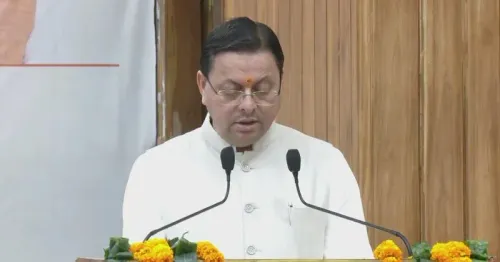
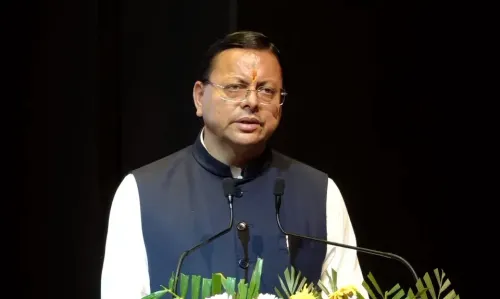
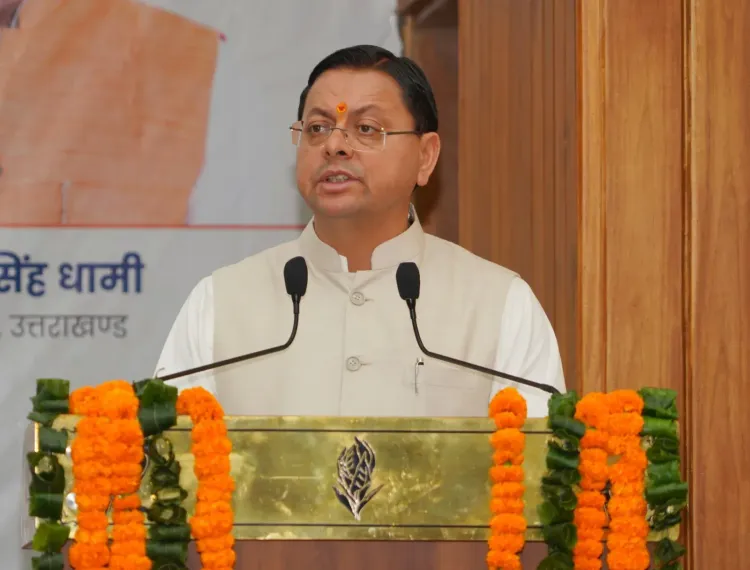
A unique family identity for every household in Uttarakhand — that is the promise Uttarakhand Chief Minister Pushkar Singh Dhami put into motion on Monday, November 2, 2026, unveiling the Devbhoomi Parivar Portal and the Viksit Uttarakhand Vision-2047 document at Mukhya Sewak Sadan in Dehradun.
One family, one ID: what the Devbhoomi Parivar Portal does
The portal operationalises a deceptively simple idea: assign every family in the state a distinct digital identity — a Devbhoomi Parivar ID — under the concept 'ek parivar, ek pehchaan, ek platform' ('one family, one identity, one platform'). CM Dhami personally observed the ID-creation process during the launch, signalling hands-on political ownership of the rollout.
The practical payoff is in welfare delivery. By linking a verified family identity to government schemes, the portal is designed to identify eligible beneficiaries with precision and route benefits to them 'transparently and easily' — the CM's own phrase. It squarely targets the leakage and duplication that have long bedevilled direct-benefit programmes in hill states.
The initiative sits within a well-established national lineage. India's Aadhaar programme, launched in 2009, built the original architecture of biometric individual identity for targeted welfare. Family-ID portals across Indian states represent the next layer — aggregating households rather than individuals — and have accelerated under the Digital India push. Uttarakhand's entry into this space is notable given the state's dispersed mountain geography, where last-mile delivery of benefits has historically been harder than almost anywhere else in the country.
Viksit Uttarakhand Vision-2047: Dehradun's answer to Viksit Bharat
The second unveiling of the day is the bigger-picture document. The Viksit Uttarakhand Vision-2047 lays out a long-term roadmap to make Uttarakhand a developed state by 2047 — the year India marks a century of independence. The document explicitly frames its goals within Prime Minister Narendra Modi's broader Viksit Bharat (Developed India) framework, targeting holistic development, modern technology, innovation, and public-welfare systems.
Uttarakhand is not alone in this exercise. Multiple states have issued their own 2047 vision documents to anchor local targets to the national centenary milestone, creating a federal mosaic of development ambitions that feed upward into the central government's headline goal. What gives the Uttarakhand document particular resonance is the state's profile: carved out of Uttar Pradesh in 2000 with an explicit mandate for hill-region development, it has spent a quarter-century building governance capacity while managing acute migration pressures and fragile Himalayan ecology.
Cabinet Ministers Ganesh Joshi and Khajan Das, MLA Savita Kapoor, and former cabinet minister Dinesh Aggarwal were among the dignitaries present at the launch.
What to watch as the rollout begins
The portal and the vision document are, for now, blueprints. The test will come in the phased enrolment of family IDs across Uttarakhand's districts — especially in remote Garhwal and Kumaon clusters — and in the annual progress benchmarks the Vision-2047 roadmap eventually produces. A state that gets the family-ID architecture right stands to become a template for other hill and tribal states wrestling with the same last-mile problem.
Point of View
The BJP government in Dehradun reinforces its alignment with New Delhi's centenary development narrative ahead of a crowded state election cycle. The family-ID model is politically significant because it shifts accountability: once beneficiaries are identified digitally, exclusion errors become visible and auditable. The real verdict on both launches will be written in enrolment numbers and scheme-delivery data, not in the ceremony.
NationPress
2 Nov 2026
Frequently Asked Questions
What is the Devbhoomi Parivar Portal?
The Devbhoomi Parivar Portal is an Uttarakhand government digital platform that assigns a unique family ID to every household in the state, enabling transparent and easy identification of eligible beneficiaries for government welfare schemes.
What is Viksit Uttarakhand Vision-2047?
Viksit Uttarakhand Vision-2047 is a state government roadmap document outlining long-term development goals to make Uttarakhand a fully developed state by 2047, aligned with Prime Minister Modi's Viksit Bharat national framework.
Who launched the Devbhoomi Parivar Portal?
Uttarakhand Chief Minister Pushkar Singh Dhami launched the portal at Mukhya Sewak Sadan in Dehradun on November 2, 2026, in the presence of cabinet ministers, MLAs, and other dignitaries.
How does the Devbhoomi Parivar ID help welfare delivery?
By assigning a verified unique identity to each family, the portal allows authorities to accurately identify eligible beneficiaries and deliver scheme benefits directly and transparently, reducing duplication and leakage.
Which other states have launched similar family ID portals?
Several Indian states have rolled out family-ID digital portals to support direct benefit transfers, consistent with the central government's Digital India initiative, though the specific features and scope vary by state.