Belgian PM Bart De Wever resigns after budget talks collapse, King Philippe weighs decision

Synopsis
Belgium's coalition government is on the brink: Prime Minister Bart De Wever has offered his resignation to King Philippe after budget talks fell apart over tax disputes. With the King reserving his decision and consultations underway, Belgium faces the prospect of a fresh electoral cycle — or a prolonged political stalemate — in the middle of a turbulent moment for Europe.
Key Takeaways
Belgian PM Bart De Wever offered his resignation to King Philippe on 2 November 2026 following the collapse of coalition budget negotiations.
King Philippe has not accepted the resignation and will consult majority party leaders before deciding.
Budget talks broke down over a dispute on taxing 'the strongest financial shoulders' — backed by Vooruit, CD&V and Les Engagés , opposed by Francophone liberals and Flemish nationalists .
If the resignation is accepted, a new electoral schedule will be announced; alternatively, a new government may be formed from the existing parliamentary balance of power.
De Wever is set to meet King Philippe again on Friday, 6 November 2026 .
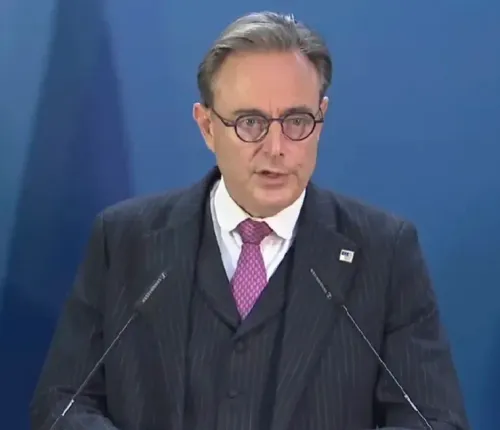
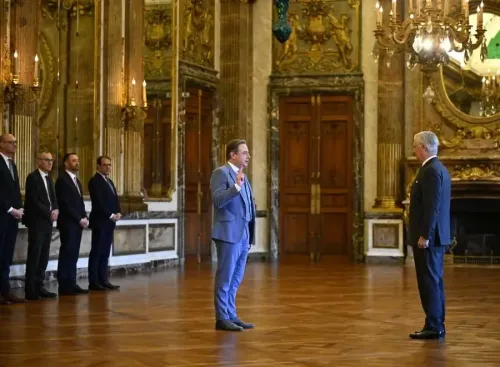
Belgian Prime Minister Bart De Wever offered his resignation to King Philippe on Monday, 2 November 2026, after coalition budget negotiations collapsed without agreement, the Belgian Royal Palace confirmed in an official statement. The King has not yet accepted the resignation and will hold consultations with majority party leaders before delivering his decision — with a follow-up audience scheduled for Friday, 6 November 2026.
What the Royal Palace Said
The Belgian Royal Palace confirmed the development in a statement shared on its official channel: 'The King has received Bart De Wever in audience. The Prime Minister has offered his resignation following the failed budget negotiations. The King is holding his decision in reserve and will begin consultations with the majority party leaders starting tomorrow.'
King Philippe also expressed concern about the broader stakes, noting that 'the country cannot afford a prolonged political crisis' amid what he described as 'major geopolitical uncertainty and significant economic challenges.' The King called on all parties to prioritise the 'general interest and a willingness to compromise.'
Why Budget Talks Failed
De Wever met King Philippe after failing to broker consensus among coalition partners on the government's budget. According to reports citing The Brussels Times, the fault lines ran along predictable ideological divisions: Vooruit (Flemish social democrats), Christian Democratic and Flemish (CD&V), and Les Engagés (Francophone centrists) reportedly pressed for higher taxes on the 'strongest financial shoulders' — a phrase widely understood to mean the wealthy — while Francophone liberals and Flemish nationalists opposed any such increase. No middle ground was found.
De Wever's meeting with the King lasted over an hour. He left the royal palace shortly after 11 am local time.
What Happens Next
The immediate outcome hinges entirely on King Philippe's decision. If the resignation is accepted, a new electoral schedule would need to be announced. However, reports suggest an alternative path: a new government could potentially be constituted on the basis of the balance of power from the previous general election, without fresh polls. King Philippe is expected to meet De Wever again on Friday, 6 November 2026 after completing his consultations with party leaders.
Context and Stakes
Belgium has a long history of protracted government formation crises — it set a world record in 2010–2011 when it went 541 days without a functioning federal government. A repeat of such a deadlock, at a time of geopolitical turbulence in Europe and fiscal pressure across the European Union, would carry significant consequences for both domestic policy and Belgium's standing within the bloc. Notably, Brussels, as the de facto capital of the European Union, adds an additional layer of symbolic and institutional weight to any Belgian political instability.
Point of View
Linguistically divided polity. De Wever's resignation, coming so early in the governing term, signals that the fiscal pressures bearing down on European governments are colliding directly with domestic political arithmetic that simply cannot hold. The tax-on-wealth fault line is not unique to Belgium; it is the central tension of European centre-right coalition politics right now. King Philippe's cautious response — holding the decision in reserve rather than accepting immediately — suggests the palace is buying time for a negotiated solution, but with Friday as the next deadline, the window is narrow.
NationPress
2 Nov 2026
Frequently Asked Questions
Why did Belgian PM Bart De Wever resign?
De Wever offered his resignation on 2 November 2026 after coalition budget negotiations collapsed. The talks failed because parties could not agree on whether to raise taxes on the wealthiest — with Vooruit, CD&V and Les Engagés in favour and Francophone liberals and Flemish nationalists opposed.
Has King Philippe accepted De Wever's resignation?
No. King Philippe has reserved his decision and will hold consultations with majority party leaders before deciding. He is scheduled to meet De Wever again on Friday, 6 November 2026.
What happens if the King accepts the resignation?
If King Philippe accepts the resignation, a new electoral schedule would be announced. Alternatively, a new government could be formed based on the balance of power from the previous elections, avoiding fresh polls.
What was the dispute in the Belgian budget talks?
The core dispute was over taxation. Vooruit, CD&V, and Les Engagés reportedly sought higher taxes on the wealthiest, while Francophone liberals and Flemish nationalists strongly opposed any such increase. The deadlock made a budget agreement impossible.
Why does Belgian political instability matter beyond Belgium?
Brussels is the de facto capital of the European Union, hosting key EU institutions. A prolonged Belgian political crisis — Belgium previously went 541 days without a functioning government in 2010–2011 — would complicate fiscal and policy decision-making at a time of significant geopolitical and economic uncertainty across Europe.