CM Mohan Yadav Approves Two Museums and Veer Bharat Fellowship
Synopsis
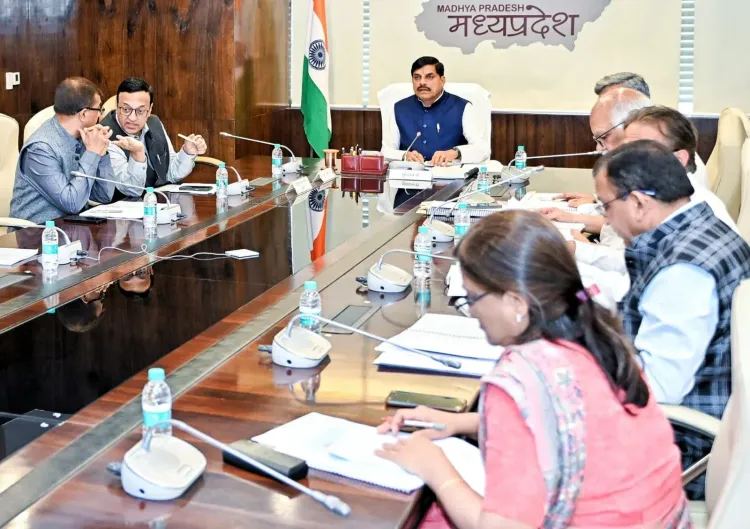
Madhya Pradesh CM Dr. Mohan Yadav chaired a Veer Bharat Nyas committee meeting on 2 November 2026, approving a new fellowship programme and two museums — one tribal museum in Betul and one in Ujjain's Kothi Mahal — to preserve India's history for younger generations.
Key Takeaways
Veer Bharat Fellowship approved to disseminate India's history and culture to the general public through dedicated scholars and communicators.
A new Aranyak Yugyugeen Janjaatiya Sangrahalaya (tribal museum) cleared for Betul , focusing on ancient and indigenous heritage.
Veer Bharat Museum to be built inside Kothi Mahal , the historic palace complex in Ujjain .
All three decisions were taken at a single Veer Bharat Nyas working-committee meeting at Mantralaya on 2 November 2026 .
Construction timelines and fellowship selection criteria have not yet been announced.
The moves align with a broader BJP state-government pattern of investing in cultural institutions that highlight India's ancient and martial history.
Three decisions made in a single meeting at Mantralaya — and Madhya Pradesh's cultural map just shifted. Madhya Pradesh Chief Minister Dr. Mohan Yadav chaired the working-committee meeting of Veer Bharat Nyas on Monday, 2 November 2026, approving two new museums and a fellowship programme designed to carry India's history to a wider public.
What was decided at the Mantralaya meeting
The committee cleared three connected proposals in one sitting. First, the Veer Bharat Fellowship — a programme to place scholars and communicators at the front line of public history outreach, spreading India's 'glorious culture and heritage to the common person,' as the Chief Minister put it. Second, the Aranyak Yugyugeen Janjaatiya Sangrahalaya — a tribal museum in Betul that will document ancient and indigenous heritage of the region. Third, a Veer Bharat Museum inside Kothi Mahal, the historic palace complex in Ujjain.
CM Yadav framed all three as part of a single mission: 'Bharat ke gauravshali evam parakrami ateet ko sanrakshit karna aur nayi peedhi ko usse parichit karana' — preserving India's glorious and valiant past and acquainting the new generation with it.
Why Betul and Ujjain
Betul sits in the Satpura range, a district with a deep tribal presence. Housing a dedicated Janjaatiya museum there is a direct nod to communities whose oral histories and material culture have rarely featured in mainstream heritage spaces. Ujjain, by contrast, is one of the oldest continuously inhabited cities in India — one of the seven sacred saptapuri — and Kothi Mahal gives the new Veer Bharat Museum a setting with centuries of its own layered history. Two sites, two very different historical registers.
Veer Bharat Nyas and the BJP's cultural agenda
Veer Bharat Nyas is the trust established by the Madhya Pradesh government to preserve and publicly champion India's martial and civilisational history. BJP-led state governments have consistently channelled investment into cultural institutions that spotlight India's ancient and medieval past, and Madhya Pradesh — with its significant tribal belt, Sanchi, Maheshwar, Mandu, and Ujjain — is fertile ground for exactly this kind of heritage infrastructure. The fellowship adds a human pipeline: producing people who can translate that history into public engagement, classrooms, and communities.
The decisions still need to move from approval to ground — construction timelines and fellowship selection criteria have not yet been announced. But with three green lights in one committee sitting, the trust now has a clear work-plan heading into the state's next budget cycle.
Two museums, one fellowship, and a trust with a mandate: Madhya Pradesh is betting that the next generation will know its own story — and is building the institutions to make that happen.
Point of View
A tribal museum, and a heritage museum signals that Veer Bharat Nyas is moving from conception to institutional infrastructure — a meaningful step up in ambition. Locating one museum in tribal-majority Betul is politically and culturally significant: it extends the cultural-heritage narrative to communities often peripheral to mainstream history projects, broadening the trust's coalition. Ujjain's Kothi Mahal site, steeped in centuries of history, gives the second museum instant legitimacy and footfall. Together, the three decisions reflect a BJP-governed state's consistent strategy of weaving cultural identity into governance — and of investing in public history as soft power for the next electoral cycle.
NationPress
2 Nov 2026
Frequently Asked Questions
What is Veer Bharat Nyas?
Veer Bharat Nyas is a trust established by the Madhya Pradesh government to preserve and promote India's history, culture, and heritage through public outreach, museums, and educational programmes.
Where will the new Veer Bharat museums be built?
One museum — the Aranyak Yugyugeen Janjaatiya Sangrahalaya focusing on tribal heritage — will be built in Betul, and another Veer Bharat Museum will be housed in Kothi Mahal in Ujjain.
What is the Veer Bharat Fellowship?
The Veer Bharat Fellowship is a newly approved scheme under Veer Bharat Nyas designed to place scholars and communicators who will spread India's glorious history and culture to the general public.
Why was Betul chosen for the tribal museum?
Betul is a district in Madhya Pradesh's Satpura region with a significant tribal population and rich indigenous heritage, making it a natural site for a museum dedicated to ancient tribal history and culture.
When were these decisions announced by CM Mohan Yadav?
The decisions were announced on 2 November 2026 following the Veer Bharat Nyas working-committee meeting chaired by Chief Minister Dr. Mohan Yadav at the state secretariat (Mantralaya).