CM Mohan Yadav Reviews Krishna Temple Trust, Cites Jal Ganga
Synopsis
Madhya Pradesh CM Dr. Mohan Yadav reviewed Shri Krishna Pathey Nyas operations on 2 November 2026, ordering pilgrim-focused temple management, a temple land-use action plan, and routing all water-structure restoration through the state's Jal Ganga Abhiyan campaign.
Key Takeaways
Shri Krishna Pathey Nyas review was chaired by CM Dr.
Mohan Yadav on 2 November 2026 .
Officials directed to prioritise basic amenities for devotees in temple protection, promotion, and management.
An action plan for productive use of temple-linked land has been formally ordered.
All water-structure restoration work at Krishna temples to be conducted under the Jal Ganga Abhiyan .
The move formally integrates religious heritage conservation with state water policy for the first time under this framework.
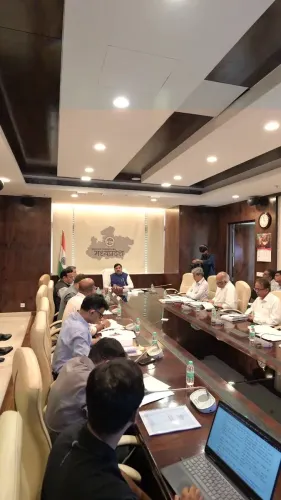
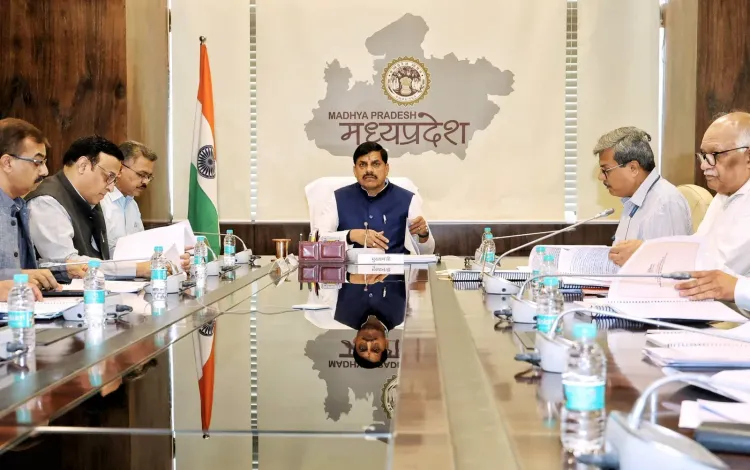
Temple conservation, pilgrim amenities, and water body restoration converged in a single government boardroom on Monday, 2 November 2026, as Madhya Pradesh Chief Minister Dr. Mohan Yadav chaired a review meeting of the Shri Krishna Pathey Nyas — the state trust tasked with managing temples dedicated to Lord Krishna across the state.
What the CM directed inside the trust meeting
Dr. Yadav instructed trust officials to ensure that the protection, promotion, and management of Krishna temples is carried out with a clear focus on basic facilities for devotees. The directive was unambiguous: pilgrim welfare is not an afterthought — it is the operational baseline. He also asked officials to prepare a concrete action plan for the productive use of land attached to temple properties, a move that signals an intent to put idle or underutilised religious landholdings to structured purpose.
On water infrastructure, the CM drew a direct link to the state's existing programme: all restoration and conservation work on water structures associated with these temples must be carried out under the Jal Ganga Abhiyan, Madhya Pradesh's ongoing water conservation and river-rejuvenation campaign. Folding temple-pond and step-well restoration into an already-running state scheme gives the effort both administrative muscle and a funding channel.
Jal Ganga Abhiyan: the environmental thread running through the temples
The Jal Ganga Abhiyan has been one of the BJP government's marquee ecological programmes in Madhya Pradesh, focused on restoring rivers, water bodies, and traditional water structures. By routing temple-linked jal sanchnayen (water structures) through this scheme, the state government formally integrates cultural heritage conservation with environmental policy — a pairing that has increasingly defined the BJP's governance template across several states.
Historically, temple complexes in the Malwa and Bundelkhand regions of Madhya Pradesh sit alongside ancient step-wells, ponds, and kunds that have fallen into disrepair. Bringing these under the Jal Ganga umbrella could mean systematic de-silting, structural repair, and groundwater recharge work at dozens of sites simultaneously.
Land-use planning for temple property: the strategic dimension
The instruction to draft an action plan for 'productive use of temple-linked land' carries administrative weight beyond ritual upkeep. Temple trusts in Madhya Pradesh collectively hold significant parcels of land whose utilisation has often been fragmented or undocumented. A formal plan — if it materialises — could channel those assets toward pilgrim infrastructure: dharamshalas, parking, sanitation, or green corridors, without privatising the land itself.
Dr. Yadav, who has made religious and cultural infrastructure a visible pillar of his administration since taking charge in December 2023, continues to use the Shri Krishna Pathey Nyas as a policy instrument — not merely a ceremonial body. The next test will be whether the action plans ordered today surface in the state budget or the trust's subsequent quarterly review.
Point of View
Dr. Yadav is doing something politically and administratively significant: he is converting religious site maintenance into a line item of an established environmental programme, giving it bureaucratic legitimacy and a pre-existing funding architecture. The directive on temple land-use planning points to a longer-term ambition to professionalise trust governance — a perennial weak spot for state-managed religious endowments in India. Taken together, these moves reflect the BJP's broader template of merging cultural mobilisation with developmental governance, seeking to satisfy both devout constituencies and infrastructure-conscious voters. Whether the action plans ordered today translate into measurable outcomes will be the real measure of the Nyas's evolution from ceremonial body to functioning development authority.
NationPress
2 Nov 2026
Frequently Asked Questions
What is the Shri Krishna Pathey Nyas in Madhya Pradesh?
The Shri Krishna Pathey Nyas is a state-level trust established by the Madhya Pradesh government to oversee the development, protection, and management of temples associated with Lord Krishna in the state.
What is the Jal Ganga Abhiyan?
Jal Ganga Abhiyan is a Madhya Pradesh government water conservation and river-rejuvenation campaign focused on restoring traditional water structures, rivers, and water bodies across the state.
What did CM Mohan Yadav direct in the Krishna temple trust meeting?
CM Dr. Mohan Yadav directed officials to ensure basic amenities for pilgrims in temple management, prepare an action plan for productive use of temple-linked land, and route all water-structure restoration work through the Jal Ganga Abhiyan.
How does Madhya Pradesh plan to use land attached to Krishna temples?
CM Dr. Yadav has asked the Shri Krishna Pathey Nyas to prepare a formal action plan for the productive utilisation of land associated with Krishna temples, though specific details of the plan are yet to be released.
When did Dr. Mohan Yadav become Chief Minister of Madhya Pradesh?
Dr. Mohan Yadav became Chief Minister of Madhya Pradesh in December 2023, succeeding Shivraj Singh Chouhan as the BJP's choice for the top post after the state assembly elections.