CM Dhami Launches Welfare Schemes for Construction Workers
Synopsis
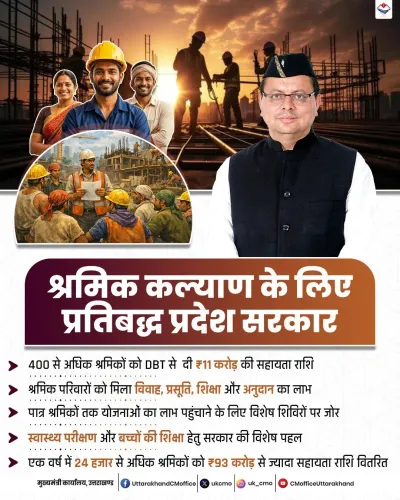
Chief Minister Pushkar Singh Dhami on 23 July 2026 launched multiple welfare schemes for registered construction workers in Uttarakhand, including free mobile health vans offering 44 tests, nutrition support, education materials, hygiene kits, and yoga-wellness skill training starting in Pauri Garhwal and Champawat districts.
Key Takeaways
Five new schemes launched for registered construction workers: nutrition, education material, sanitation kit distribution, health screening, and yoga-wellness skill training.
Two Mobile Medical Vans flagged off under Mukhyamantri Shramik Swasthya Parikshan Yojana , offering 44 free tests including X-ray and ECG, plus tele-consultation and three-month health monitoring.
Vans will initially operate in Pauri Garhwal and Champawat districts before a phased statewide rollout.
The Mukhyamantri Yog Evam Wellness Arogya Yojana will train 210 children of workers annually in free residential yoga and wellness programmes; 70 youth will be linked to employment after technical training.
Existing support — tools, cycles, sewing machines, housing assistance, and monthly pensions for elderly workers — was reaffirmed alongside the new launches.
The schemes are funded through cess collections under the central Building and Other Construction Workers Act, 1996 .
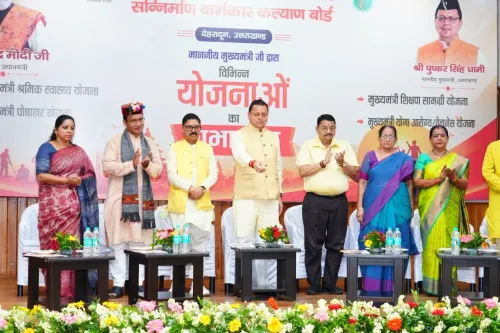
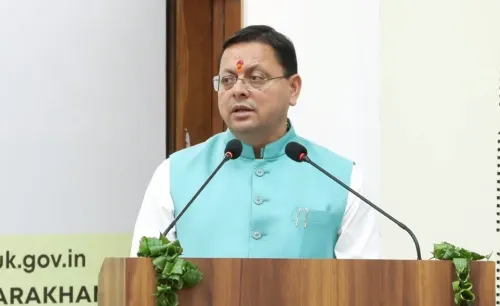
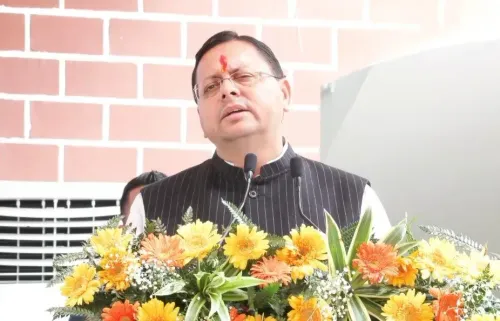
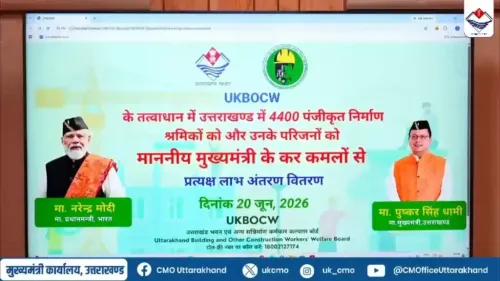
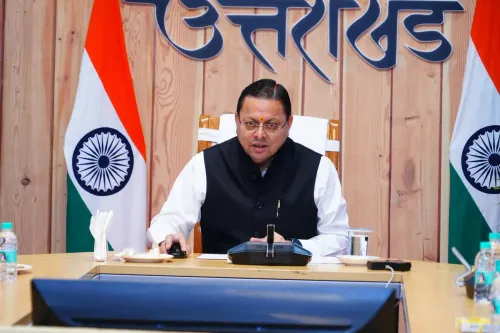
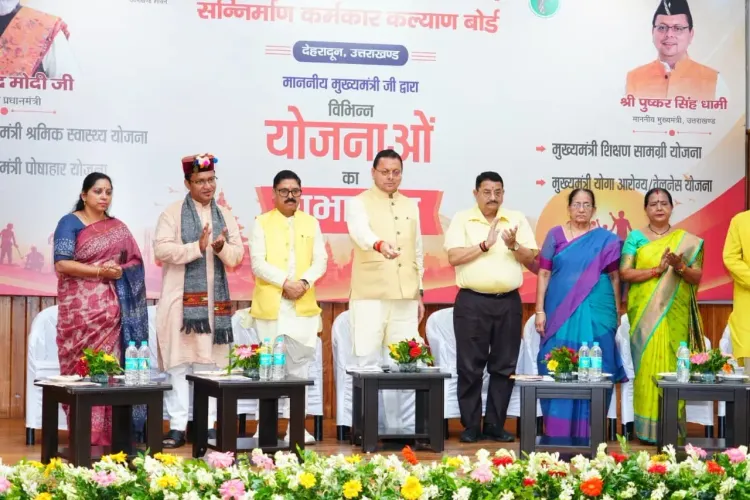
Chief Minister Pushkar Singh Dhami on Thursday, 23 July 2026, launched several new welfare schemes for registered construction workers at a programme held at Mukhya Sevak Sadan, the Chief Minister's Camp Office. The schemes — administered through the Uttarakhand Building and Other Construction Workers Welfare Board — cover health, nutrition, education, sanitation, and skill development for workers and their families. He also flagged off two Mobile Medical Vans under the Mukhyamantri Swasthya Yojana (Chief Minister's Health Scheme).
What Was Launched
The Chief Minister unveiled a cluster of targeted programmes for registered construction workers. The Mukhyamantri Poshan Yojana (Chief Minister's Nutrition Scheme) will provide nutritional support to workers' families. The Mukhyamantri Shiksha Samagri Yojana (Education Material Scheme) will supply educational materials to workers' children.
A Mukhyamantri Swachhata Samagri Vitaran Karyakram (Sanitation Material Distribution Programme), inspired by Prime Minister Narendra Modi's Swachh Bharat campaign, will distribute hygiene kits to workers' households. Under the Mukhyamantri Yog Evam Wellness Arogya Yojana, eligible children of registered workers will receive free residential training in yoga and wellness, with 210 children trained annually. Additionally, 70 youth receiving technical training under the scheme will be linked to employment upon completion.
Mobile Health Vans: Reach and Services
The two flagged-off vans form the operational core of the Mukhyamantri Shramik Swasthya Parikshan Yojana (Worker Health Screening Scheme). Each van carries specialised health teams that will travel to worksites and residences in remote areas, offering 44 types of tests — including X-ray and ECG — entirely free of charge.
The vans also provide tele-consultation with specialist doctors, and beneficiaries will receive follow-up health monitoring for three months after their screening. The rollout begins in Pauri Garhwal and Champawat districts and will be expanded in phases across the state.
Policy Backdrop
The schemes are administered through the state's construction workers welfare board, which draws funding from a cess levied under the Building and Other Construction Workers (Regulation of Employment and Conditions of Service) Act, 1996 — a central law that mandated every state to establish such a board. Uttarakhand has operated its board since the early 2000s, offering housing, education, and health assistance to registered labourers.
Chief Minister Dhami invoked Prime Minister Modi's 2014 'Shramev Jayate' campaign — launched to restore dignity and expand social security access for workers — as the ideological anchor for the state's expanded welfare push. He stated that the state government regards workers not merely as a labour force, but as 'Uttarakhand ki Vikas Shakti' ('the development force of Uttarakhand').
Beyond the new schemes, the government also reiterated existing support: tools, cycles, and sewing machines for workers' livelihoods; financial assistance for construction or purchase of homes for registered workers; and monthly pensions for elderly construction workers.
Stakeholders and Presence
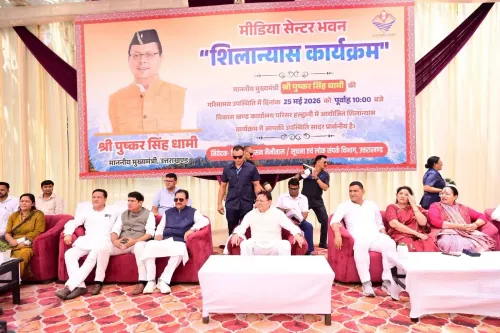
Board Secretary P.C. Dumka presented an overview of the board's activities and briefed attendees on the new schemes. The programme was attended by legislators including Umesh Sharma Kau, Savita Kapoor, and Durgeshwar Lal, along with Kailash Pant, Chairman of the State Advisory Contract Board; Geeta Rawat, Chairperson of the Vigilance Committee; Mohani Pokharia, Vice-Chairperson; and Prof. Govind Singh, Chairman of the Media Advisory Committee.
What's Next
The immediate priority is the phased extension of the two mobile medical vans from Pauri Garhwal and Champawat to all remaining districts of Uttarakhand. The government's stated goal is to ensure that even the most remote construction worker receives health screening and welfare support at their worksite or home. Beneficiary registration numbers and health screening outcomes will be a key metric of the programme's reach over the coming months.
Point of View
Sabka Vikas' frameworks, the state government is explicitly aligning its labour welfare narrative with the central government's branding, signalling continuity rather than divergence. The mobile health van rollout — starting in two districts before a phased expansion — reflects a pragmatic sequencing that will be judged by how quickly coverage scales and how many registered workers actually access the 44 free tests. The yoga-and-wellness skill scheme is an unusual addition to a construction-worker welfare package, pointing to Uttarakhand's broader push to position the state as a wellness economy destination while simultaneously generating employment for workers' children.
NationPress
23 Jul 2026
Frequently Asked Questions
What new schemes did CM Dhami launch for construction workers in Uttarakhand?
Chief Minister Pushkar Singh Dhami launched five new welfare schemes on 23 July 2026: the Mukhyamantri Poshan Yojana (nutrition support), Mukhyamantri Shiksha Samagri Yojana (education materials for workers' children), Mukhyamantri Swachhata Samagri Vitaran Karyakram (hygiene kit distribution), Mukhyamantri Shramik Swasthya Parikshan Yojana (mobile health screening), and Mukhyamantri Yog Evam Wellness Arogya Yojana (free yoga and wellness training for workers' children).
What services do the mobile medical vans for Uttarakhand construction workers offer?
The mobile medical vans offer 44 types of tests entirely free of charge, including X-ray and ECG. They also provide tele-consultation with specialist doctors and three months of follow-up health monitoring after screening. The vans travel directly to worksites and residences in remote areas.
Which districts will the Uttarakhand mobile medical van scheme start in?
The mobile medical vans will initially operate in Pauri Garhwal and Champawat districts of Uttarakhand, with plans for a phased rollout to all remaining districts of the state.
Who is eligible for the Mukhyamantri Yog Evam Wellness Arogya Yojana in Uttarakhand?
Children of registered construction workers enrolled with the Uttarakhand Building and Other Construction Workers Welfare Board are eligible. The scheme provides free residential yoga and wellness training to 210 children per year, and separately links 70 youth completing technical training to employment opportunities.
Under which law does the Uttarakhand construction workers welfare board operate?
The board operates under the Building and Other Construction Workers (Regulation of Employment and Conditions of Service) Act, 1996, a central law that requires every state to establish a welfare board funded by a cess collected from construction projects.