CM Himanta Visits Doctors Amid Assam Floods 2026
Synopsis
Assam Chief Minister Himanta Biswa Sarma on 23 July 2026 personally met doctors and healthcare staff managing flood-related medical emergencies, publicly thanking them for their work during the ongoing monsoon crisis that annually overwhelms the state's health infrastructure.
Key Takeaways
Assam CM Himanta Biswa Sarma met healthcare workers on 23 July 2026 during the ongoing Assam floods .
Sarma described conditions as 'testing times' and expressed personal gratitude to medical staff on the ground.
Assam's annual flood cycle regularly triggers surges in diarrhoea, malaria, and snake-bite cases at district hospitals.
The state has deployed mobile health teams and flood medical camps under its disaster management framework since at least 2012 .
The visit signals political-level attention to the health dimension of flood relief, with implications for resource allocation.
Future budget decisions for flood-resilient health infrastructure ahead of the 2027 monsoon will be closely watched.
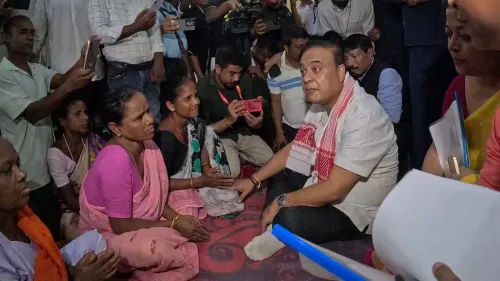
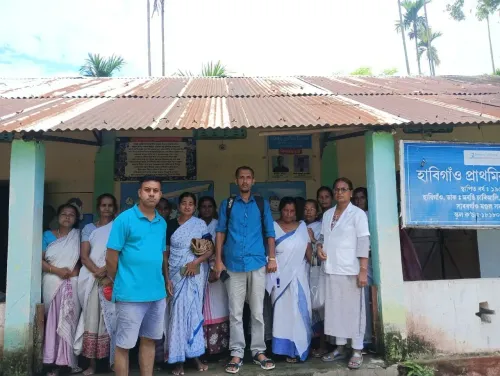
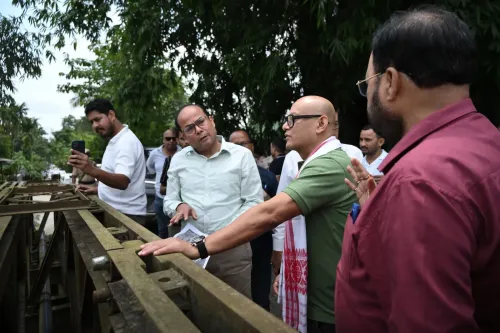
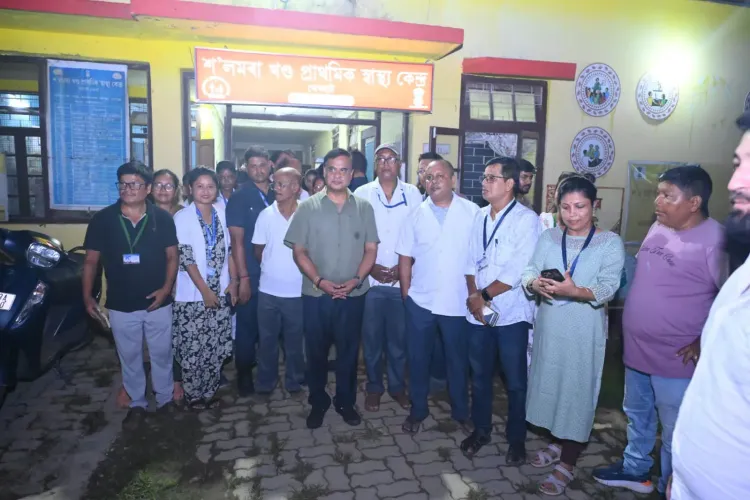
Assam Chief Minister Himanta Biswa Sarma on Thursday, 23 July 2026, met doctors and healthcare staff deployed during the ongoing Assam floods, expressing personal gratitude for their work in what he described as 'testing times.' The visit underscores the state government's effort to visibly acknowledge frontline medical personnel as monsoon inundation continues to strain health services across the Brahmaputra and Barak valleys.
Context
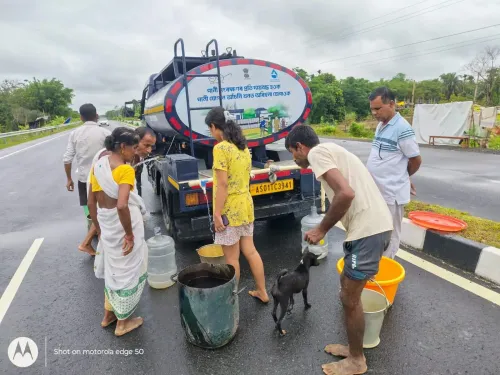
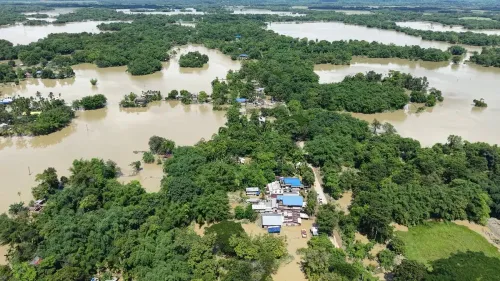
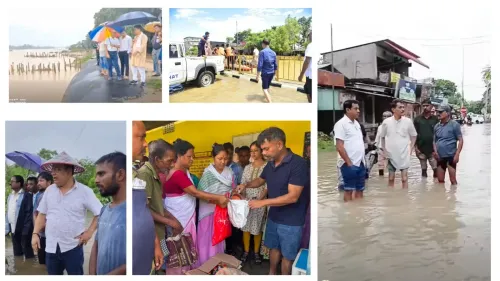
Assam endures one of India's most punishing annual flood cycles, with the Brahmaputra and its tributaries regularly breaching embankments and submerging entire districts. Each monsoon season, district hospitals and primary health centres face a surge in cases of diarrhoea, malaria, and snake bites — conditions that multiply rapidly in flood-displaced communities. Healthcare workers are often the last institutional line of care in areas cut off by rising waters.
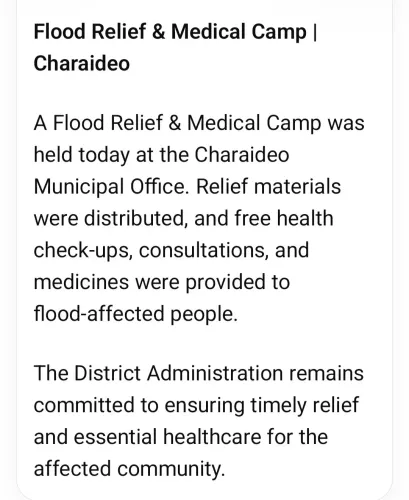
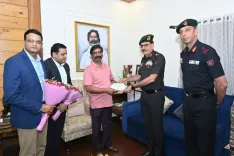
Chief Minister Sarma posted on X: 'Our doctors and healthcare staff are doing an exceptional job in these testing times to take care of the people. I met them to express my gratitude for their efforts.' The post was accompanied by two images from the meeting.
Policy Backdrop
Assam's state disaster management framework has, since at least 2012, mandated the deployment of mobile health teams and flood medical camps during monsoon emergencies. Successive administrations — including the current BJP-led government under Sarma — have institutionalised this response as part of the broader State Disaster Management Plan. The practice includes rapid deployment of doctors to relief camps and coordination with district health officers to track disease outbreaks in real time.
Public gestures by senior political figures — visiting medical teams, posting appreciation on social media — have become a consistent feature of Assam's flood-response communication, signalling administrative attention at the highest level during peak disaster periods.
Stakeholders and Impact
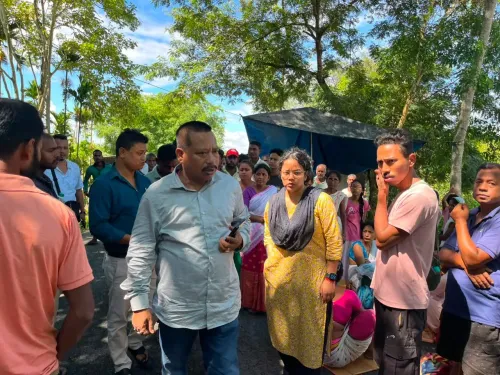
The primary stakeholders are the flood-affected populations across Assam's low-lying districts, who depend on state-deployed medical infrastructure when normal health access is disrupted. Doctors, nurses, and paramedical staff working in these conditions face logistical challenges including damaged roads, limited supplies, and high patient loads.
For healthcare workers, a direct acknowledgement from the Chief Minister carries both morale and administrative significance — it can accelerate resource allocation and signal political priority to district-level officials. Non-governmental organisations and community health volunteers operating alongside state teams also benefit from heightened visibility during such visits.
What's Next
Attention will now turn to whether the state government follows the visit with concrete measures: additional medical personnel deployments, enhanced drug stockpiles at relief camps, or fresh budget allocations for flood-resilient health infrastructure. State budget discussions ahead of the 2027 monsoon season will be a key indicator of how this public appreciation translates into structural investment. Observers will also watch for district-level deployment orders and any updates on disease-surveillance data from flood-hit areas as the current monsoon season progresses.
Point of View
And may pressure officials down the line to prioritise medical deployments. Critically, the long-term test is whether such gestures translate into structural investments in flood-resilient health infrastructure, an area where Assam has historically lagged despite recurring crises. The post and visit together position the BJP-led government as attentive to disaster welfare, a politically salient message in a state where floods affect lakhs of voters every year.
NationPress
23 Jul 2026
Frequently Asked Questions
Why did Assam CM Himanta Biswa Sarma meet doctors in July 2026?
CM Himanta Biswa Sarma met doctors and healthcare staff on 23 July 2026 to personally express gratitude for their work managing medical emergencies during the ongoing Assam floods.
How do Assam floods affect healthcare services?
Assam's annual monsoon floods regularly overwhelm district hospitals and primary health centres with cases of diarrhoea, malaria, and snake bites, while damaged roads cut off access to affected communities.
What medical measures does Assam take during floods?
The state deploys mobile health teams and sets up flood medical camps as part of its State Disaster Management Plan, a practice in place since at least 2012.
Which areas are most affected by Assam floods?
The Brahmaputra and Barak valley districts are most vulnerable, with inundation displacing lakhs of people and triggering disease outbreaks each monsoon season.
What is the BJP government's approach to flood relief in Assam?
The BJP-led government under CM Himanta Biswa Sarma has continued the practice of deploying medical teams and making public gestures of appreciation toward healthcare workers, while flood-resilient infrastructure investment remains a key area to watch.