CM Sukhu: HP scheme to conserve organic resources via community model
Synopsis
Chief Minister Sukhvinder Singh Sukhu announced that a state scheme will conserve local organic biological resources while reinforcing a people-participation-based development model in Himachal Pradesh, signalling a dual focus on ecology and community governance.
Key Takeaways
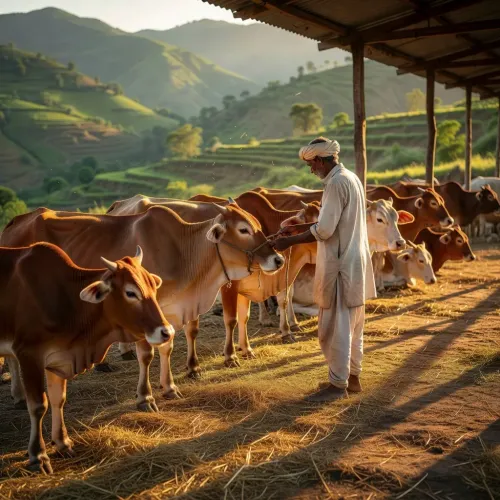
CM Sukhvinder Singh Sukhu stated that a scheme will conserve local organic biological resources in Himachal Pradesh .
The same scheme will strengthen a janbhagidari (people-participation) based development model.
The announcement was made on 23 July 2026 via the official Chief Minister's Office X account.
Local farmers and rural communities are the primary stakeholders of the initiative.
The approach aligns with national frameworks such as the Paramparagat Krishi Vikas Yojana (PKVY) while adding a community-governance dimension.
Scheme guidelines, pilot districts, and funding details are yet to be officially announced.
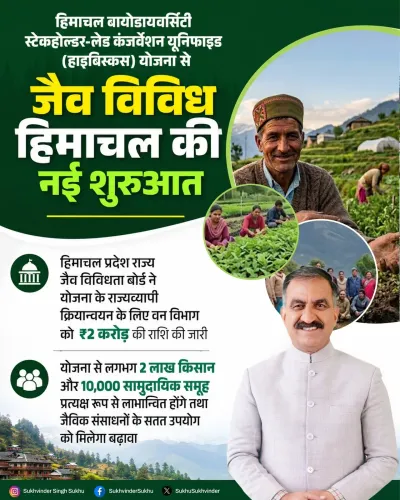
Chief Minister Sukhvinder Singh Sukhu of Himachal Pradesh on Thursday, 23 July 2026 stated that an ongoing scheme will simultaneously conserve local organic biological resources and strengthen a people-participation-based development model in the state.
The Chief Minister's Office posted the statement on X, quoting Chief Minister Thakur Sukhvinder Singh Sukhu directly: 'योजना के माध्यम से स्थानीय जैविक संसाधनों के संरक्षण के साथ-साथ जनभागीदारी आधारित विकास मॉडल को भी सुदृढ़ किया जाएगा' — 'Through the scheme, along with the conservation of local organic biological resources, the people-participation-based development model will also be strengthened.'
Context
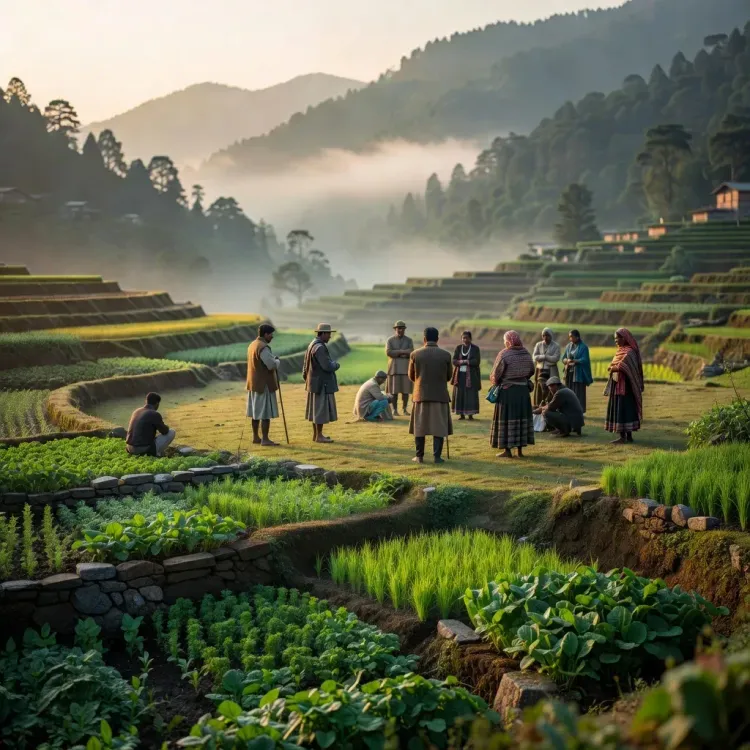
Himachal Pradesh is a Himalayan state with exceptional biodiversity and a long tradition of community-led natural resource management. The state's fragile mountain ecosystems have made conservation of local organic resources a recurring policy priority for successive governments.
The concept of janbhagidari — people's participation — has been central to governance frameworks in hill states, linking rural communities directly to planning and implementation of development schemes.
Policy Backdrop
At the national level, the Paramparagat Krishi Vikas Yojana (PKVY), launched in 2015, set a precedent by promoting organic farming clusters built around farmer participation and local resource conservation. Himachal Pradesh's approach aligns with this framework while adding a distinct community-governance dimension suited to its ecological character.
Indian hill states have increasingly merged biodiversity conservation with participatory planning models, reflecting both international biodiversity commitments and the practical necessity of protecting livelihoods in ecologically sensitive zones. CM Sukhu, who took office in December 2022, has placed sustainable development and community-led governance at the centre of his administration's agenda.
Stakeholders and Impact
Local farmers and rural communities across Himachal Pradesh stand to be the primary beneficiaries of this approach. By embedding conservation within a participatory development model, the scheme aims to ensure that ecological goals and livelihood security reinforce each other rather than compete.
The dual focus — protecting organic biological resources while empowering communities as active development partners — reflects a broader pattern of blending traditional ecological knowledge with structured participatory planning. This model has shown resilience in other Himalayan contexts where top-down conservation efforts have historically faced community resistance.
What's Next
Observers will watch for the release of specific scheme guidelines, identification of pilot districts, and allocation of funding provisions, likely to be detailed in upcoming state budget announcements or Himachal Pradesh Legislative Assembly sessions.
The emphasis on a janbhagidari-based model suggests that grassroots institutions — including panchayats and farmer collectives — may play a formal role in scheme implementation, a detail that will become clearer as operational guidelines are published.
Point of View
The Chief Minister positions the initiative within a governance philosophy that resonates with Himachal Pradesh's tradition of decentralised resource management. This dual framing also helps the state align with national sustainable agriculture policy and international biodiversity commitments simultaneously. The real test will be whether implementation translates the rhetorical balance between conservation and community development into measurable outcomes on the ground.
NationPress
22 Oct 2026
Frequently Asked Questions
What did CM Sukhvinder Singh Sukhu announce about organic resources in Himachal Pradesh?
CM Sukhu stated that a scheme will conserve local organic biological resources in Himachal Pradesh while also strengthening a people-participation-based development model.
What is janbhagidari and why is it important in Himachal Pradesh?
Janbhagidari means people's participation in governance and development. In Himachal Pradesh, it refers to involving local communities — including farmers and panchayats — directly in planning and implementing schemes, which is especially important in ecologically sensitive hill regions.
Which national scheme is related to organic farming and community participation in India?
The Paramparagat Krishi Vikas Yojana (PKVY) , launched in 2015 , promotes organic farming clusters with farmer participation and local resource conservation, and serves as a national policy precedent for state-level initiatives like Himachal Pradesh's.
When did Sukhvinder Singh Sukhu become Chief Minister of Himachal Pradesh?
Sukhvinder Singh Sukhu became Chief Minister of Himachal Pradesh in December 2022 , with a focus on sustainable development and community-led governance.
What are the next steps for Himachal Pradesh's organic resource conservation scheme?
Specific scheme guidelines, pilot districts, and funding details are expected to be announced through upcoming state budget provisions or Himachal Pradesh Legislative Assembly sessions.