CM Sukhu: 2 Lakh Farmers to Gain from HP Biodiversity Push

Synopsis
Chief Minister Thakur Sukhvinder Singh Sukhu has announced an initiative set to benefit 2 lakh farmers and 10,000 community groups in Himachal Pradesh, targeting biodiversity conservation, traditional knowledge preservation, and sustainable use of natural resources.
Key Takeaways
The Chief Minister's Office of Himachal Pradesh announced the initiative on 27 July 2026 , citing a statement from CM Thakur Sukhvinder Singh Sukhu .
Approximately 2 lakh farmers are expected to benefit from the initiative.
10,000 community groups across the state are also among the stated beneficiaries.
The initiative targets biodiversity conservation , preservation of traditional knowledge , support for local livelihoods , and sustainable use of natural resources.
The policy aligns with India's Biological Diversity Act, 2002 and commitments under the Convention on Biological Diversity .
Implementation details and budget allocations are expected to emerge in upcoming Himachal Pradesh Legislative Assembly sessions.
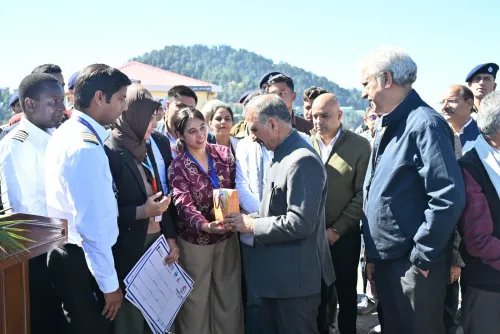
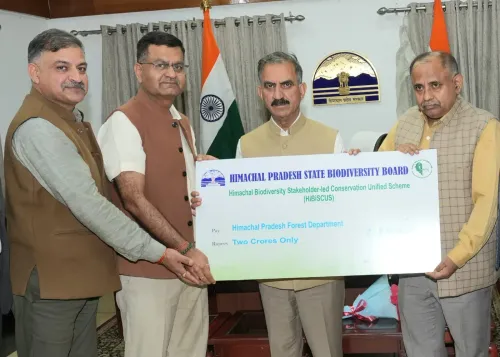
The Chief Minister's Office of Himachal Pradesh, citing a statement from Chief Minister Thakur Sukhvinder Singh Sukhu, announced on Monday, 27 July 2026 that a new initiative in the state is set to benefit approximately 2 lakh farmers and 10,000 community groups, with aims to strengthen biodiversity conservation, local livelihoods, and the sustainable use of natural resources.
In his statement, CM Sukhu said the initiative would reinforce 'जैव विविधता संरक्षण, स्थानीय आजीविका, पारंपरिक ज्ञान के संरक्षण तथा प्राकृतिक संसाधनों के सतत उपयोग' — that is, 'biodiversity conservation, local livelihoods, preservation of traditional knowledge, and the sustainable use of natural resources.'
Context
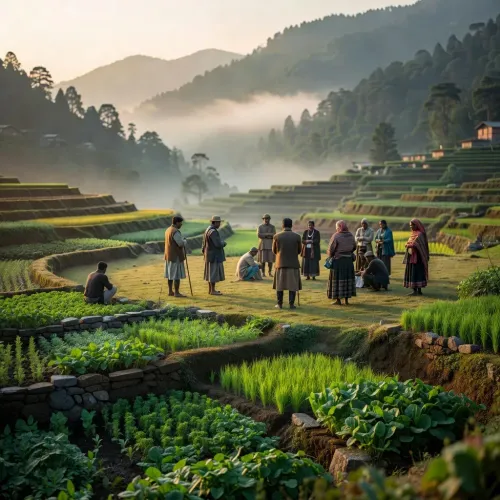
Himachal Pradesh, a Himalayan state where agriculture and biodiversity form twin pillars of the economy and ecology, has long grappled with the dual challenge of protecting fragile hill ecosystems while sustaining rural incomes. The scale cited — 2 lakh farmers and 10,000 community groups — signals an intent to embed conservation within the livelihoods of a large section of the rural population.
Community-based models that link biodiversity protection with agricultural practice have gained traction across Indian hill states, and Himachal Pradesh's approach reflects that broader national trend.
Policy Backdrop
India's Biological Diversity Act, 2002 created the legal architecture for states to conserve biodiversity and safeguard traditional knowledge at the local level, including through Biodiversity Management Committees at the panchayat tier. Himachal Pradesh has aligned successive rural and agricultural programmes with these provisions.
The initiative also dovetails with India's obligations under the Convention on Biological Diversity, which calls on signatory nations to integrate conservation goals with sustainable use and equitable benefit-sharing — particularly for indigenous and local communities.
Stakeholders and Impact
The primary beneficiaries, as stated by CM Sukhu, are 2 lakh farmers and 10,000 community groups across the state. For farming households in Himachal Pradesh, whose incomes are closely tied to horticulture, medicinal plant cultivation, and traditional hill-crop varieties, conservation-linked schemes can provide both ecological and financial stability.
Community groups — often self-help groups or village-level collectives — stand to gain institutional recognition and potential access to livelihood support tied to stewardship of local biodiversity. The explicit mention of 'traditional knowledge' preservation also points to an effort to document and protect indigenous agricultural and ecological practices before they are lost.
What's Next
Attention will now turn to the state government's budget allocations and the implementation guidelines that will define how the initiative reaches its stated beneficiaries. Upcoming sessions of the Himachal Pradesh Legislative Assembly are expected to provide further clarity on scheme design, funding, and timelines.
If implemented at the scale announced, the initiative could serve as a replicable model for other Himalayan and hill states seeking to reconcile conservation mandates with rural development imperatives — a balance that remains one of the harder policy challenges in India's mountain regions.
Point of View
000 community groups — the government signals a shift from purely regulatory biodiversity policy toward one that ties conservation directly to rural welfare. This framing is significant: it allows the ruling administration to present environmental stewardship not as a constraint on development but as a driver of it. Whether the initiative delivers at scale will depend heavily on implementation architecture, a detail the announcement has yet to fill in.
NationPress
26 Oct 2026
Frequently Asked Questions
What is CM Sukhu's new biodiversity initiative in Himachal Pradesh?
Chief Minister Thakur Sukhvinder Singh Sukhu has announced an initiative in Himachal Pradesh aimed at biodiversity conservation, preservation of traditional knowledge, and sustainable use of natural resources, with approximately 2 lakh farmers and 10,000 community groups set to benefit.
How many farmers will benefit from the Himachal Pradesh biodiversity scheme?
According to CM Sukhu's statement, approximately 2 lakh farmers are expected to benefit from the initiative, alongside 10,000 community groups.
What is India's Biological Diversity Act and how does it relate to Himachal Pradesh?
India's Biological Diversity Act, 2002 provides the legal framework for states to conserve biodiversity and protect traditional knowledge at the local level. Himachal Pradesh's initiative aligns with this act and with India's obligations under the Convention on Biological Diversity.
What does 'traditional knowledge preservation' mean in the context of Himachal Pradesh farming?
In the context of Himachal Pradesh, traditional knowledge refers to indigenous agricultural and ecological practices — such as cultivation of heritage crop varieties and use of medicinal plants — that local communities have developed over generations and which the initiative seeks to document and protect.
When did CM Sukhu announce the Himachal Pradesh biodiversity initiative?
The Chief Minister's Office of Himachal Pradesh shared CM Sukhu's statement on 27 July 2026.