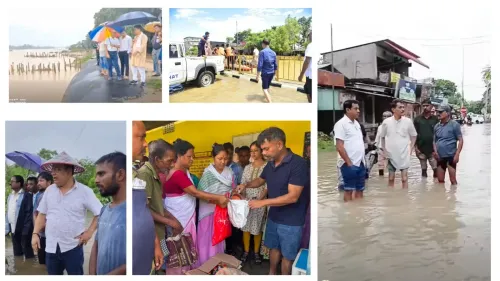
CM Himanta Leads Flood Relief Ops in Assam's Affected Zones
Synopsis
Assam Chief Minister Himanta Biswa Sarma on 20 July 2026 announced that relief and rescue operations are actively underway in flood-affected areas, with his administration pre-positioning medical supplies and aid for residents across every hit region during the peak monsoon season.
Key Takeaways
CM Himanta Biswa Sarma confirmed on 20 July 2026 that relief and rescue operations are ongoing in flood-affected areas of Assam .
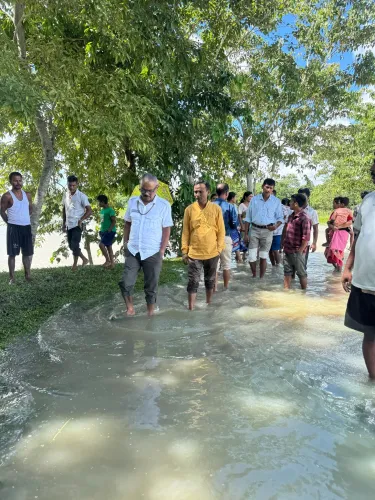
The Chief Minister stated he is physically present among affected communities to oversee the response.
Aid and medical supplies are being stockpiled and pre-positioned across all flood-hit regions of the state.
Assam faces annual Brahmaputra flooding during monsoon months, typically displacing lakhs of residents each year.
Operations involve coordination with NDRF and SDRF teams, consistent with the state's established disaster response framework.
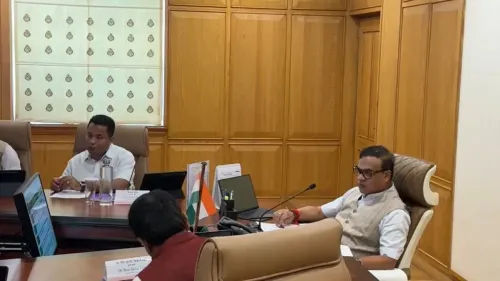
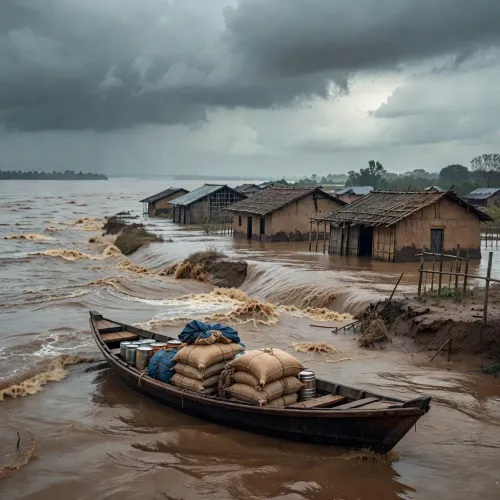
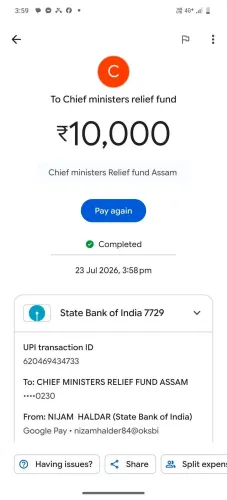
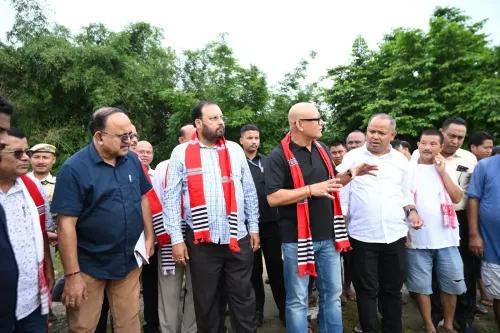
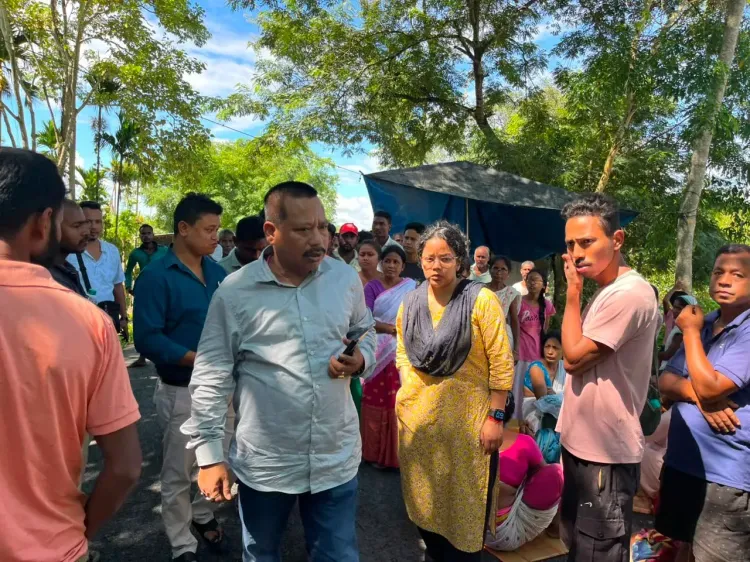
The post was shared with four images , indicating active on-ground engagement during the relief mission.
Assam Chief Minister Himanta Biswa Sarma on Monday, 20 July 2026, said that relief and rescue operations in flood-hit areas of the state are ongoing, with his administration working from within the affected communities to bring the situation under control. The Chief Minister stated that efforts to stockpile aid and medical supplies for residents across every affected region are continuing without pause.
Posting in Assamese, CM Sarma wrote: 'বান প্ৰভাৱিত অঞ্চলৰ ৰাইজৰ মাজত থাকি আমি পৰিস্থিতি নিয়ন্ত্ৰণৰ বাবে সাহায্য আৰু উদ্ধাৰ অভিযান অব্যাহত ৰাখিছোঁ' ['Staying among the people of flood-affected areas, we are continuing relief and rescue operations to bring the situation under control']. He added that ensuring relief and medical materials are pre-positioned for residents in every area remains a sustained priority.
Context
Assam is one of India's most flood-prone states, with the Brahmaputra river and its tributaries inundating large swathes of land during the monsoon months each year. The flooding typically peaks between June and August, displacing lakhs of residents, damaging crops, and cutting off road and rail connectivity across districts. The July 2026 flood event follows this well-established seasonal pattern.
CM Sarma's on-ground presence in affected zones signals direct executive oversight — a posture his administration has adopted during previous flood cycles as well. The post was accompanied by four images, indicating active field engagement by the Chief Minister or his team.
Policy Backdrop
Assam governments have coordinated annual flood-relief operations with the National Disaster Response Force (NDRF) and the State Disaster Response Force (SDRF) every monsoon season since at least the early 2000s. These operations typically involve rescue boat deployments, relief distribution camps, and mobile medical units reaching marooned villages.
The current administration under CM Sarma, in office since May 2021, has continued this framework, often supplementing state resources with requests for additional central forces and calamity relief funds from New Delhi. Pre-positioning of medical supplies — as specifically mentioned in this post — is a standard protocol aimed at preventing disease outbreaks in waterlogged areas.
Stakeholders and Impact
Flood-affected rural communities across Assam are the immediate stakeholders, with residents in low-lying districts along the Brahmaputra and its tributaries typically bearing the greatest burden. Agricultural households face crop loss, while those in remote areas risk being cut off from healthcare and food supplies for extended periods.
The Chief Minister's statement that aid and medical materials are being 'stockpiled' for 'every region' suggests a district-wide mobilisation rather than a response limited to a single area. NDRF and SDRF teams, state health department personnel, and local administrative machinery are the key operational actors in such relief missions.
What's Next
With peak monsoon weeks still ahead, the state government is expected to issue further updates on the scale of deployment, including any requests for additional NDRF battalions or release of funds from the State Disaster Response Fund (SDRF). Longer-term, the flood season typically renews political and policy attention on structural interventions — embankment reinforcement, river dredging, and early-warning systems — for the Brahmaputra basin.
The administration's ability to demonstrate visible, on-ground relief delivery will be closely watched by affected communities and opposition parties alike as the monsoon season progresses through July and August 2026.
Point of View
And visible executive leadership during peak inundation weeks carries significant electoral weight in rural districts. The emphasis on pre-positioned medical supplies points to a lesson absorbed from past outbreaks of waterborne disease in flood camps. Whether this season's response translates into durable infrastructure investment, or remains within the familiar cycle of annual relief, will be the longer test of the administration's flood governance record.
NationPress
19 Oct 2026
Frequently Asked Questions
What is the current flood situation in Assam in July 2026?
Assam is experiencing active flooding during the monsoon season as of 20 July 2026 , with Chief Minister Himanta Biswa Sarma confirming that relief and rescue operations are underway across affected areas. The exact number of districts or people affected has not been officially specified in this update.
What relief measures is the Assam government taking for flood victims?
The Assam government is conducting ongoing rescue operations and pre-positioning aid and medical supplies across all flood-hit regions. CM Sarma stated that his administration is working from within affected communities to bring the situation under control.
Which forces help in Assam flood rescue operations?
Assam's flood rescue operations are typically coordinated with the National Disaster Response Force (NDRF) and the State Disaster Response Force (SDRF) , alongside state health and administrative machinery. These deployments have been a standard feature of the state's monsoon response for over two decades.
Why does Assam flood every year?
Assam floods annually due to heavy monsoon rainfall and the overflow of the Brahmaputra river and its numerous tributaries. The state's low-lying geography and the Brahmaputra's high silt load make large-scale inundation a near-certain seasonal occurrence between June and August.
Who is Himanta Biswa Sarma?
Himanta Biswa Sarma is the Chief Minister of Assam , in office since May 2021 , and a senior leader of the BJP . He also serves as the convenor of the North-East Democratic Alliance (NEDA) , a coalition of BJP-aligned parties across northeastern India.