CM Dhami credits PM Modi for India's rapid development
Synopsis
Uttarakhand Chief Minister Pushkar Singh Dhami marked twelve years of the Garib Kalyan welfare framework on 11 June 2026, crediting Prime Minister Narendra Modi's leadership for India's accelerated development and underscoring the state's alignment with central welfare programmes.
Key Takeaways
The Chief Minister's Office of Uttarakhand posted CM Dhami's statement on 11 June 2026 marking the #12YearsofGaribKalyan milestone.
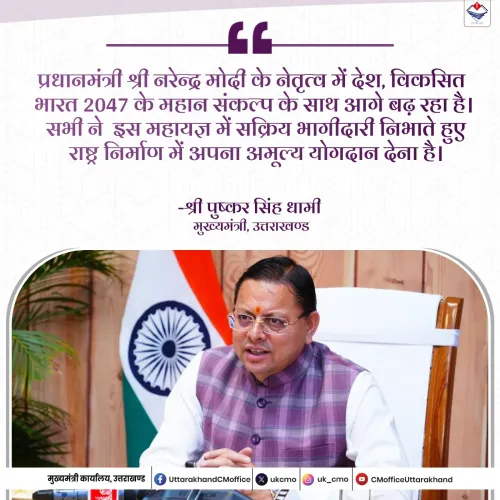
CM Dhami stated that India is 'developing rapidly' under PM Narendra Modi 's leadership.
The Garib Kalyan welfare brand encompasses schemes including PMGKAY , Direct Benefit Transfer , housing, and sanitation programmes launched since May 2014 .
PMGKAY , the flagship free food-grain scheme, was first launched in March 2020 and extended multiple times through 2024 .
Uttarakhand has consistently aligned state administration with centrally sponsored Garib Kalyan schemes since 2021 .
With Uttarakhand assembly elections due in 2027 , welfare messaging is expected to intensify in the months ahead.
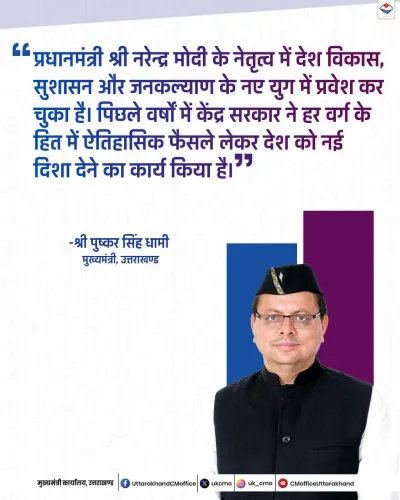
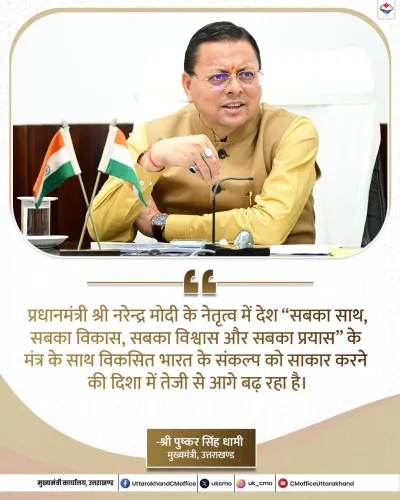
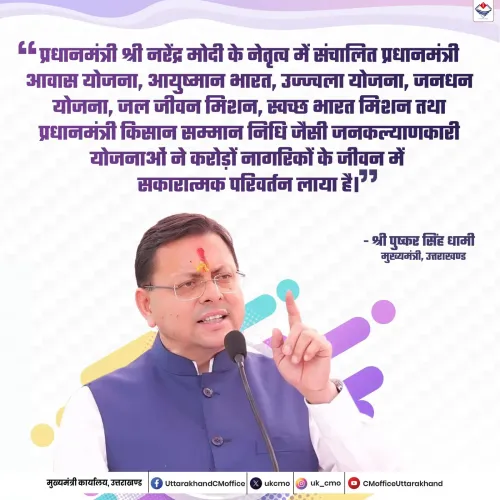
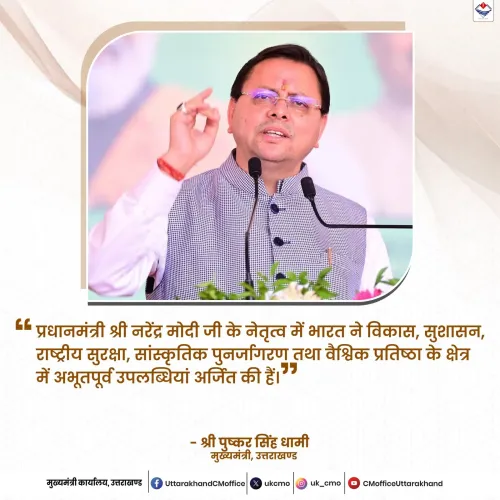
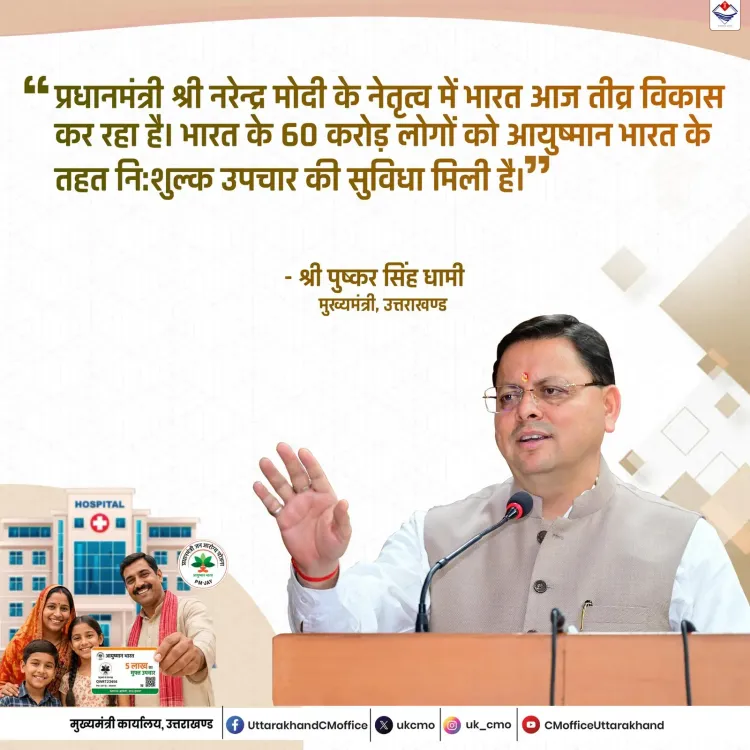
The Chief Minister's Office of Uttarakhand on Thursday, 11 June 2026 shared a statement by Chief Minister Pushkar Singh Dhami crediting Prime Minister Narendra Modi's leadership for accelerating India's development, marking the occasion of the #12YearsofGaribKalyan milestone.
Context
CM Dhami's statement — 'प्रधानमंत्री श्री नरेन्द्र मोदी के नेतृत्व में भारत आज तीव्र विकास कर रहा है' ('Under the leadership of Prime Minister Shri Narendra Modi, India is today developing rapidly') — was posted by the official CMO account alongside the hashtag commemorating twelve years of the Garib Kalyan welfare framework. The post was accompanied by one image and carried no specific programme statistics.
The phrase 'Garib Kalyan' (welfare of the poor) has served as the overarching brand for a cluster of central government welfare initiatives since 2014, covering food security, housing, sanitation, and direct benefit transfers. The twelve-year mark falls in June 2026, counting from the formation of the first Modi-led government in May 2014.
Policy Backdrop
The centrepiece of the Garib Kalyan architecture is the Pradhan Mantri Garib Kalyan Anna Yojana (PMGKAY), a free food-grain programme first launched in March 2020 and subsequently extended multiple times through 2024. The scheme provides subsidised or free grain to hundreds of millions of beneficiaries under the National Food Security Act.
Alongside PMGKAY, the broader Garib Kalyan umbrella encompasses the Direct Benefit Transfer (DBT) architecture introduced from 2014 onward, which routes subsidies and cash transfers directly to beneficiaries' bank accounts, reducing leakage. Uttarakhand, a BJP-governed Himalayan state, has aligned its state administration with these centrally sponsored schemes, highlighting coverage under food security, housing, and sanitation programmes.
Stakeholders and Impact
The primary beneficiaries of the Garib Kalyan framework are economically weaker sections and rural households across India, including those in Uttarakhand's remote hill districts where physical delivery of welfare has historically been challenging. State-level convergence with central schemes has been a recurring theme in CM Dhami's public communications since he took office in 2021.
Such statements also carry a political dimension: ruling-party state governments routinely issue messaging that credits the central welfare architecture for improvements in poverty metrics, reinforcing alignment between state and central leadership ahead of electoral cycles.
What's Next
With Uttarakhand assembly elections due in 2027, welfare delivery and the extension of schemes like PMGKAY are expected to remain central to the state government's public communication. Any fresh budget allocation for Garib Kalyan programmes or new state-level convergence announcements will be closely watched as indicators of how the BJP plans to frame its welfare record heading into the next electoral cycle.
Point of View
Where a BJP-governed state amplifies the Centre's welfare narrative on a symbolic anniversary. The twelve-year Garib Kalyan milestone is being deployed as a campaign asset ahead of the 2027 Uttarakhand elections, framing central welfare architecture as a shared achievement. This pattern of state-level endorsement reinforces the BJP's broader strategy of making welfare delivery — rather than ideological messaging alone — the primary electoral pitch in hill states. The post signals that Uttarakhand's administration will continue to anchor its public communications to central scheme milestones as the election cycle draws closer.
NationPress
22 Sept 2026
Frequently Asked Questions
What is Garib Kalyan and why is 12 years being celebrated?
'Garib Kalyan' means 'welfare of the poor' and refers to the cluster of central government welfare schemes launched after PM Narendra Modi came to power in May 2014. The 12-year mark falls in June 2026, commemorating a decade-plus of programmes covering food security, housing, sanitation, and direct benefit transfers.
What did CM Pushkar Singh Dhami say about PM Modi?
CM Dhami stated that 'under the leadership of Prime Minister Shri Narendra Modi, India is today developing rapidly,' crediting the Prime Minister's governance for the country's accelerated development on the Garib Kalyan anniversary.
What is the Pradhan Mantri Garib Kalyan Anna Yojana (PMGKAY)?
PMGKAY is a free food-grain scheme launched in March 2020 to provide subsidised or free grain to hundreds of millions of beneficiaries under the National Food Security Act. It has been extended multiple times and is the flagship programme under the Garib Kalyan umbrella.
How has Uttarakhand implemented Garib Kalyan schemes?
Uttarakhand, governed by the BJP, has aligned its state administration with centrally sponsored Garib Kalyan schemes since 2021, highlighting coverage under food security, housing, and sanitation programmes, particularly in its remote hill districts.
What is the significance of this statement ahead of Uttarakhand elections?
Uttarakhand is due for assembly elections in 2027. Statements linking the state's progress to central welfare schemes are part of a broader BJP strategy to frame welfare delivery as a key electoral achievement in the run-up to the polls.