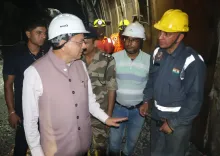
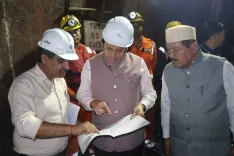
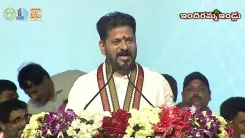
CM Dhami Orders War-Footing Rescue in Chamoli THDC Tunnel Accident
Synopsis
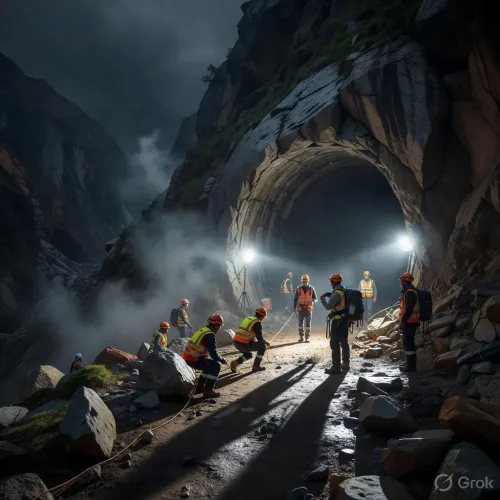
Chief Minister Pushkar Singh Dhami reached Uttarakhand's Disaster Operations Centre late on 14 August 2026 and ordered a war-footing rescue operation after a tunnel accident involving THDC India Ltd in Chamoli district, deploying state and central agencies to the site.
Key Takeaways
CM Pushkar Singh Dhami personally arrived at the Disaster Operations Centre late at night on 14 August 2026 to oversee the emergency response.
The accident occurred at a THDC India Ltd tunnel in Chamoli district , Uttarakhand's Garhwal region.
Dhami ordered rescue operations to be conducted on a war footing ( yuddha-star par ), indicating maximum-priority mobilisation.
Uttarakhand's Disaster Operations Centre was established and upgraded after the 2013 Kedarnath floods for round-the-clock coordination.
Chamoli has a history of landslides, flash floods, and construction incidents tied to hydroelectric infrastructure in fragile Himalayan terrain.
The incident may prompt a fresh safety review of THDC's tunnel projects in the state by state or central agencies.
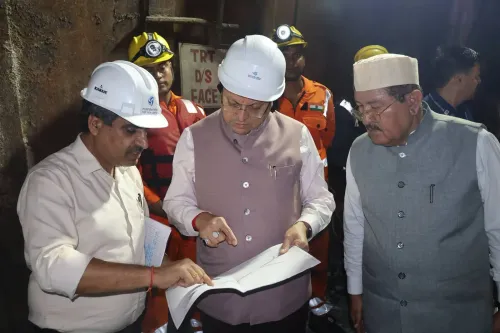
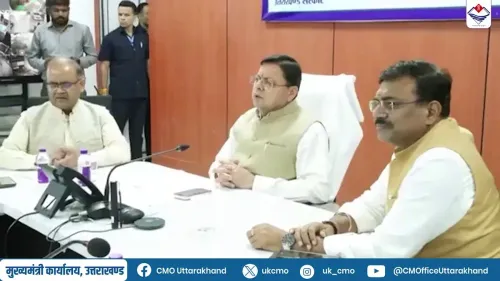
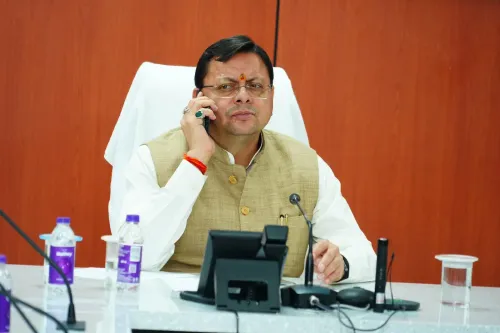
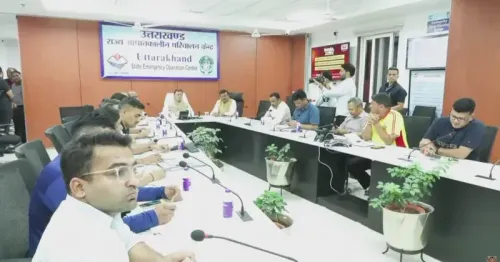
Late into the night, Chief Minister Pushkar Singh Dhami arrived at the Disaster Operations Centre in Uttarakhand and issued orders for a war-footing rescue operation following a tunnel accident involving THDC India Ltd in Chamoli district. The Chief Minister's Office confirmed the intervention on 14 August 2026, signalling that the state's top leadership was directly overseeing the emergency response.
Dhami at the Control Room: What the Late-Night Visit Signals
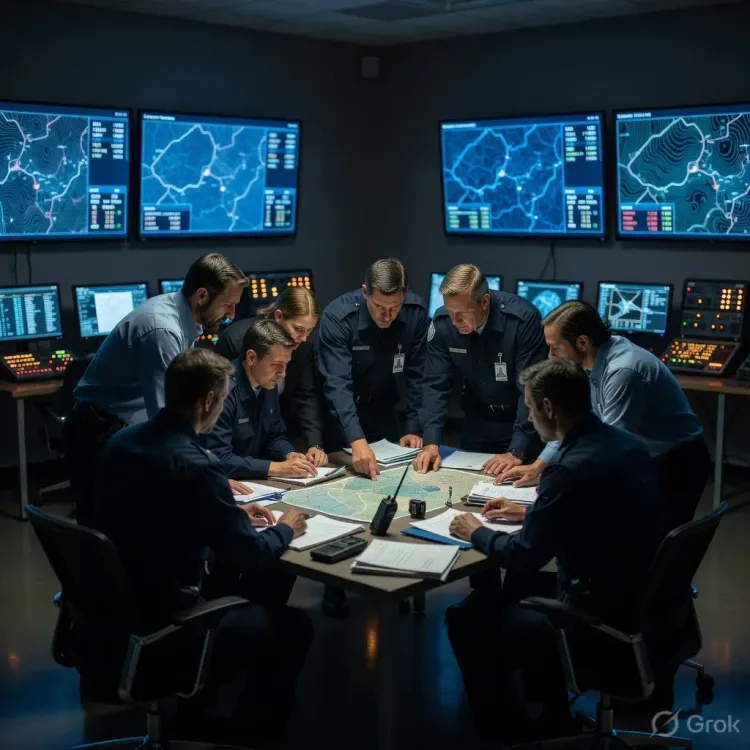
Arriving at the disaster operations centre well past midnight, CM Dhami directed agencies to conduct the rescue mission at maximum urgency — the Hindi phrase used was yuddha-star par (on a war footing), a term that in Indian administrative language signals the highest level of mobilisation. His physical presence at the coordination hub, rather than a remote directive, underscores the gravity the state government has assigned to the incident.
The Disaster Operations Centre in Uttarakhand was upgraded significantly after the 2013 Kedarnath floods, when the absence of real-time coordination proved catastrophic. It now functions as a round-the-clock hub connecting state agencies, district administrations, and central rescue forces during emergencies.
THDC Tunnel in Chamoli: A Familiar Fault Line
THDC India Ltd is a central public sector undertaking with a significant footprint in Uttarakhand's hydroelectric infrastructure, including tunnel construction in the ecologically fragile Garhwal Himalayan belt. Chamoli district sits at the heart of this network — and at the heart of the state's recurring disaster vulnerability. The district has seen landslides, flash floods, and construction-related incidents repeatedly, a consequence of aggressive infrastructure development in geologically unstable terrain.
Tunnel accidents at hydro-project sites in Uttarakhand have drawn national attention before. The Silkyara tunnel collapse of 2023, which trapped 41 workers for 17 days, became a landmark rescue operation and exposed systemic gaps in worker safety protocols at such sites. Whether this latest THDC incident involves trapped workers or structural failure, the pattern of risk is well-established.
Rescue Machinery and What Comes Next
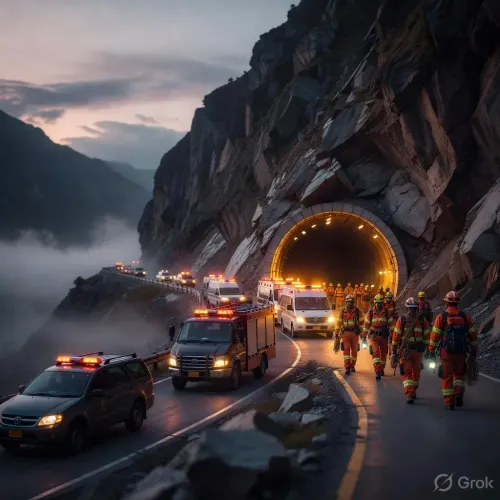
State Disaster Response Force teams, district administration units, and likely central agencies are expected to be part of the ground operation. The immediate priority is the safety of any workers or personnel at the tunnel site. Beyond the rescue itself, the incident will likely renew calls for a safety audit of THDC's tunnel projects in the region — a conversation Uttarakhand's administration has faced repeatedly but has yet to resolve with lasting structural reform.
In a state where hydroelectric revenue and Himalayan geology exist in permanent tension, every tunnel accident is both an emergency and a reckoning. The question after the rescue concludes will be the same one it always is: what changes so this does not happen again.
Point of View
Where disaster response is a core test of governance credibility, visible leadership during emergencies has become a defining metric for chief ministers. The THDC tunnel incident lands in a broader national conversation about worker safety at hydro-infrastructure sites, a conversation that intensified after the Silkyara rescue of 2023 but produced limited regulatory follow-through. For the BJP government in Dehradun, managing both the optics and the operational reality of this rescue will matter: Chamoli is not just a district, it is a symbol of the state's unresolved tension between development ambition and ecological fragility. How quickly and safely the rescue concludes — and whether a credible safety audit follows — will define the political aftermath.
NationPress
14 Aug 2026
Frequently Asked Questions
What happened in the THDC tunnel accident in Chamoli?
A tunnel accident occurred at a THDC India Ltd project site in Chamoli district , Uttarakhand, prompting Chief Minister Pushkar Singh Dhami to order a war-footing rescue operation late on 14 August 2026 . Specific details of the scale and cause are subject to ongoing official updates.
Who is THDC India Ltd and what does it do in Uttarakhand?
THDC India Ltd is a central public sector undertaking focused on hydroelectric power development. It operates multiple projects in Uttarakhand, including tunnel infrastructure in the Garhwal Himalayan region.
What is the Disaster Operations Centre in Uttarakhand?
Uttarakhand's Disaster Operations Centre is a round-the-clock coordination hub established and upgraded after the 2013 Kedarnath floods . It connects state agencies, district administrations, and central rescue forces during emergencies.
Why is Chamoli prone to tunnel and construction accidents?
Chamoli district lies in the geologically fragile Garhwal Himalayan belt, where landslides, flash floods, and ground instability are frequent. Aggressive hydroelectric infrastructure development in the area has repeatedly led to construction-related incidents.
What does 'war footing rescue' mean in Indian administration?
The phrase yuddha-star par (war footing) in Indian administrative language signals the highest level of urgency and mobilisation — all available resources are deployed without delay, and normal procedural timelines are compressed.