CM Manik Saha Pays Tribute on Partition Horrors Remembrance Day
Synopsis
On Partition Horrors Remembrance Day, Tripura Chief Minister Dr. Manik Saha offered a solemn tribute in Bengali to all who lost family and homeland in the 1947 division of India, connecting Tripura's lived partition history to the national day of remembrance instituted in 2021.
Key Takeaways
Manik Saha posted a tribute in Bengali on 14 August marking Partition Horrors Remembrance Day.
He described the 1947 Partition as a 'blood-soaked chapter of horror scripted behind closed doors' that divided an ancient civilisation.
The Union Government declared 14 August as Partition Horrors Remembrance Day in 2021 to honour partition victims and preserve collective memory.
Tripura was directly affected by partition-era refugee movements, giving the state's leadership a historically grounded voice on the occasion.
The tribute is part of an annual national pattern of official remembrance, archival releases, and survivor testimony on this date.
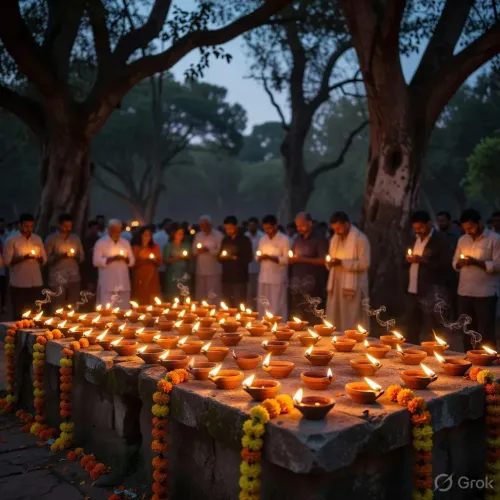
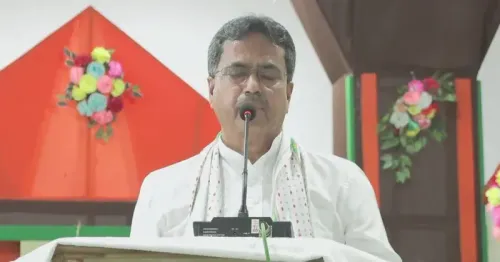
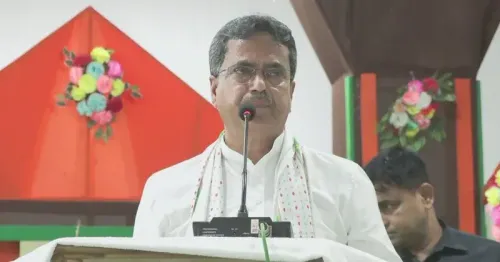
Seventy-nine years after the bloodiest border was drawn in modern history, Tripura Chief Minister Dr. Manik Saha paused on 14 August to honour those who lost everything — family, home, and homeland — in the cataclysm of India's 1947 Partition.
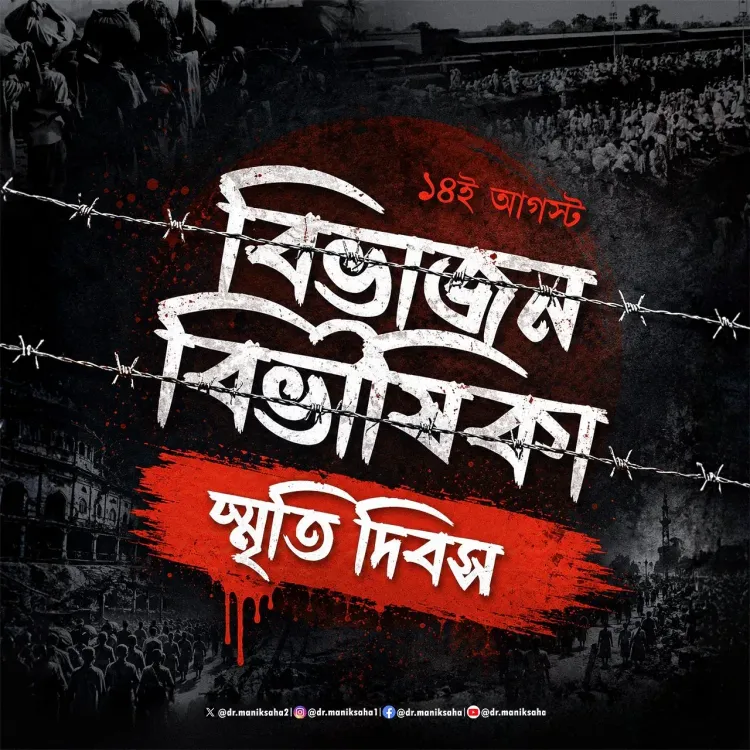
Writing in Bengali, Dr. Saha described the Partition as a 'blood-soaked chapter of horror, scripted behind closed doors, that tore through the chest of an age-old civilisation.' He paid tribute to every Indian who lost loved ones or was uprooted from their native soil, marking the occasion of Bibhajon Bibhishika Smriti Diwas — Partition Horrors Remembrance Day.
A Day Born from Deliberate Memory
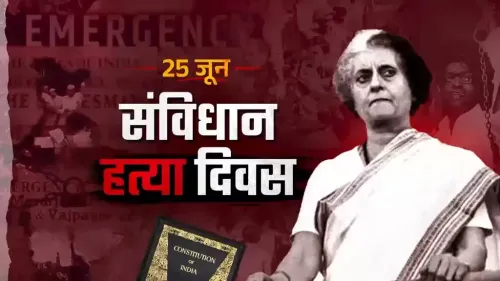
The observance is no accident of the calendar. In 2021, the Union Government formally declared 14 August as Partition Horrors Remembrance Day, choosing the eve of Independence Day to ensure the trauma of division is never buried beneath the celebrations of freedom. The intent was explicit: to record the human cost of one of the largest forced migrations in recorded history, one that displaced an estimated 10–20 million people and left hundreds of thousands dead.
The date carries a particular weight — it is simultaneously the day Pakistan came into being and the night before India declared independence, a collision of birth and grief that the remembrance day holds in tension.
Why Tripura's Voice Carries Extra Resonance
Tripura is not a bystander in this history. The northeastern state, which shares a long border with Bangladesh, absorbed successive waves of partition refugees and witnessed profound demographic and cultural shifts as a direct consequence of 1947. For communities in Tripura, the Partition is not a textbook event — it is living memory, carried in family stories, in the names of villages left behind, in the Bengali language itself.
Dr. Saha's tribute, delivered in Bengali, speaks directly to that inheritance. His phrase 'khandita matribhumir khatchinha' — 'the wound-marks of a divided motherland' — is the language of people who felt the cut personally, not abstractly.
Annual Observance, Enduring Wound
Each year on this date, state and central government leaders issue tributes, archives are highlighted, and survivor testimonies are amplified. The pattern reflects a deliberate national project: to build institutional memory around an event that, for decades, was processed largely in silence. Dr. Saha's post, hashtagged #বিভাজন_বিভীষিকা and #Partition_Horrors, joins that growing record.
The wound of 1947 does not close. What changes, year by year, is how loudly the nation chooses to acknowledge it.
Point of View
Signalling to Tripura's large Bengali-speaking population that the ruling dispensation holds their partition inheritance as a matter of state concern, not just national policy. The BJP's institutionalisation of 14 August as Partition Horrors Remembrance Day in 2021 created a durable annual platform for leaders in border states to frame the party as the custodian of undivided India's memory. For a state like Tripura — where the demographic and political consequences of 1947 remain live issues — that framing carries electoral as well as emotional weight. The consistency of these tributes year on year is building a new layer of official historical narrative around partition that sits alongside, and sometimes in tension with, Independence Day celebrations.
NationPress
29 Sept 2026
Frequently Asked Questions
What is Partition Horrors Remembrance Day?
Partition Horrors Remembrance Day is observed on 14 August each year to honour the millions of Indians who suffered, were displaced, or lost their lives during the 1947 Partition of India . The Union Government declared it in 2021 .
Why did CM Manik Saha post about Partition Horrors Day?
Dr. Manik Saha , Chief Minister of Tripura, posted a tribute in Bengali to mark Partition Horrors Remembrance Day, paying respects to all who lost family or homeland in 1947. Tripura was directly shaped by partition-era refugee movements.
Why is 14 August chosen for Partition Horrors Remembrance Day?
14 August is the eve of India's Independence Day and the date Pakistan was created in 1947 . The government chose it so the human cost of partition is remembered alongside the celebration of freedom.
How was Tripura affected by the 1947 Partition?
Tripura , a northeastern state bordering Bangladesh, received large waves of partition refugees and experienced significant demographic and cultural shifts as a direct result of the 1947 division .
What did Manik Saha say about the Partition?
Dr. Saha described the Partition as a 'blood-soaked chapter of horror scripted behind closed doors' that 'tore through the chest of an age-old civilisation,' and offered his 'humble tribute' to all who lost loved ones or their native soil.