CM Manik Saha Speaks at Partition Horrors Remembrance Day Event in Tripura
Synopsis
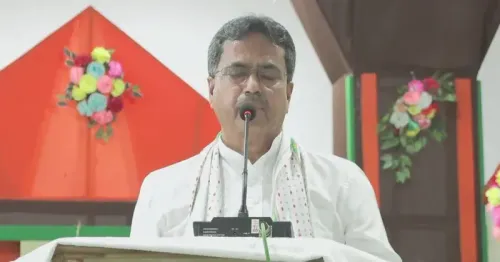
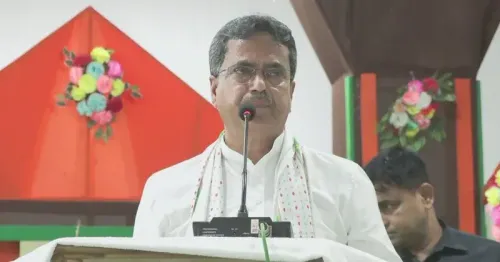
Tripura Chief Minister Dr. Manik Saha addressed the Sadar Shahar District's Partition Horrors Remembrance Day event on 14 August 2026, marking a national observance that holds particular weight in Tripura — a state whose identity was shaped by 1947 Partition refugees.
Key Takeaways
Manik Saha spoke at the Sadar Shahar District 's Partition Horrors Remembrance Day event on 14 August 2026 .
The event is part of a national observance declared by the Government of India in 2021 to honour victims of the 1947 Partition .
Tripura has a large Bengali-speaking population descended from Partition-era refugees, making the day especially significant in the state.
State-level observances have been held annually since 2021 , connecting regional Partition histories to a national narrative of unity.
The Chief Minister's live address signals the Tripura government's active commitment to the commemoration, beyond mere ceremony.
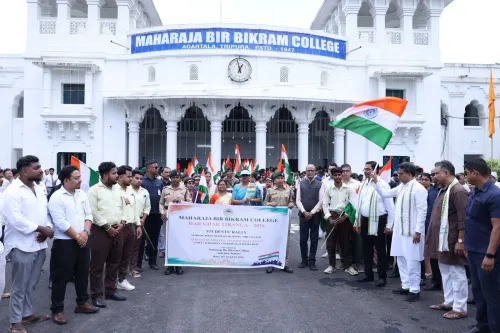
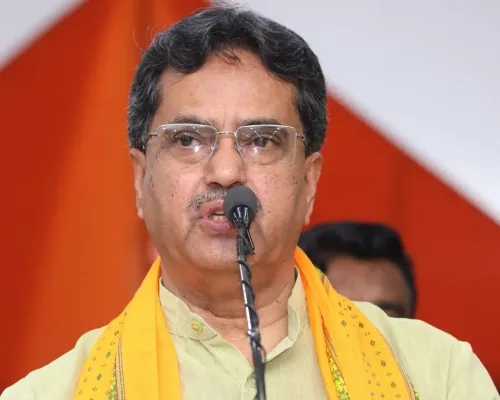
On the eve of India's 79th Independence Day, Tripura Chief Minister Dr. Manik Saha addressed a solemn gathering at the Sadar Shahar District's observance of Bibhajan Bibhishika Smriti Dibas — Partition Horrors Remembrance Day — on 14 August 2026, lending the state's highest voice to a day of national mourning and memory.
A Day Rooted in 1947's Deepest Wounds
Every year on 14 August, India pauses to remember one of modern history's most traumatic ruptures. The Government of India declared 14 August as Partition Horrors Remembrance Day in 2021, institutionalising grief that millions of families — particularly in Bengal, Punjab, and the Northeast — had carried privately for generations. The observance is a deliberate act of national reckoning: to name the suffering, not erase it.
For Tripura, this day carries a weight that is not abstract. The state's demographic and cultural identity was reshaped by waves of Partition refugees who crossed into the region from what became East Pakistan — and later Bangladesh — in 1947 and in the years that followed. The Bengali-speaking communities of Tripura are, in many ways, living testimony to that displacement.
Why Tripura's Voice in This Observance Matters
Chief Minister Dr. Manik Saha, who took office in May 2022, addressed the district-level event in what was a live public address — a signal that the state government treats this commemoration as substantive, not ceremonial. Since 2021, state governments across India have been encouraged to hold local programmes that connect regional histories of Partition to the broader national narrative of unity forged through loss.
Tripura's participation is particularly resonant: few states carry the Partition's demographic imprint as visibly. The families in the audience at Sadar Shahar are, in many cases, descendants of those who arrived with nothing, rebuilding lives on the eastern frontier of a newly independent nation.
Remembrance as a Political and Moral Commitment
The BJP-led central government's 2021 decision to formalise this day was framed as restoring dignity to victims long overlooked in official history. State-level observances — especially in the Northeast — extend that intent into the communities most directly shaped by Partition's aftermath. Dr. Saha's presence at the Sadar Shahar event underscores the Tripura government's alignment with that framework, anchoring remembrance in the very geography where its consequences were most acutely felt.
Seventy-nine years on, the wounds of 1947 are still being named aloud. That, on its own, is the point.
Point of View
Giving the region's displacement its due place in the official historical record. Whether these observances translate into concrete policy support for affected communities remains the more substantive question.
NationPress
28 Sept 2026
Frequently Asked Questions
What is Partition Horrors Remembrance Day?
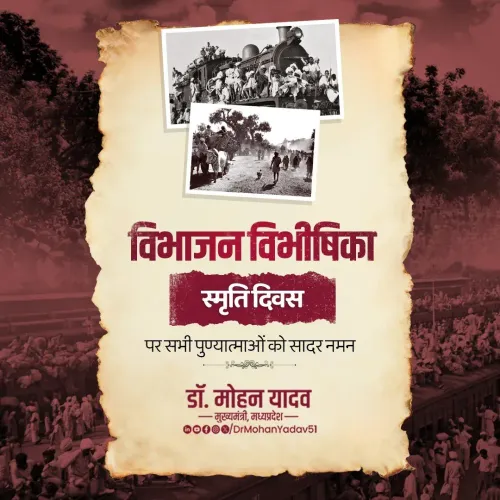
Partition Horrors Remembrance Day is observed every year on 14 August to honour the victims of the 1947 Partition of India . The Government of India declared it in 2021 to ensure the human cost of Partition is formally remembered as part of national history.
Why does Tripura observe Partition Horrors Remembrance Day?
Tripura received large numbers of refugees from what became East Pakistan during and after the 1947 Partition . Its Bengali-speaking population is closely tied to that history, making the observance especially meaningful in the state.
What did CM Manik Saha do on 14 August 2026?
Tripura Chief Minister Dr. Manik Saha delivered a live address at the Sadar Shahar District 's Partition Horrors Remembrance Day event on 14 August 2026 .
When was Partition Horrors Remembrance Day first observed?
The observance was first held in 2021 , after the Government of India formally declared 14 August as Partition Horrors Remembrance Day.
What is Bibhajan Bibhishika Smriti Dibas?
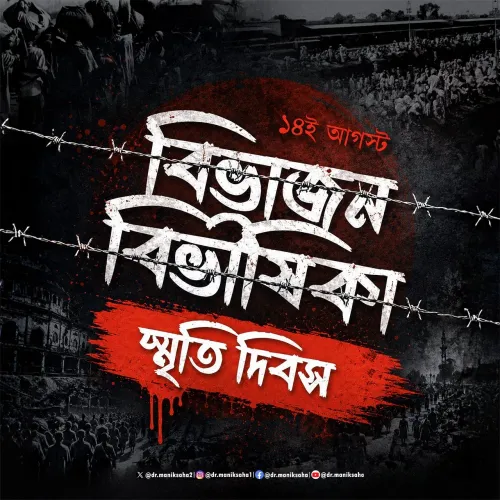
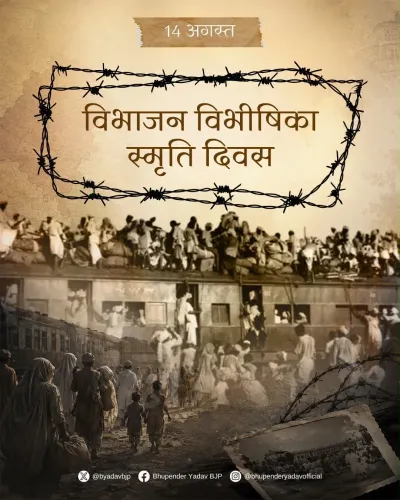
Bibhajan Bibhishika Smriti Dibas is the Bengali name for Partition Horrors Remembrance Day — bibhajan meaning partition, bibhishika meaning horror, and smriti dibas meaning day of remembrance.