CM Dhami calls for unified health family in Uttarakhand
Synopsis
Chief Minister Pushkar Singh Dhami on 3 July 2026 called for the Uttarakhand government, medical institutions, the IMA, and civil society to operate as a unified health family, aiming to maximise healthcare reach across the hill state.
Key Takeaways
CM Pushkar Singh Dhami called for a 'shared health family' comprising the state government, medical institutions, the IMA , and civil society.
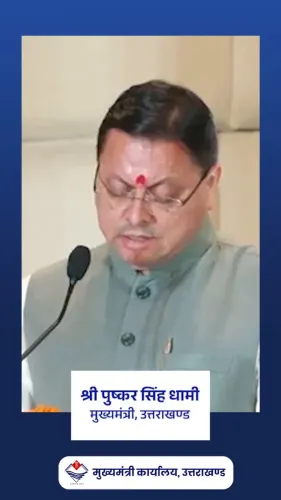
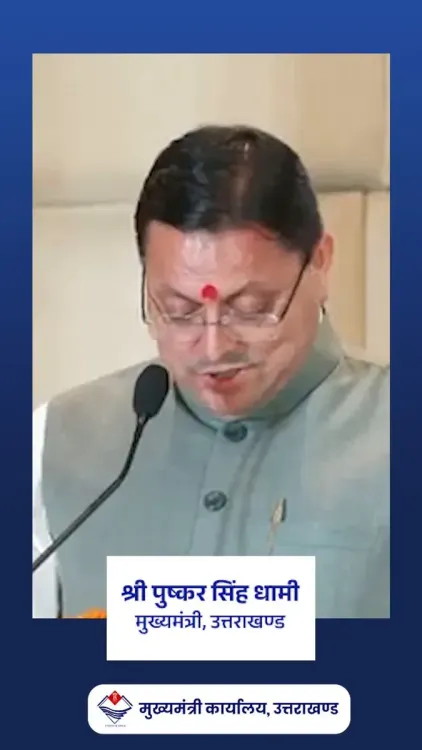
The appeal was made on 3 July 2026 and shared via the official Chief Minister's Office account on X, accompanied by a video.
Uttarakhand's mountain terrain creates persistent healthcare access gaps, making multi-stakeholder coordination especially critical.
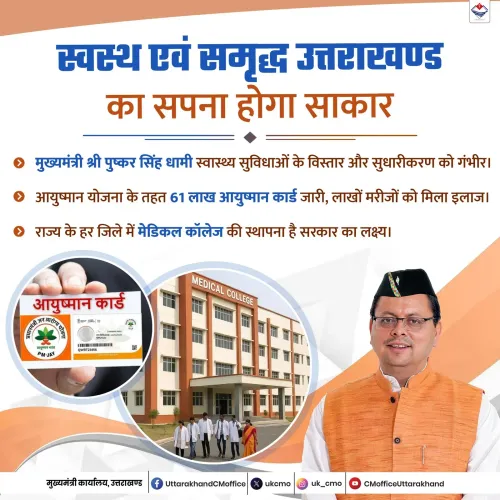
The state has implemented Ayushman Bharat PMJAY since 2018 and operates under the National Health Mission framework to strengthen primary care.
AIIMS Rishikesh serves as the state's primary tertiary care anchor, but rural and high-altitude areas remain underserved.
Formal IMA partnership could enable structured private-sector participation in public health programmes, audits, and rural outreach.
Chief Minister Pushkar Singh Dhami of Uttarakhand on Friday, 3 July 2026, called for the state government, medical institutions, the Indian Medical Association (IMA), and civil society to function as a single, unified health family — arguing that such coordination would extend the benefits of the state's healthcare system to the maximum number of people.
Context
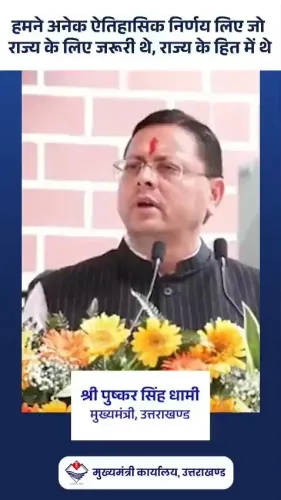
Dhami's remarks, shared by the official Chief Minister's Office account on X, quoted him directly: 'राज्य सरकार, चिकित्सा संस्थान, इंडियन मेडिकल एसोसिएशन और समाज एक साझा स्वास्थ्य परिवार के रूप में काम करें तो उत्तराखण्ड की स्वास्थ्य व्यवस्था का लाभ ज्यादा से ज़्यादा लोगों को मिल सकता है।' ('If the state government, medical institutions, the Indian Medical Association, and society work together as a shared health family, the benefits of Uttarakhand's healthcare system can reach the maximum number of people.')
The statement signals an intent to move beyond siloed public administration toward a multi-stakeholder model for healthcare delivery in the hill state. The post was accompanied by a video, suggesting the remarks were drawn from a formal address or meeting.
Policy Backdrop
Uttarakhand's dispersed mountain geography has long complicated uniform healthcare delivery. The state has participated in the Ayushman Bharat Pradhan Mantri Jan Arogya Yojana since 2018, which extended health insurance coverage to eligible families, while the National Health Mission framework since 2013 has supported strengthening of primary health centres and community outreach across the state.
The establishment of AIIMS Rishikesh added a significant tertiary care and medical education anchor for the region. Yet access gaps persist, particularly for residents in remote valleys and higher-altitude zones, where professional medical presence remains thin. Dhami's call for IMA integration into the public health architecture is consistent with the National Health Policy 2017's emphasis on multi-stakeholder models for achieving universal health coverage.
Stakeholders and Impact
The Indian Medical Association, as the national body of organised medical professionals, holds significant influence over doctor deployment, ethical standards, and capacity-building programmes. A formal partnership between the IMA and the Uttarakhand government could unlock structured participation of private practitioners in public health programmes, facility audits, and rural outreach camps.
For Uttarakhand's rural and semi-urban communities — many of whom depend on government health centres as their primary point of care — such coordination could translate into better-staffed facilities, shorter referral chains, and more consistent specialist availability. Civil society's inclusion in Dhami's framing also hints at community health worker networks and local bodies playing a complementary role.
What's Next
Observers will watch for concrete follow-through: state health department circulars, memoranda of understanding with the IMA, or announcements at upcoming budget sessions that formalise the partnership Dhami has articulated. The Chief Minister's framing sets a political expectation that the administration will now need to translate into operational structures. If institutionalised, the model could serve as a template for other hill states grappling with similar terrain-driven healthcare access challenges.
Point of View
Reducing the burden on an under-resourced public system. For a state like Uttarakhand, where geography is an inherent constraint, institutionalising IMA involvement is a pragmatic necessity, not merely an aspiration. The real test will be whether this rhetoric translates into binding agreements and measurable service delivery improvements before the next electoral cycle.
NationPress
1 Oct 2026
Frequently Asked Questions
What did CM Pushkar Singh Dhami say about Uttarakhand's health system?
CM Dhami said that if the state government, medical institutions, the Indian Medical Association, and society work together as a shared health family, the benefits of Uttarakhand's healthcare system can reach the maximum number of people.
What is the role of the IMA in Uttarakhand's healthcare?
The Indian Medical Association is a national body of organised doctors that can contribute to Uttarakhand's public health through structured participation in outreach programmes, facility audits, and professional capacity-building alongside government institutions.
What healthcare schemes are active in Uttarakhand?
Uttarakhand participates in the Ayushman Bharat Pradhan Mantri Jan Arogya Yojana since 2018 and operates under the National Health Mission framework, which supports primary health centres and community outreach across the state.
Why is healthcare delivery difficult in Uttarakhand?
Uttarakhand's dispersed mountain geography and high-altitude terrain make uniform healthcare delivery challenging, limiting access to specialists and referral facilities for many rural and remote communities.
What could a government-IMA partnership mean for Uttarakhand residents?
A formal partnership could bring better-staffed health facilities, structured private-doctor participation in public programmes, and more consistent specialist availability, particularly for underserved rural and hill communities.