CM Dhami shares Ram devotional verse, invokes Jai Shri Ram
Synopsis
Uttarakhand Chief Minister Pushkar Singh Dhami posted a devotional Ramcharitmanas couplet on 9 July 2026, invoking Lord Ram's grace. The post reflects BJP's broader pattern of Hindu cultural signalling by chief ministers, aligned with Uttarakhand's pilgrimage-centred identity and governance.
Key Takeaways
CM Pushkar Singh Dhami posted a Ramcharitmanas couplet on 9 July 2026 , invoking Lord Ram's blessings.
The verse — 'Ja par kripa Ram ki hoi, ta par kripa karahim sab koi' — is attributed to the saint-poet Tulsidas .
The post included a video and the salutation 'Jai Shri Ram', consistent with BJP 's cultural communication style.
Uttarakhand is home to the Char Dham pilgrimage circuit, making religious identity central to both state politics and economy.
BJP governments in Uttarakhand have intensified pilgrimage infrastructure investment since 2016–17 , a thrust continued under Dhami since 2021 .
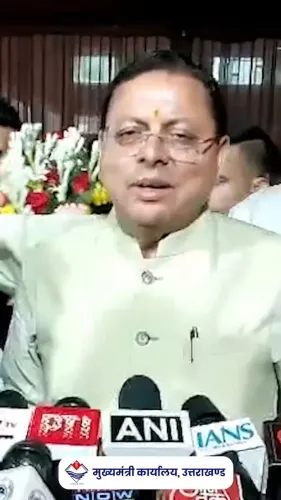
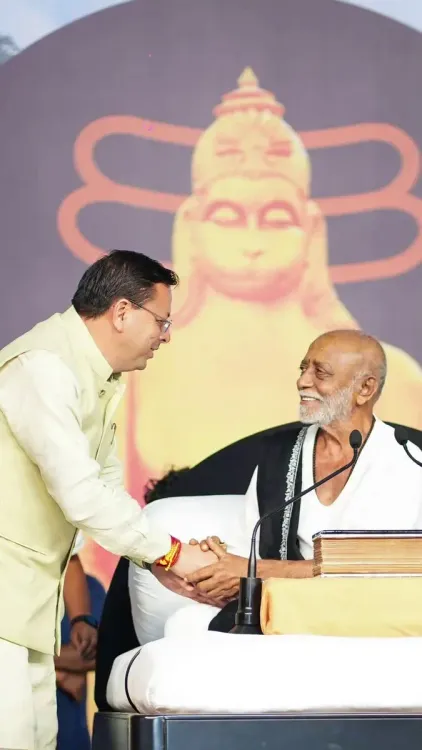
Uttarakhand Chief Minister Pushkar Singh Dhami shared a devotional couplet from the Ramcharitmanas on Thursday, 9 July 2026, invoking the blessings of Lord Ram in a post that reflects a recurring pattern of Hindu cultural signalling by BJP chief ministers on social media.
Context
The couplet shared by CM Dhami — 'Ja par kripa Ram ki hoi, ta par kripa karahim sab koi' — translates as: 'One upon whom Ram bestows grace, upon that person all others too bestow grace.' The verse is drawn from the Ramcharitmanas, the 16th-century devotional epic composed by the saint-poet Tulsidas, which holds deep reverence across northern and central India. The post was accompanied by a video and the salutation 'Jai Shri Ram', a phrase widely associated with BJP's Hindu-majority cultural outreach.
Such devotional posts by CM Dhami are not isolated; he regularly uses his official social media presence to share verses, prayers, and religious greetings tied to the Hindu calendar and broader cultural milestones. The specific occasion prompting this 9 July post has not been confirmed from available information.
Policy Backdrop
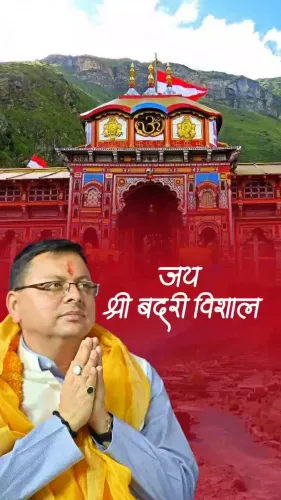
Uttarakhand's identity as a state is deeply intertwined with Hindu pilgrimage. The state is home to the Char Dham circuit — comprising Badrinath, Kedarnath, Gangotri, and Yamunotri — which draws millions of devotees annually and forms a cornerstone of the state's economy. Since 2016–17, successive BJP governments in Uttarakhand have intensified investment in pilgrimage infrastructure, a thrust that has continued and expanded under Dhami, who took office in 2021.
The promotion of religious tourism and the assertion of Uttarakhand's Hindu-Himalayan cultural identity have been consistent policy and communication pillars for Dhami's administration. Devotional social media posts complement this on-ground policy orientation, reinforcing the state's brand as a spiritual destination.
Stakeholders and Impact
The primary audience for such messaging is Uttarakhand's large Hindu devotee base, as well as pilgrims and religious tourists from across India who view the state as a sacred geography. Workers in the pilgrimage economy — including hoteliers, priests, transport operators, and local vendors — benefit directly when the state's spiritual identity is kept prominent in public discourse.
For the broader BJP ecosystem, such posts by a sitting chief minister serve as cultural markers that reinforce the party's ideological positioning ahead of electoral cycles and during periods of heightened religious activity in the Hindu calendar.
What's Next
Observers of Uttarakhand politics and religious tourism will watch for any follow-up announcements from the state tourism department regarding Char Dham footfall figures or infrastructure upgrades tied to upcoming religious festivals. CM Dhami's continued use of devotional rhetoric on public platforms signals that the intersection of governance, pilgrimage economy, and cultural identity will remain central to his administration's public communication strategy.
Point of View
Particularly in states with strong Hindu pilgrimage identities. For Uttarakhand, where the Char Dham economy and Hindu cultural branding are inseparable from governance, such messaging is not merely symbolic — it reinforces the administration's core electoral and policy proposition. The choice of a Ramcharitmanas verse, rather than a generic greeting, signals a degree of scriptural literacy that resonates with the party's base. Sustained over time, this pattern builds a durable cultural-political identity that is difficult for opposition parties to contest on the same terrain.
NationPress
8 Oct 2026
Frequently Asked Questions
What did Uttarakhand CM Pushkar Singh Dhami post on 9 July 2026?
CM Dhami shared a devotional couplet from the Ramcharitmanas — 'Ja par kripa Ram ki hoi, ta par kripa karahim sab koi' — meaning 'One upon whom Ram bestows grace, upon that person all others too bestow grace,' along with a 'Jai Shri Ram' salutation and a video.
What is the meaning of the couplet Dhami shared?
The couplet translates as: 'One upon whom Ram bestows grace, upon that person all others too bestow grace.' It is drawn from the Ramcharitmanas, composed by the 16th-century saint-poet Tulsidas.
Why does CM Dhami frequently post devotional content on social media?
As a senior BJP leader and Chief Minister of Uttarakhand — a state whose identity and economy are closely tied to Hindu pilgrimage circuits like Char Dham — Dhami regularly uses devotional posts as part of a wider pattern of public cultural signalling consistent with BJP's political communication strategy.
What is the significance of Uttarakhand in Hindu pilgrimage?
Uttarakhand is home to the Char Dham circuit comprising Badrinath, Kedarnath, Gangotri, and Yamunotri, which attracts millions of devotees annually and is a major driver of the state's economy.
When did BJP governments in Uttarakhand begin promoting religious tourism?
BJP governments in Uttarakhand began intensified promotion of religious tourism circuits in 2016–17, a policy thrust that has continued and expanded under CM Dhami since he took office in 2021.