CM Dhami Promises Extra Relief for Hail-Hit Uttarakhand Farmers
Synopsis
Chief Minister Pushkar Singh Dhami has announced that hail-affected farmers in Uttarakhand will receive additional state assistance equivalent to standard disaster relief, supplementing central crop insurance cover for weather-hit agricultural households across the Himalayan state.
Key Takeaways
CM Pushkar Singh Dhami announced on 15 October 2026 that hail-affected farmers will get extra aid matching existing disaster relief benchmarks.
The move supplements the Pradhan Mantri Fasal Bima Yojana (PMFBY) , launched in 2016 , which provides federal crop insurance for natural calamity losses.
Uttarakhand faces recurring hailstorm damage due to its Himalayan topography and fragmented hill farm holdings.
Specific relief amounts, eligible districts, and disbursement timelines are yet to be formalised by state revenue and agriculture departments.
The announcement aligns with a wider pattern of Indian states topping up central SDRF norms with direct ex-gratia payments after unseasonal weather events.
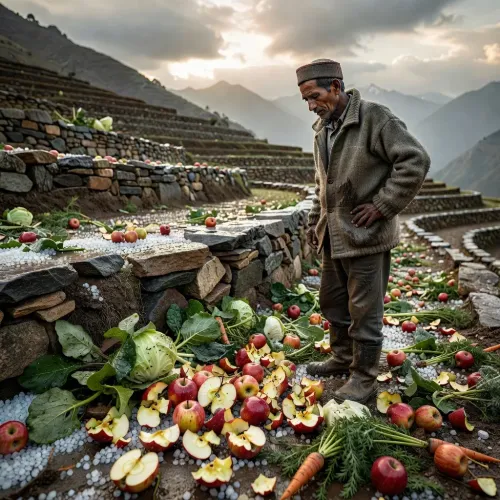
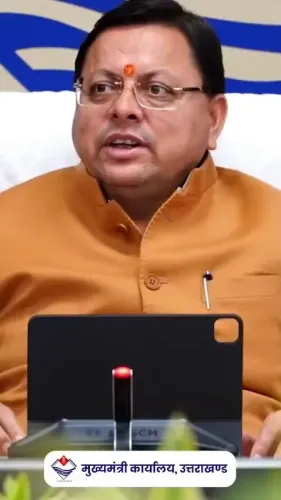
When hailstones strip a Himalayan farmer's crop bare, the loss can wipe out an entire season's livelihood in minutes. Uttarakhand Chief Minister Pushkar Singh Dhami announced on Thursday, 15 October 2026 that farmers affected by hailstorms in the state will receive additional financial assistance equivalent to standard disaster relief — a direct top-up over and above existing compensation frameworks.
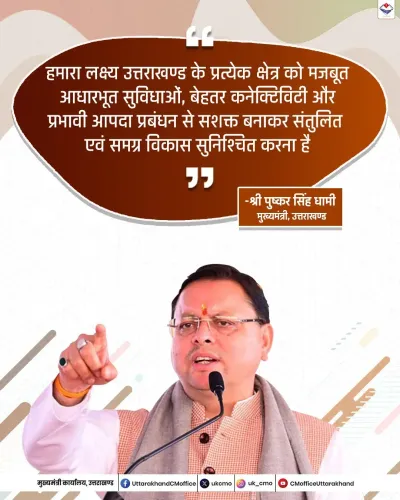
The Chief Minister's Office posted the announcement on X, quoting CM Dhami directly: 'ओलावृष्टि प्रभावित किसानों को आपदा राहत के बराबर मिलेगी अतिरिक्त सहायता' — 'Hail-affected farmers will receive additional assistance equivalent to disaster relief.' The framing is deliberate: by benchmarking the new aid to the existing disaster relief standard, the government signals that unseasonal hailfall will now be treated on par with a formal calamity in terms of payout.
Why Uttarakhand Farmers Need a Safety Net Beyond Insurance
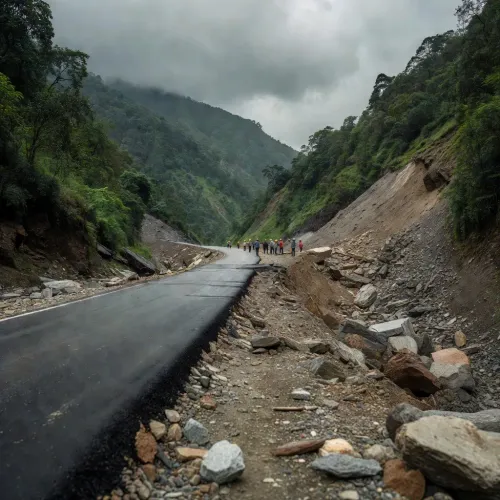
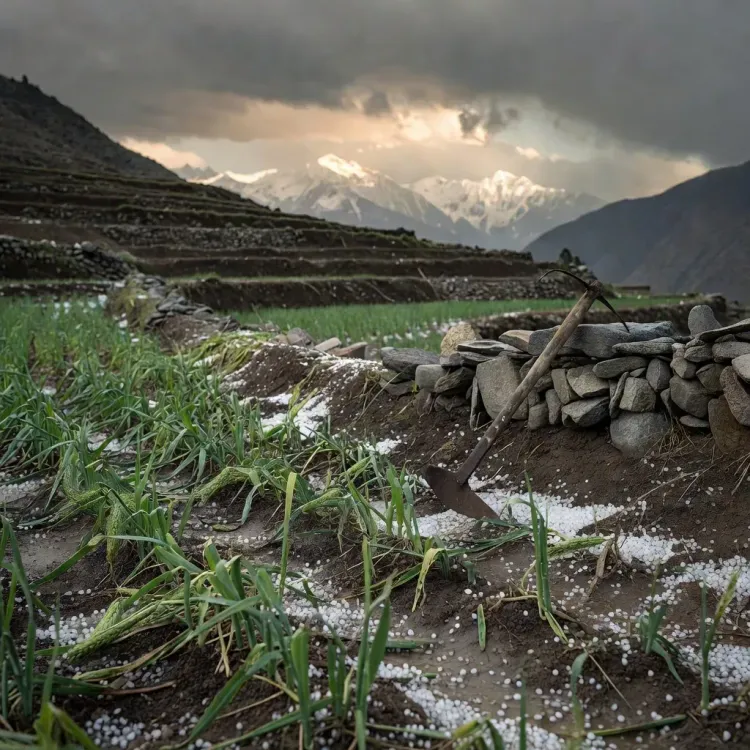
Uttarakhand's broken topography — terraced hillside fields, remote high-altitude villages, steep micro-climates — makes it one of India's most weather-exposed agricultural belts. Hailstorms are a recurring hazard, capable of flattening standing wheat, vegetable crops, and horticulture in a single afternoon. While the Pradhan Mantri Fasal Bima Yojana (PMFBY), launched in 2016, provides federal crop insurance cover for natural calamity losses, claim settlements under insurance schemes often take weeks or months and may not fully capture the depth of loss in small, fragmented hill holdings.
State governments across India have long recognised this gap. When unseasonal weather events cause widespread damage, state administrations routinely supplement SDRF (State Disaster Response Fund) norms and central insurance payouts with direct ex-gratia assistance. Dhami's announcement fits squarely into that pattern — but the explicit equation of the new aid to 'disaster relief' levels suggests the government wants to make the floor of protection unambiguous to affected farmers.
What Comes Next: Quantum, Eligibility, and Disbursement
The announcement sets the policy direction; the critical details — exact per-hectare amounts, which districts or blocks qualify, survey and verification protocols, and the disbursement timeline — will be formalised by the state's revenue and agriculture departments. In past instances of similar relief in hill states, district magistrates typically conduct rapid crop-loss surveys before lists are finalised.
For farmers waiting on scorched or flattened fields, the speed of that ground-level machinery will determine whether the CM's promise becomes tangible relief before the next sowing window opens.
Point of View
Raising the floor of state obligation to hill farmers who are often under-served by centralised insurance mechanisms. Himalayan states have historically struggled with quick disbursal to remote holdings, so the policy intent will be tested entirely by implementation speed. More broadly, the announcement fits a pattern of hill-state governments using ex-gratia top-ups to manage a structural gap in agricultural social protection — a gap that neither PMFBY alone nor SDRF norms fully close for fragmented, high-altitude farmland. The details on quantum and eligibility criteria, when released, will reveal whether this is a substantive expansion of the relief floor or a restatement of existing entitlements.
NationPress
15 Oct 2026
Frequently Asked Questions
What did CM Dhami announce for hail-affected farmers in Uttarakhand?
CM Pushkar Singh Dhami announced that farmers affected by hailstorms in Uttarakhand will receive additional financial assistance equivalent to the standard disaster relief provided under state norms, over and above any existing crop insurance payouts.
What is PMFBY and does it cover hailstorm damage?
Pradhan Mantri Fasal Bima Yojana (PMFBY), launched in 2016, is the central government's crop insurance scheme that covers losses from natural calamities including hailstorms. CM Dhami's announcement supplements this with an additional state-level ex-gratia payment for affected farmers.
Which farmers in Uttarakhand are eligible for the new hailstorm relief?
The exact eligibility criteria — including affected districts, minimum crop loss thresholds, and verification procedures — have not yet been formally announced. These details are expected to be notified by the state revenue and agriculture departments.
How much extra money will hail-affected farmers in Uttarakhand receive?
The specific per-hectare or per-farmer amount has not been disclosed yet. CM Dhami stated the quantum will be 'equivalent to disaster relief,' but the exact figures are to be determined and announced by state authorities.
Why is Uttarakhand particularly vulnerable to hailstorm crop damage?
Uttarakhand's Himalayan topography, micro-climates, and fragmented terraced farmland make it highly susceptible to unseasonal hailstorms that can destroy standing crops rapidly, making state-level relief mechanisms especially important for its farming communities.