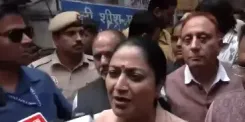
CM Dhami addresses 8 lakh students in virtual Diwali outreach
Synopsis
Uttarakhand CM Pushkar Singh Dhami virtually addressed nearly 8 lakh school students on November 5 through 'Dil ki Baat, Uncle Dhami ke Saath', delivering Diwali wishes alongside messages on cleanliness, safety, Vocal for Local, and unwavering goal-setting — and promising AI upgrades to the programme.
Key Takeaways
CM Pushkar Singh Dhami addressed nearly 8 lakh school students across Uttarakhand virtually on November 5, 2026 via 'Dil ki Baat, Uncle Dhami ke Saath'.
The programme aims to maintain continuous engagement with students on education, culture, ethical values, and life guidance, reaching children in remote hill areas through digital technology.
Dhami urged children to support local potters and artisans by buying clay lamps and handmade products, citing PM Modi's 'Vocal for Local' initiative.
Children were advised to stay away from firecrackers and to use lamps and sparklers only under adult supervision during the festive season.
More than 2.5 lakh students previously submitted development essays; the CM said useful suggestions will be considered in future state policy planning.
The programme will be enhanced using AI and digital technology in future editions, the CM announced.
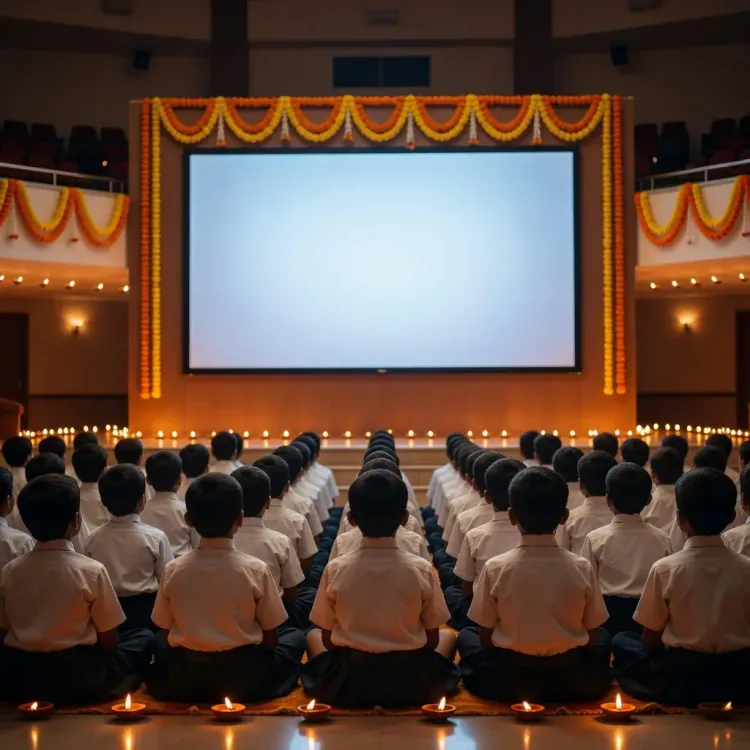
With Diwali days away, Uttarakhand Chief Minister Pushkar Singh Dhami turned his official residence into a broadcast studio on Thursday, November 5, 2026 — connecting virtually with nearly 8 lakh school children across the state through the flagship programme 'Dil ki Baat, Uncle Dhami ke Saath' ('Heart-to-Heart, With Uncle Dhami'). From remote Himalayan villages to valley towns, one CM and hundreds of thousands of children — all on the same screen at once.
'Dil ki Baat' and the classroom it built across the mountains
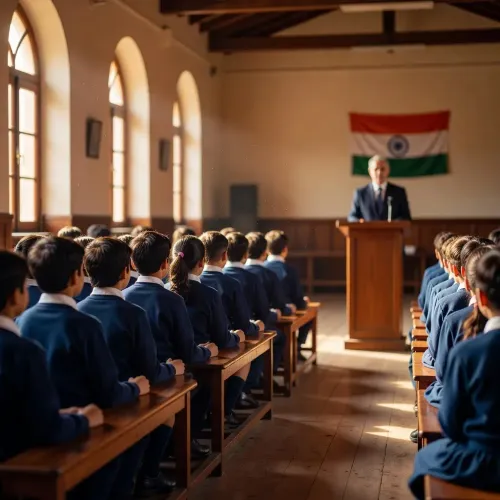
The programme is designed to do what geography makes hard in Uttarakhand: reach everyone. CM Dhami described its core purpose as maintaining 'continuous engagement with the children of the state, encouraging their talent, and providing guidance on education, culture, ethical values, and important life subjects.' Using digital infrastructure, the session bridged students in distant hill districts with those in the state's urban centres — a persistent challenge for a state whose terrain keeps communities scattered across deep valleys and high ridgelines.
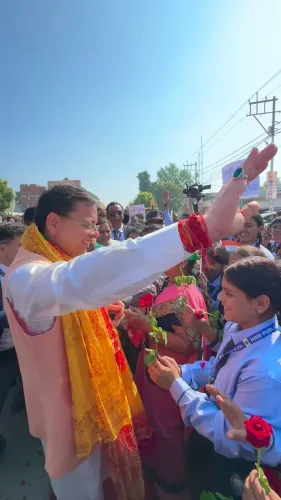
Dhami opened on a warm, conversational note — asking children about their families and their Diwali preparations before moving into the substance of his message. The deliberate informality was the point: not a minister addressing students, but, as the programme's name signals, an uncle talking to children.
Diwali as a lesson: cleanliness, safety, and 'Vocal for Local'
The CM wove the festival season into three distinct calls to action. First, cleanliness: Dhami urged children to help clean their homes during Diwali and to treat hygiene as a daily habit, explicitly citing Prime Minister Narendra Modi's Swachh Bharat Abhiyan, launched nationwide in 2014. 'Our small individual efforts can together make a significant contribution to keeping our state and country clean,' he said.
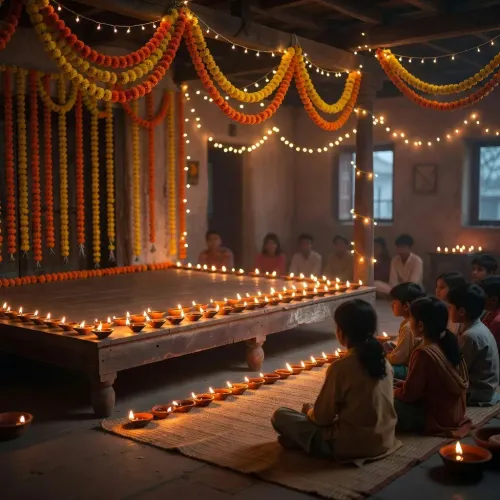
Second, safety: children were asked to stay away from firecrackers and to light lamps and sparklers only under adult supervision. 'The real joy of festivals,' Dhami said, 'is when we keep ourselves safe and also look out for the safety of others.' Third, and with an economic edge: the CM urged students to light clay earthen lamps and buy products made by local potters and artisans, framing it as carrying forward PM Modi's 'Vocal for Local' call — an initiative the central government has promoted since 2020 to support domestic artisans and reduce import dependence. Supporting a local potter, Dhami argued, is not just commerce — it is sharing in that family's festive happiness.
Half-yearly exams, 'Vikalp Rahit Sankalp', and the AI upgrade ahead
Switching from festival to future, Dhami wished students well for their upcoming half-yearly examinations and introduced them to the phrase 'Vikalp Rahit Sankalp' — a resolution without alternatives. He explained it as moving forward toward a fixed goal 'with complete hard work, dedication, and firm determination' — no exit clauses, no fallback comfort. Study hard, play hard, and learn constantly, he told them: 'Let your talent illuminate the name of your parents, your state, and your country.'
He also flagged a significant precedent from the programme's earlier edition: more than 2.5 lakh students had submitted essays sharing ideas on Uttarakhand's development. Dhami said those suggestions carry real weight — useful inputs, he promised, will be considered in the design of future state plans and policies. The programme itself, he added, will be upgraded through AI and digital technology to become 'more useful in the future.'
Present at the event were Secretary (Education) Jyoti Yadav, Director General of Education Akanksha Konde, and Joint Director Govind Ram Jaiswal.
When a government treats a child's essay as a policy input, it is signalling something — and Uttarakhand's students now have both a hotline to the Chief Minister and a seat, however symbolic, at the planning table.
Point of View
Dhami reinforces alignment with central government priorities while positioning himself as an accessible, avuncular figure rather than a distant administrator. The pledge to convert student essay inputs into policy consideration is notably forward-looking, echoing participatory governance rhetoric increasingly common in BJP-ruled states. The announced AI upgrade signals that the programme is intended as a durable institution, not a one-off electoral gesture.
NationPress
5 Nov 2026
Frequently Asked Questions
What is 'Dil ki Baat, Uncle Dhami ke Saath'?
'Dil ki Baat, Uncle Dhami ke Saath' is a virtual outreach programme run by Uttarakhand Chief Minister Pushkar Singh Dhami to connect with school children across the state on topics like education, culture, ethical values, and life goals, reaching students in remote hill areas through digital technology.
How many students did CM Dhami address on November 5, 2026?
CM Pushkar Singh Dhami addressed nearly 8 lakh school students across Uttarakhand during the November 5 virtual session of 'Dil ki Baat, Uncle Dhami ke Saath'.
What was CM Dhami's Diwali message to students?
CM Dhami asked students to maintain cleanliness at home, stay safe by avoiding firecrackers, buy locally made clay lamps and artisan products to support local potters, and treat festivals as occasions to strengthen family and community bonds.
What is 'Vikalp Rahit Sankalp' as explained by CM Dhami?
'Vikalp Rahit Sankalp' means a resolution without alternatives — Dhami explained it as pursuing a fixed goal with complete hard work, dedication, and firm determination, leaving no room for giving up.
Will AI be used in the 'Dil ki Baat' programme in Uttarakhand?
Yes, CM Dhami announced that the 'Dil ki Baat, Uncle Dhami ke Saath' programme will be made more useful in the future through AI and digital technology enhancements.