Giriraj Singh: Bihar Revenue Courts Go Online-Only via RCMS
Synopsis
Union Textiles Minister Giriraj Singh announced that Bihar's revenue courts will now accept only online evidence submitted through the RCMS portal, marking a mandatory digital shift for land and revenue litigation in the state. Litigants are directed to biharbhumi.bihar.gov.in for applications.
Key Takeaways
The RCMS (Revenue Court Management System) portal is now the sole channel for submitting documents and evidence in Bihar's revenue courts.
Physically submitted evidence will no longer be accepted in Bihar revenue courts.
Litigants can access applications and information on the Bihar Bhumi portal at biharbhumi.bihar.gov.in.
The move aligns with India's National Land Records Modernization Programme , launched in 2008 , which pushed states to digitise land records.
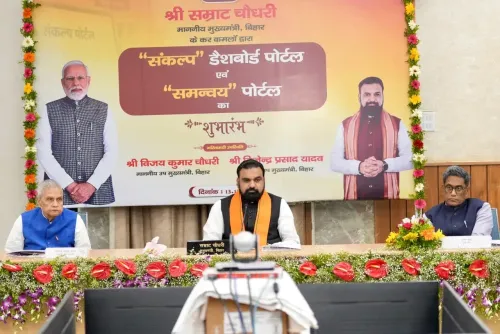
Union Textiles Minister Giriraj Singh , an MP from Begusarai, Bihar , shared the announcement on X on 5 November 2026 .
Rural and unrepresented litigants' access to digital infrastructure will be a key implementation challenge to watch.
Bihar's revenue courts have crossed a digital threshold — Union Textiles Minister Giriraj Singh announced on Thursday, 5 November 2026 that the RCMS (Revenue Court Management System) portal is now the sole channel for submitting documents and evidence in Bihar's revenue courts, with physically submitted evidence no longer accepted.
Posting in Hindi, the Minister stated: 'दस्तावेज एवं साक्ष्य जमा करने का एकमात्र माध्यम RCMS पोर्टल' — 'The RCMS portal is the only medium for submitting documents and evidence. In revenue courts, only online-submitted evidence will now be accepted.' Litigants seeking further information or applications have been directed to the Bihar Bhumi portal at biharbhumi.bihar.gov.in.
What RCMS means for Bihar's land litigants
Bihar's revenue courts handle a significant volume of land and property disputes — a category of litigation that has historically been vulnerable to delays, missing files, and procedural manipulation. The mandatory shift to the RCMS portal means every piece of evidence in a revenue case must now be digitally uploaded before it can be considered by a court. No document handed across a counter will carry legal weight. That is a structural change, not an incremental one.
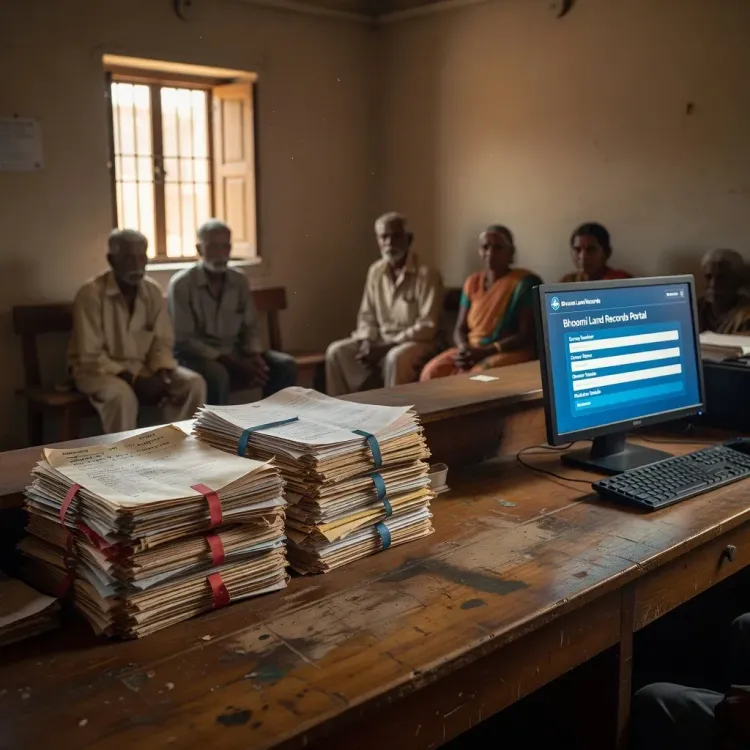
The Bihar Bhumi portal already serves as the state's unified land-records interface, holding digitised records of ownership, mutation history, and cadastral maps. Routing court evidence through RCMS layers a judicial-process function onto that existing digital infrastructure — closing a gap that reformers have flagged for years.
Bihar's move in India's long digitisation march
This step sits inside a wider national pattern. India's National Land Records Modernization Programme (NLRMP), launched in 2008, seeded the drive to computerise land records and reduce disputes across all states. Nearly two decades on, frontline implementation — the moment a litigant must actually use a portal rather than a paper form — is where many states still lag. Bihar's online-only mandate for revenue courts pushes past that last mile.
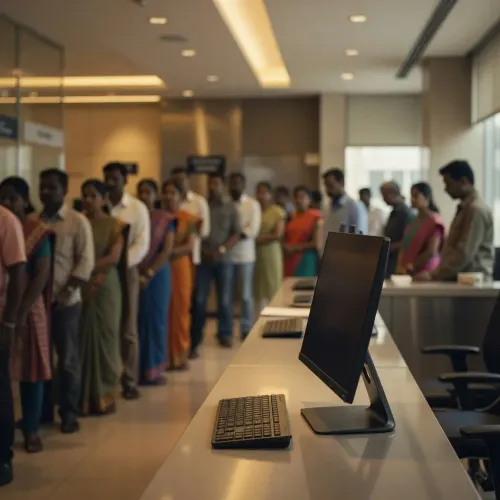
Transparency advocates have long argued that the opacity of physical filings creates openings for document tampering and rent-seeking by intermediaries. A single, time-stamped digital record of every submission is harder to lose, alter, or deny. The flip side is real: rural litigants, elderly landowners, and those without reliable internet access will need assisted-upload facilities or common service centres to exercise their legal rights without being effectively shut out.
Giriraj Singh's role in amplifying a state reform
It is worth noting the institutional context. Giriraj Singh is a Union minister — land records and revenue courts fall under the Bihar state government. His amplification of this announcement on X signals coordinated messaging between the BJP-aligned state administration and its central leadership, projecting Bihar's governance reforms to a national audience. The practical machinery, however, runs entirely through state agencies.
Whether the RCMS rollout delivers on its promise will depend on ground-level infrastructure: stable portal uptime, trained court staff, and accessible upload points in every block. Bihar's landowners are watching — and so is the reform scorecard.
Point of View
It doubles as a governance-delivery story ahead of electoral cycles in a state where land disputes are a persistent voter grievance. The critical test, however, is not the mandate itself but the last-mile infrastructure: a digital-only system that excludes rural or elderly litigants due to connectivity gaps could convert a transparency win into an access-to-justice problem, inviting political and legal challenge.
NationPress
5 Nov 2026
Frequently Asked Questions
What is the RCMS portal in Bihar?
The RCMS (Revenue Court Management System) portal is the Bihar government's designated digital platform for filing documents and evidence in revenue courts. As of November 2026, it is the only accepted channel for such submissions — physical documents are no longer valid.
What is the Bihar Bhumi portal and how do I use it?
The Bihar Bhumi portal at biharbhumi.bihar.gov.in is the official state platform for land records, applications, and revenue-related information. Litigants seeking to file through RCMS or check land records should visit this portal for forms and guidance.
Will Bihar revenue courts still accept physical documents?
No. Following the RCMS mandate, Bihar revenue courts will only accept evidence and documents submitted online through the RCMS portal. Physically submitted documents will not be considered valid.
Why is Bihar shifting revenue court filings online?
The move is part of India's broader drive — rooted in the National Land Records Modernization Programme of 2008 — to digitise land administration, reduce delays, improve transparency, and limit opportunities for document tampering or rent-seeking by intermediaries.
What if a litigant does not have internet access to file on RCMS?
The post does not specify assisted-access arrangements, and operational details of the RCMS rollout have not been officially confirmed. Litigants without direct internet access are advised to visit the Bihar Bhumi portal or contact local Common Service Centres for guidance.