Giriraj Singh backs Bihar's special courts push against corruption

Synopsis
Union Textiles Minister Giriraj Singh endorsed the Bihar government's move to form special courts for fast-tracking corruption cases, while also lauding its digital administration and transparent recruitment decisions as pillars of stronger governance in the state.
Key Takeaways
Giriraj Singh , Union Textiles Minister and Begusarai MP, publicly backed Bihar's anti-corruption court initiative on July 30, 2026 .
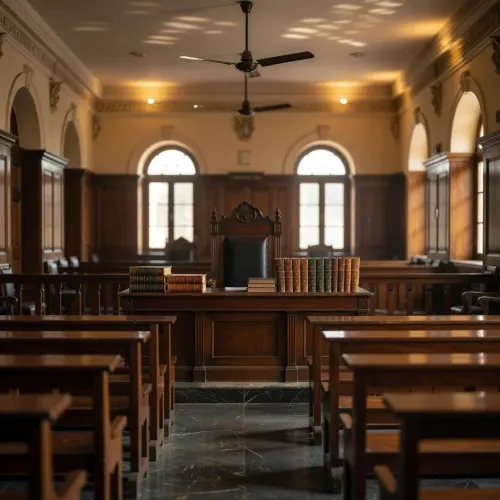
The Bihar government is setting up special courts to accelerate disposal of corruption cases.
Digital administration and transparent recruitment were cited alongside the courts as key governance reforms.
Singh framed the moves as reinforcing Bihar's commitment to 'good governance' ( sushasan ).
The post fits a broader pattern of central BJP leaders publicly amplifying Bihar's state-level reform record.
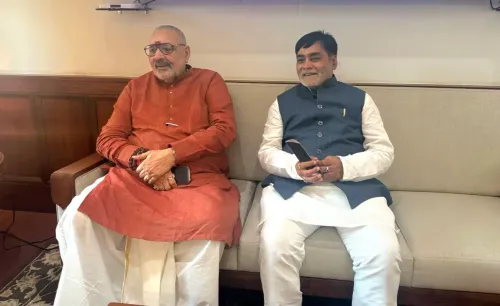
Bihar's fight against corruption just got a high-profile endorsement from the Centre. Union Textiles Minister Giriraj Singh on Thursday, July 30, 2026, hailed the Bihar government's move to set up special courts for fast-tracking corruption cases — calling it a decisive step toward accountability and swift justice in the state.
Posting in Hindi, Singh wrote: 'भ्रष्टाचार के विरुद्ध निर्णायक कार्रवाई और त्वरित न्याय की दिशा में बिहार सरकार का एक महत्वपूर्ण कदम' — 'An important step by the Bihar government toward decisive action against corruption and speedy justice.' He added that the formation of special courts would accelerate disposal of corruption cases, while decisions on digital administration and transparent recruitment would further strengthen the state's commitment to good governance.
Special courts as a corruption-busting tool
Special courts dedicated to corruption cases are not a new idea in Indian jurisprudence, but their implementation has been uneven across states. The logic is straightforward: dedicated benches with focused dockets move faster than overloaded sessions courts. For Bihar — a state that has long battled the perception of entrenched administrative corruption — the symbolic and practical weight of such a move is significant. Faster verdicts mean both deterrence and relief for complainants who would otherwise wait years for resolution.
Digital governance and transparent recruitment: the other two pillars
Singh's post flags two additional reform planks alongside the courts announcement: digital administration and transparent recruitment. Digitising government processes reduces human discretion at the point of service delivery — a proven lever against petty corruption in states that have implemented it at scale. Transparent recruitment, meanwhile, directly addresses one of Bihar's most politically sensitive fault lines: allegations of irregularities in government job hiring, which have triggered protests and legal challenges in recent years.
A central minister amplifying state optics
Singh, a Lok Sabha MP from Begusarai and one of the BJP's most prominent faces in Bihar, routinely uses his platform to spotlight the state government's governance record. The timing of this post — mid-week, ahead of what could be legislative or administrative follow-through — fits a pattern of central BJP leaders building a public narrative around Bihar's reform credentials, particularly as the state remains a critical electoral battleground.
The real test will be in the details: how many special courts are constituted, how quickly they are staffed, and whether the digital and recruitment reforms translate into measurable outcomes on the ground. Bihar's governance story is being written in real time — and the Centre is making sure it is being read.
Point of View
If implemented robustly, could mark a genuine institutional shift in how corruption cases are handled; but the Centre's vocal endorsement also signals that the BJP is keen to own the 'good governance' narrative in Bihar well ahead of any electoral cycle. The pairing of judicial reform with digital administration and recruitment transparency suggests a deliberate three-pronged messaging strategy — courts for deterrence, digitisation for process integrity, and clean hiring to neutralise a long-running political liability.
NationPress
13 Sept 2026
Frequently Asked Questions
What did Giriraj Singh say about Bihar's governance reforms?
Giriraj Singh praised the Bihar government's decision to form special courts for fast-tracking corruption cases and highlighted digital administration and transparent recruitment as further steps toward good governance in the state.
What are the special courts Bihar is setting up?
Bihar is forming dedicated courts to handle corruption cases more quickly, reducing the backlog that typically slows accountability in regular sessions courts. Exact dates and full details of the formation are yet to be officially confirmed.
Why is digital administration important for Bihar's anti-corruption push?
Digitising government services reduces human discretion at service-delivery points, limiting opportunities for petty corruption and making processes more transparent and auditable for citizens.
What is the significance of transparent recruitment in Bihar?
Recruitment irregularities in government jobs have been a major political and legal flashpoint in Bihar. Transparent hiring processes are seen as essential to restoring public trust in state institutions.
Who is Giriraj Singh?
Giriraj Singh is the Union Minister of Textiles, a senior BJP leader, and the Lok Sabha MP representing Begusarai constituency in Bihar.