India's 300 GW green energy milestone a model for Global South: V-P Radhakrishnan
Synopsis
India hit 50% clean electricity capacity five years ahead of schedule and crossed 300 GW of non-fossil fuel power — and Vice-President Radhakrishnan is now pitching that journey as a blueprint for the entire developing world. With solar costs collapsing, 65 lakh homes solarised, and 30 lakh farmers earning from energy, India's transition is no longer just a climate story — it is a growth and equity story.
Key Takeaways
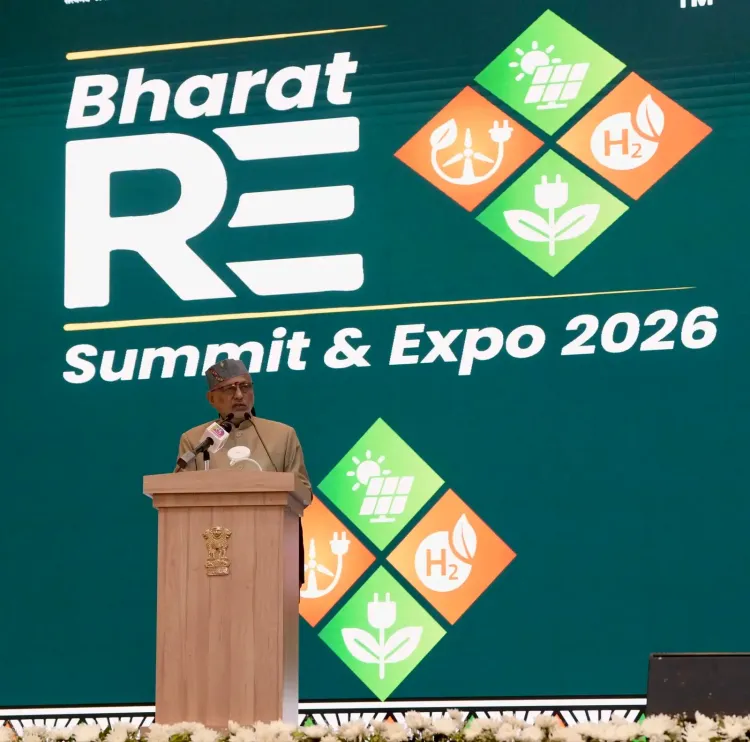
Radhakrishnan addressed the Bharat Renewable Energy Summit and Expo 2026 in New Delhi on 5 November 2026 .
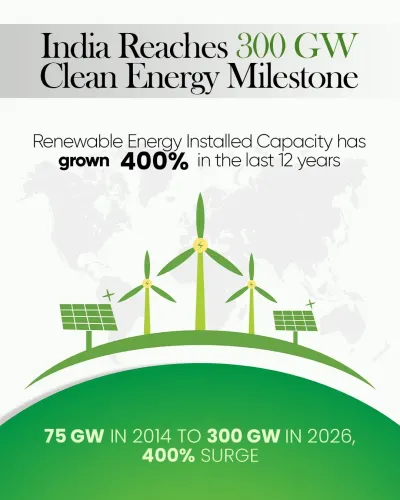
India's non-fossil fuel installed capacity has crossed 300 GW ; the country achieved 50% clean electricity capacity in 2025 , five years ahead of its commitment.
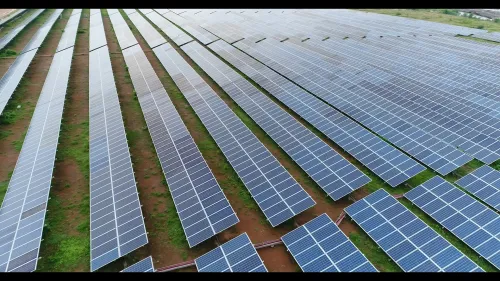
Solar power capacity grew from under 3 GW to over 170 GW in a decade, and is now among the cheapest electricity sources in India.
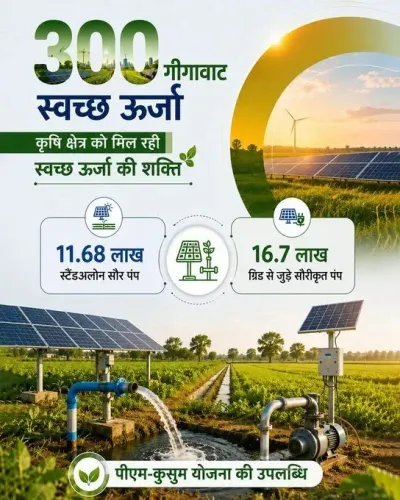
Over 65 lakh households enrolled under PM Surya Ghar Muft Bijli Yojana ; nearly 30 lakh farmers benefited under PM-KUSUM .
Radhakrishnan called for stronger industry-academia collaboration and citizen participation, describing the transition as a Jan Andolan .
Hydrogen energy flagged as the next frontier, with the VP expressing confidence it will become more affordable through technological advancement.
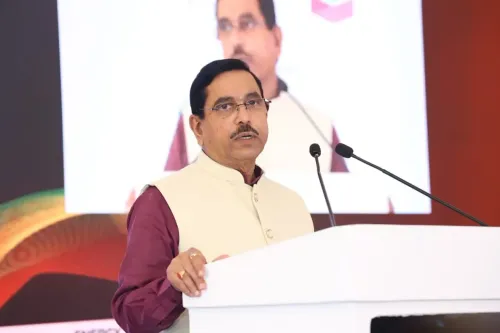
Vice-President C.P. Radhakrishnan on Thursday, 5 November 2026 declared that India's renewable energy transformation is not only a national achievement but a replicable model for the Global South, citing a string of milestones that have redefined the country's energy landscape. He was addressing the valedictory session of the Bharat Renewable Energy Summit and Expo 2026 in New Delhi.
Key Milestones Cited
Radhakrishnan highlighted that India's non-fossil fuel-based installed capacity has crossed 300 gigawatts (GW), and that the country achieved 50 per cent of its total installed electricity capacity from non-fossil fuel sources in 2025 — a full five years ahead of its stated commitment. Solar power capacity alone, he noted, has surged from under 3 GW to over 170 GW in a decade, and solar electricity is now among the cheapest sources of power in India — a dramatic reversal from when it cost several times more than coal-based generation.
Schemes Reaching Households and Farmers
The Vice-President pointed to two flagship programmes as drivers of this grassroots transition. More than 65 lakh households have joined the solar movement under the PM Surya Ghar Muft Bijli Yojana, gaining access to affordable clean energy. Meanwhile, nearly 30 lakh farmers have benefited under the Pradhan Mantri Kisan Urja Suraksha evam Utthan Mahabhiyan (PM-KUSUM) scheme, through which solar pumps have reduced diesel costs, supplemented incomes, and enabled farmers to become what Radhakrishnan called 'Urjadatas' — givers of energy as well as food.
Reaching Remote and Tribal Areas
Radhakrishnan also underscored the equity dimension of India's energy push, noting that the Pradhan Mantri Janjati Adivasi Nyaya Maha Abhiyan (PM-JANMAN) and the Dharti Aaba Janjatiya Gram Utkarsh Abhiyan are extending electricity access to remote tribal areas where conventional grid connectivity may not be feasible. He emphasised that access to electricity transforms lives by expanding opportunities in education, healthcare, communication and livelihoods, and that energy solutions must address the distinct needs of cities, villages and remote habitations.
Hydrogen and the Road Ahead
Looking ahead, the Vice-President said hydrogen energy is making encouraging progress in India and expressed confidence that advances in science and technology would make hydrogen increasingly affordable. Invoking what he called the innovation pipeline, he said: 'The technologies of 2040 will come from the laboratories and start-ups of today', calling for stronger industry-academia collaboration and urging teachers, students, entrepreneurs and citizens to actively participate in what he described as a Jan Andolan — a people's movement — as envisioned by Prime Minister Narendra Modi.
India's Answer to the Doubters
Radhakrishnan recalled the scepticism that once surrounded India's ability to sustain rapid economic growth while reducing fossil fuel dependence, arguing that the achievements of the past decade have put those doubts to rest. He said the progress vindicates Prime Minister Modi's contention that environmental commitments are catalysts for growth — delivering greater energy access, lower industrial costs, employment opportunities and reduced import dependence. This comes amid growing calls from developing nations for a just energy transition that does not compromise growth, making India's data-backed narrative particularly influential in multilateral forums.
Point of View
But the more consequential claim — that the model is exportable to the Global South — deserves scrutiny. India's solar cost collapse was partly driven by massive Chinese panel imports and domestic policy tailwinds that may not exist elsewhere; replicating it requires both capital access and supply-chain depth that most developing nations lack. The 50%-by-2025 milestone is a headline worth celebrating, but installed capacity is not the same as reliable generation — grid integration, storage, and last-mile connectivity remain unresolved. The pivot to hydrogen is promising, though current costs mean it remains a medium-term aspiration rather than an imminent solution.
NationPress
5 Nov 2026
Frequently Asked Questions
What renewable energy milestones did India achieve ahead of schedule?
India crossed 300 GW of non-fossil fuel installed capacity and achieved 50% of its total electricity capacity from non-fossil sources in 2025 — five years ahead of its national commitment. Solar power alone grew from under 3 GW to over 170 GW in a decade.
What is the PM Surya Ghar Muft Bijli Yojana and how many households have benefited?
The PM Surya Ghar Muft Bijli Yojana is a government scheme enabling households to adopt rooftop solar power. More than 65 lakh households across India have joined the programme, gaining access to affordable clean electricity.
How has the PM-KUSUM scheme benefited farmers?
The Pradhan Mantri Kisan Urja Suraksha evam Utthan Mahabhiyan (PM-KUSUM) scheme has benefited nearly 30 lakh farmers by providing solar-powered pumps that reduce diesel costs, generate additional income, and allow farmers to supply surplus power to the grid.
Why does Vice-President Radhakrishnan say India's model is relevant to the Global South?
Radhakrishnan argued that India's achievement — rapid economic growth combined with reduced fossil fuel dependence — directly refutes the assumption that developing nations must choose between growth and clean energy. India's policy mix, scale, and cost reductions offer a replicable framework for other emerging economies.
What is India's next frontier in clean energy according to the Vice-President?
Vice-President Radhakrishnan identified hydrogen energy as India's next clean energy frontier, saying it is already making encouraging progress and that advances in science and technology will make it increasingly affordable in the years ahead.