Piyush Goyal: India crosses 300 GW non-fossil fuel capacity
Synopsis
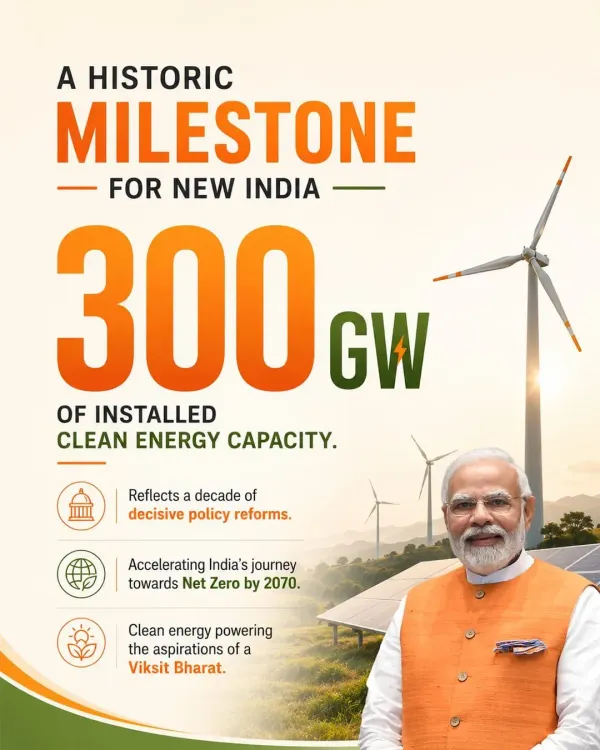
India has crossed 300 GW of non-fossil fuel installed capacity, Commerce Minister Piyush Goyal announced on August 8, 2026. The milestone marks 60 per cent progress toward PM Modi's Panchamrit pledge of 500 GW by 2030, reinforcing India's Paris Agreement commitments and push for energy independence.
Key Takeaways
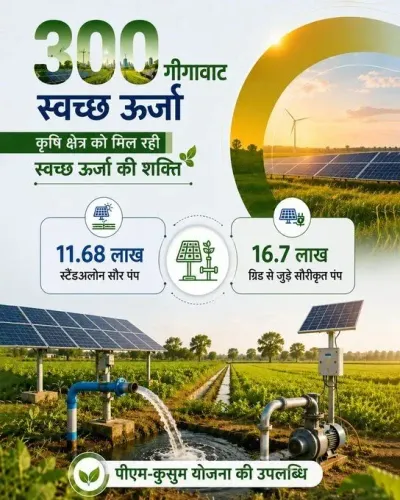
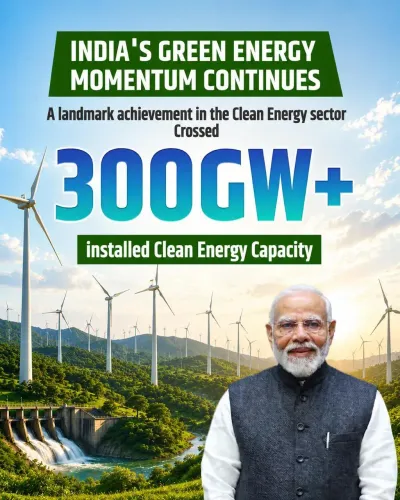
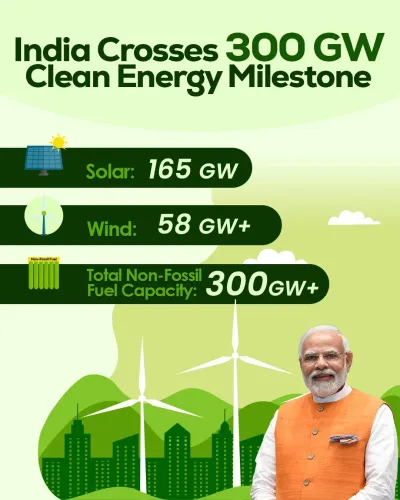
India has officially crossed 300 GW of non-fossil fuel installed capacity as of August 2026 .
Commerce Minister Piyush Goyal credited 'bold structural reforms and future-ready infrastructure' under PM Narendra Modi .
The milestone represents 60 per cent of India's Panchamrit target of 500 GW non-fossil capacity by 2030 , announced at COP26 in 2021 .
India's clean energy base spans solar, wind, hydropower, nuclear, and other non-fossil sources.
The achievement aligns with India's Paris Agreement obligations and reduces dependence on imported fossil fuels.
Approximately 200 GW of additional capacity is still needed to hit the 2030 target.
Three hundred gigawatts. That number — now officially crossed in India's non-fossil fuel installed capacity — marks one of the most consequential milestones in the country's energy history. Union Commerce and Industry Minister Piyush Goyal on Saturday, August 8, 2026, hailed the achievement on X, calling it 'a historic leap toward sustainability and energy independence' driven by structural reforms under Prime Minister Narendra Modi.
From 175 GW to 300 GW — the arc of a decade
The journey to this milestone stretches back to 2015, when India stood at COP21 in Paris and pledged 175 GW of renewable energy capacity by 2022. That target was ambitious for its time. Six years later at COP26 in Glasgow, PM Modi raised the ceiling dramatically with the Panchamrit (five-nectar) commitments — a suite of climate goals anchored by a target of 500 GW non-fossil fuel capacity by 2030. The 300 GW crossing now places India at the 60 per cent mark of that 2030 goal, with four years still on the clock.
The capacity base spans solar, wind, hydropower, nuclear, and other non-fossil sources. Policy scaffolding — production-linked incentives, green energy corridors, competitive tariff auctions, and transmission infrastructure investment — has underpinned the scale-up, pulling in both domestic and international capital into the sector.
What 300 GW means for energy security and climate commitments
India is the world's third-largest emitter of greenhouse gases, and its energy choices carry global weight. Crossing 300 GW of clean installed capacity signals that the country's Paris Agreement trajectory is holding — and accelerating. For renewable energy developers and power utilities, the milestone validates years of project pipelines and grid integration work. For India's energy import bill, every gigawatt of domestic non-fossil capacity chips away at dependence on imported coal and crude oil.
Minister Goyal framed the moment explicitly in global terms, describing it as 'contributing meaningfully to global climate action' — language that positions India not merely as a developing economy managing growth, but as an active participant shaping the energy transition's pace.
The road to 500 GW by 2030
The remaining 200 GW needed to hit the 2030 Panchamrit target will test India's grid infrastructure, storage capacity, and regulatory agility. Analysts watching the sector will track the pace of new capacity additions, the rollout of large-scale battery storage, and any fresh policy signals from the Ministry of New and Renewable Energy. The arithmetic is achievable — but the next tranche requires the same structural momentum that delivered the first 300 GW.
India did not get here by accident. It got here by setting a target, building the policy architecture, and then raising the bar. The question now is whether the final sprint to 500 GW can match the pace of the opening chapters.
Point of View
Arriving as a tangible, numbers-backed vindication of PM Modi's COP26 Panchamrit pledge — a target critics once called aspirational. For Minister Goyal, framing it as both an energy-security win and a climate-action contribution is deliberate: it speaks simultaneously to domestic voters concerned about energy costs and to international partners assessing India's green credibility. The announcement also pre-positions India ahead of future multilateral climate negotiations, where the 300 GW figure will serve as evidence that developing economies can scale clean energy without sacrificing growth. The real test of this policy arc, however, lies in the next 200 GW — which will require grid modernisation and storage solutions at a scale India has not yet demonstrated.
NationPress
9 Oct 2026
Frequently Asked Questions
What is India's 300 GW non-fossil fuel capacity milestone?
India has crossed 300 GW of total installed capacity from non-fossil fuel sources — including solar, wind, hydropower, and nuclear — marking a major step in the country's clean energy transition.
What is India's renewable energy target by 2030?
Under PM Modi's Panchamrit commitments announced at COP26 in 2021, India aims to achieve 500 GW of non-fossil fuel installed capacity by 2030. The 300 GW crossing puts India at roughly 60 per cent of that goal.
What did Piyush Goyal say about India's clean energy milestone?
Minister Piyush Goyal called the 300 GW crossing 'a historic leap toward sustainability and energy independence,' attributing it to structural reforms and infrastructure development under PM Narendra Modi.
How does India's 300 GW capacity relate to its Paris Agreement commitments?
India pledged at COP21 in 2015 to reach 175 GW of renewable capacity by 2022, and later raised its ambition to 500 GW non-fossil by 2030 at COP26. The 300 GW milestone demonstrates progress on these internationally binding climate commitments.
How much more capacity does India need to reach its 2030 clean energy target?
India needs approximately 200 GW of additional non-fossil fuel capacity to reach the 500 GW Panchamrit target by 2030.