CM Dhami Chairs High-Level Review of Uttarakhand Governance

Synopsis
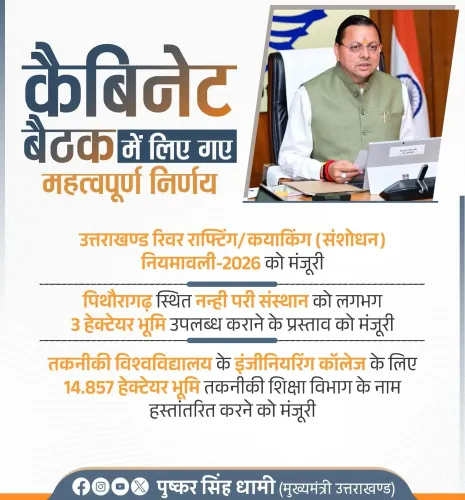
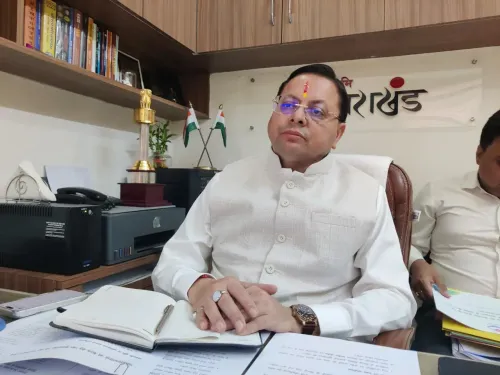
Chief Minister Pushkar Singh Dhami chaired a comprehensive high-level review in Uttarakhand on October 14, 2026, covering development works, law and order, and public service delivery across the Himalayan state.
Key Takeaways
CM Pushkar Singh Dhami personally presided over the high-level meeting on October 14, 2026 .
The review covered three areas: development works , law and order , and public services (jan-suvidhaen) .
Uttarakhand is a Himalayan state formed in 2000 , balancing tourism, pilgrimage management, and border infrastructure priorities.
Dhami has led the state's BJP government since March 2021 , with direct executive review a recurring administrative tool.
Follow-up directives and departmental progress reports are the key deliverables to watch from this session.
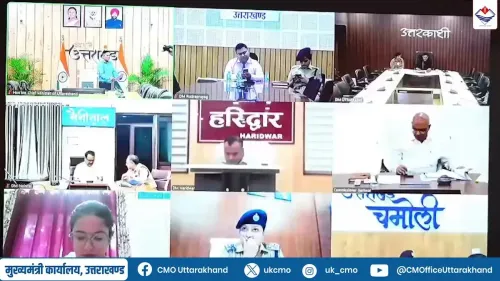
Development projects, public order, and citizen services all came under the scanner on Wednesday, October 14, 2026, as Chief Minister Pushkar Singh Dhami convened a high-level review meeting at Dehradun to take comprehensive stock of the state's administrative performance.
The Chief Minister's Office of Uttarakhand announced the session on X, describing it as a wide-ranging audit — 'विकास कार्यों, कानून-व्यवस्था और जनसुविधाओं की व्यापक समीक्षा' (a comprehensive review of development works, law and order, and public conveniences) — presided over personally by CM Dhami.
Three pillars under the lens: development, law and order, public services
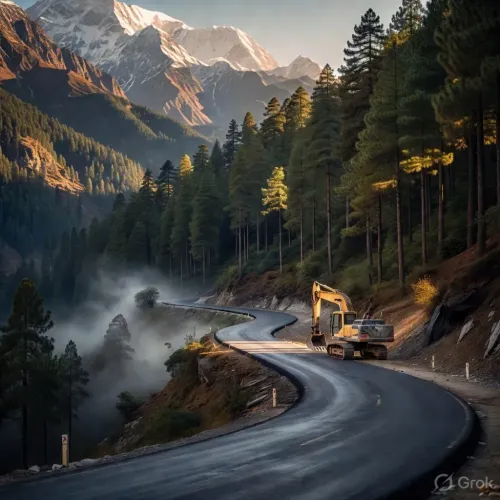
The three-pronged agenda is telling. Development works cover the state's ongoing infrastructure push — road connectivity in remote hill districts, tourism-linked projects, and border-area development that carries both economic and strategic weight for this Himalayan frontier state. Law and order remains a standing concern in Uttarakhand, a state that hosts millions of pilgrims annually for the Char Dham Yatra and must manage crowd management, disaster response, and crime in equal measure.
Public service delivery — the third strand — cuts closest to daily life. Access to roads, water, power, and grievance redress in the state's mountainous geography has historically lagged behind plains districts, making periodic executive review a practical necessity rather than a ceremonial one.
Dhami's track record of hands-on oversight
Pushkar Singh Dhami, who has led Uttarakhand's BJP government since March 2021, has made direct administrative review a signature of his tenure. High-level meetings chaired by the chief minister serve as the state's chief accountability mechanism — a pressure valve for departments that might otherwise let schemes stall on paper. The model is standard across Indian states, used by both BJP and Congress governments, but its frequency and the seniority of the chair signal how seriously a government treats delivery over announcement.
For Uttarakhand — a state formed in 2000 that still grapples with out-migration, uneven tourism revenue distribution, and the perennial challenge of mountain logistics — every review cycle is a chance to close the gap between scheme launch and ground reality.
The directives that emerge from this meeting, and whether departments report measurable progress in the next cycle, will be the real test of Wednesday's session.
Point of View
But their value lies entirely in the follow-through. For Uttarakhand, a state where out-migration and uneven development remain structural challenges, the breadth of Wednesday's three-point agenda — development, law and order, and public services — reflects the Dhami government's attempt to present a full-spectrum governance posture heading into a period of continued infrastructure investment. Whether this cycle translates into measurable ground-level change, or remains a recurring ritual, will define how voters and administrators ultimately read it.
NationPress
14 Oct 2026
Frequently Asked Questions
What was reviewed in CM Dhami's high-level meeting on October 14?
The meeting reviewed three broad areas: development works, law and order, and public service delivery (jan-suvidhaen) across Uttarakhand.
Who is Pushkar Singh Dhami?
Pushkar Singh Dhami is the Chief Minister of Uttarakhand and has led the state's BJP government since March 2021.
Why does Uttarakhand hold high-level administrative review meetings?
Given Uttarakhand's mountainous geography and challenges around infrastructure, tourism management, and public service access, periodic executive review ensures development schemes progress from announcement to actual delivery.
What are the key governance challenges in Uttarakhand?
Uttarakhand faces out-migration from hill districts, uneven tourism revenue distribution, mountain logistics for service delivery, and managing law and order during mass pilgrimages like the Char Dham Yatra.
When was Uttarakhand formed as a state?
Uttarakhand was carved out as a separate Himalayan state in the year 2000.