CM Dhami Scheme Lands Tehri Woman ₹3.30L/Month Job in Germany
Synopsis
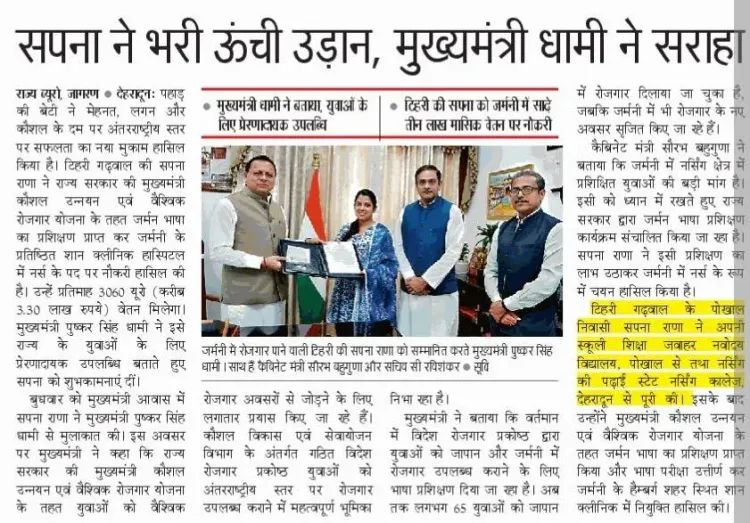
A woman from Tehri Garhwal has landed a job in Germany at ₹3.30 lakh per month after completing German-language training under Uttarakhand's Mukhyamantri Kaushal Unnayan Evam Vaishvik Rozgar Yojana. CM Pushkar Singh Dhami congratulated her, highlighting the scheme's potential for hill-district youth.
Key Takeaways
Ms Sapna Rana of Tehri Garhwal , Uttarakhand, secured employment in Germany at ₹3.30 lakh per month .
The placement came after she completed a German-language course under the state's Mukhyamantri Kaushal Unnayan Evam Vaishvik Rozgar Yojana .
Chief Minister Pushkar Singh Dhami personally congratulated Ms Rana, as announced by the official CMO account on 25 June 2026 .
The scheme is part of Uttarakhand's strategy to channel hill-district youth into structured overseas employment through language and skill training.
Uttarakhand's approach mirrors similar state-level overseas employment programmes in Kerala , Punjab , and Tamil Nadu .
Total placements under the scheme and future country-specific training modules remain areas to watch in upcoming state budget announcements.
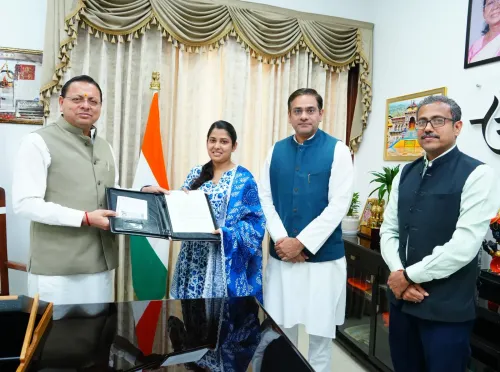
The Chief Minister's Office of Uttarakhand announced on Thursday, 25 June 2026, that Ms Sapna Rana of Tehri Garhwal has secured employment in Germany at a salary of ₹3.30 lakh per month after completing a German-language course under the Mukhyamantri Kaushal Unnayan Evam Vaishvik Rozgar Yojana. Chief Minister Pushkar Singh Dhami extended his congratulations to Ms Rana for this achievement.
Context
The post by the Chief Minister's Office states: 'Tehri Garhwal ki Sushri Sapna Rana ko Mukhyamantri Kaushal Unnayan Evam Vaishvik Rozgar Yojana ke tahat German language ka course karne ke baad Germany mein ₹3.30 lakh pratimah ki salary par job mili hai' — meaning 'Ms Sapna Rana of Tehri Garhwal has received a job in Germany at a salary of ₹3.30 lakh per month after completing a German language course under the Chief Minister Skill Upgradation and Global Employment Scheme.' CM Dhami personally conveyed his best wishes to Ms Rana, signalling the state government's intent to publicise individual success stories as proof of the scheme's impact.
Policy Backdrop
The Mukhyamantri Kaushal Unnayan Evam Vaishvik Rozgar Yojana is an Uttarakhand government programme that provides language and vocational skill training to youth seeking overseas employment. The scheme aligns with India's broader Skill India Mission, launched in 2015, which aimed to improve employability of youth for both domestic and international labour markets. Uttarakhand has specifically expanded foreign-language training — including German — to channel its hill-district youth toward higher-paying jobs in Europe, where labour shortages in skilled and semi-skilled sectors have opened pathways for Indian workers.
Germany has emerged as a key destination under India's bilateral skill and migration partnerships. India and Germany have engaged on joint migration and mobility agreements that facilitate legal labour movement, and several Indian states have developed country-specific training modules to take advantage of these frameworks. Uttarakhand's approach mirrors similar initiatives in Kerala, Punjab, and Tamil Nadu, which have long-running programmes to match trained workers with European and Gulf employers.
Stakeholders and Impact
Tehri Garhwal is a hill district in Uttarakhand historically marked by high out-migration and youth unemployment — structural challenges that have persisted for decades. Programmes like this scheme attempt to convert that migration pressure into an organised, skills-first pathway that generates remittances and raises household incomes. A placement at ₹3.30 lakh per month — well above average earnings in the hill economy — represents a significant income uplift for a family from the district.
For aspiring overseas workers in Uttarakhand's Himalayan districts, Ms Rana's case serves as a visible benchmark of what structured language training can deliver. State governments across India have found that publicising individual beneficiary outcomes helps drive enrolment in skill programmes, particularly in rural and semi-urban areas where awareness of such schemes remains limited.
What's Next
Attention will now turn to the scheme's aggregate performance — specifically, how many placements have been made under the Mukhyamantri Kaushal Unnayan Evam Vaishvik Rozgar Yojana since its launch, the range of countries covered, and the state's budget allocations for scaling language-training infrastructure. Any announcement of new country-specific modules or expanded training centres in hill districts would indicate whether the government intends to institutionalise this model beyond individual success stories. With Germany's labour demand for skilled workers continuing to grow, Uttarakhand's early investment in German-language training could position the state as a consistent supplier of qualified candidates under India's evolving bilateral mobility frameworks.
Point of View
Remittance-generating pathways rather than informal movement. For CM Dhami, publicising a ₹3.30 lakh-per-month overseas salary from a hill district carries political weight in a state where youth unemployment and out-migration are persistent electoral concerns. The real test will be whether the government scales this model with verifiable aggregate data on placements, or whether it remains anchored to selective individual narratives.
NationPress
23 Sept 2026
Frequently Asked Questions
What is the Mukhyamantri Kaushal Unnayan Evam Vaishvik Rozgar Yojana?
The Mukhyamantri Kaushal Unnayan Evam Vaishvik Rozgar Yojana is an Uttarakhand government scheme that provides language and skill training to youth for securing overseas employment, with a focus on countries such as Germany.
Who is Sapna Rana and how did she get a job in Germany?
Sapna Rana is a resident of Tehri Garhwal district in Uttarakhand who completed a German-language course under the state's Mukhyamantri Kaushal Unnayan Evam Vaishvik Rozgar Yojana and subsequently secured a job in Germany at ₹3.30 lakh per month.
What salary did Sapna Rana get in Germany?
According to the Chief Minister's Office of Uttarakhand, Sapna Rana secured a salary of ₹3.30 lakh per month at her job in Germany.
What did CM Pushkar Singh Dhami say about Sapna Rana's placement?
Chief Minister Pushkar Singh Dhami extended his congratulations and best wishes to Sapna Rana on securing overseas employment in Germany through the state skill scheme.
Does Uttarakhand have a scheme for sending youth to work abroad?
Yes. The Mukhyamantri Kaushal Unnayan Evam Vaishvik Rozgar Yojana is Uttarakhand's dedicated programme for overseas employment, offering language and vocational training to help youth from the state access jobs in countries including Germany.