CM Dhami marks 5 years in office, launches outreach drive
Synopsis
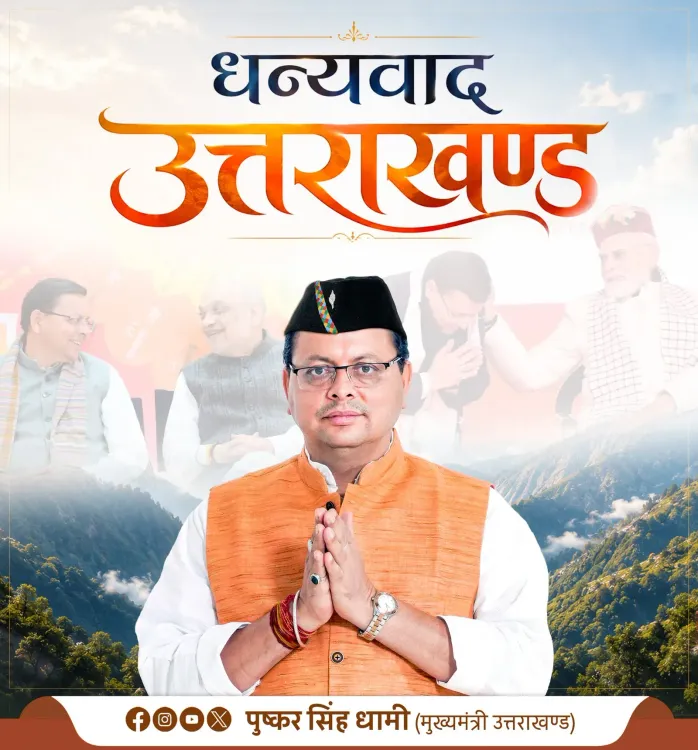
Uttarakhand Chief Minister Pushkar Singh Dhami marked five years in office on 4 July 2026, citing the UCC, anti-cheating law, women's job reservation and Rs 1 lakh crore investment grounding as highlights, while launching Phase 2 of his doorstep governance campaign.
Key Takeaways
Pushkar Singh Dhami completed five years as Uttarakhand Chief Minister on 4 July 2026 .
Uttarakhand enacted the Uniform Civil Code in February 2024 , becoming the first Indian state to do so post-independence.
The state government claims more than 34,000 youth were given government jobs through a transparent recruitment process.
30 per cent horizontal reservation for women in state government jobs was introduced during this tenure.
The 'House of Himalayas' initiative was launched to give local products national and global market access.
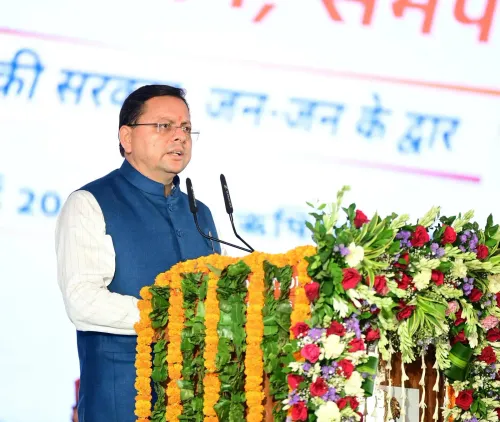
Phase 2 of the 'Jan-Jan Ki Sarkar, Jan-Jan Ke Dwar' outreach campaign was launched on the same day to deliver welfare schemes at the doorstep.
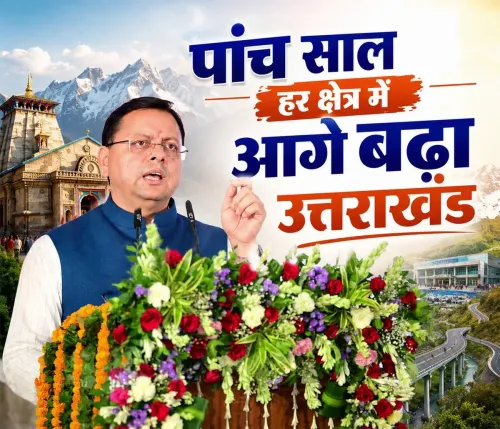
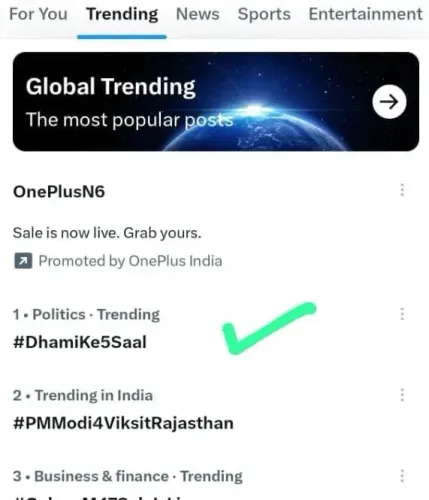
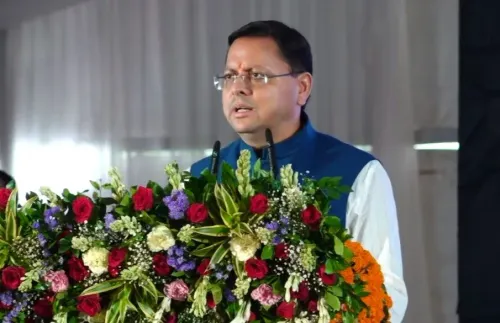
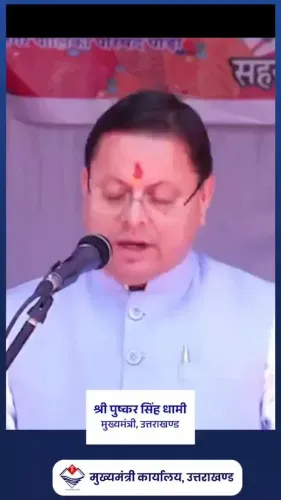
Uttarakhand Chief Minister Pushkar Singh Dhami marked five years in office on Saturday, 4 July 2026, crediting the trust of 1.25 crore Uttarakhand residents for the milestone and simultaneously launching the second phase of the state's flagship doorstep-governance campaign, 'Jan-Jan Ki Sarkar, Jan-Jan Ke Dwar' ('Government for every person, at every door').
Context
Pushkar Singh Dhami assumed office as Chief Minister in March 2021 and was returned to power after the 2022 Uttarakhand Assembly elections, making him the first BJP chief minister in the state to complete a full term after winning a fresh mandate. In his anniversary message, Dhami described his tenure as a journey of 'service, good governance and public welfare,' dedicated to the aspirations of the state's residents.
Dhami credited the guidance of Prime Minister Narendra Modi and what he called the 'double engine government' — a term referring to aligned BJP governments at the state and central levels — for enabling what he described as several 'historic decisions' over the five-year period.
Policy Backdrop
Among the decisions Dhami highlighted was Uttarakhand's Uniform Civil Code (UCC), passed by the state assembly in February 2024, which made Uttarakhand the first Indian state to enact such legislation after independence, replacing religion-based personal laws with a common legal framework. He also cited the enactment of a strict anti-cheating law targeting examination fraud, an anti-conversion law, and a strengthened land law as landmark reforms.
Dhami additionally highlighted the dissolution of the Madrasa Board and the formation of the Uttarakhand State Minority Education Authority in its place, describing it as setting 'a new precedent in the country.' The post further pointed to 30 per cent horizontal reservation for women in government jobs and a transparent recruitment drive that, he claimed, provided opportunities to more than 34,000 youth in state services — a figure flagged as unverified administrative data.
On the economic side, Dhami cited the 'House of Himalayas' initiative — a state branding programme to give local products national and global visibility — record pilgrim and tourist arrivals boosting the local economy, successful hosting of the National Games, and claimed investment grounding of more than Rs 1 lakh crore, a figure that has not been independently verified. He also noted Uttarakhand's strong performance on Sustainable Development Goals (SDGs).
Stakeholders and Impact
The governance agenda Dhami outlined spans multiple constituencies: youth through transparent recruitment and anti-cheating measures; women through job reservation; farmers and soldiers through welfare decisions; and tourists and pilgrims through infrastructure development around the Char Dham pilgrimage circuit. Solar energy promotion and homestay expansion were cited as drivers of rural self-employment.
The UCC and the restructuring of minority education institutions remain politically significant, drawing both support from the BJP's core constituency and scrutiny from civil society and minority groups who have questioned the implications for religious pluralism and community autonomy.
What's Next
The second phase of 'Jan-Jan Ki Sarkar, Jan-Jan Ke Dwar', launched on the same day as the anniversary, is designed to take the government directly to citizens for grievance redressal and last-mile delivery of welfare schemes. The campaign's measurable outcomes — including how many grievances are resolved and how many beneficiaries are reached — will be closely watched as indicators of the administration's ground-level effectiveness ahead of the next assembly election cycle. Dhami framed the continued effort under the broader national goal of 'Viksit Uttarakhand – Viksit Bharat' (Developed Uttarakhand – Developed India).
Point of View
Carefully threading together social legislation — UCC, anti-conversion law, madrasa board dissolution — with economic metrics like investment grounding and tourist arrivals to present a unified 'governance plus identity' narrative. The simultaneous launch of Phase 2 of the doorstep campaign signals that the BJP in Uttarakhand is already in mobilisation mode, using service delivery as electoral groundwork well ahead of the next assembly cycle. The framing within the 'Viksit Bharat 2047' arc also ties state performance directly to the Prime Minister's national brand, reinforcing the 'double engine' political logic. Whether the campaign's second phase translates into verifiable last-mile outcomes will determine how durable this narrative proves to be.
NationPress
3 Oct 2026
Frequently Asked Questions
How long has Pushkar Singh Dhami been Chief Minister of Uttarakhand?
Pushkar Singh Dhami has completed five years as Chief Minister of Uttarakhand as of July 2026, having first assumed office in March 2021.
What is the 'Jan-Jan Ki Sarkar, Jan-Jan Ke Dwar' campaign?
'Jan-Jan Ki Sarkar, Jan-Jan Ke Dwar' is an Uttarakhand government outreach programme in which officials travel directly to citizens for grievance redressal and last-mile delivery of welfare schemes. Its second phase was launched on 4 July 2026.
What is the Uniform Civil Code in Uttarakhand?
Uttarakhand's Uniform Civil Code, passed in February 2024, replaces religion-based personal laws with a common legal framework for all residents, making Uttarakhand the first Indian state to enact such legislation after independence.
What is 'House of Himalayas'?
'House of Himalayas' is a state government initiative launched to brand and market local products from Uttarakhand at national and international levels, aiming to boost rural incomes and self-employment.
What reservation has Uttarakhand provided to women in government jobs?
Uttarakhand introduced 30 per cent horizontal reservation for women in state government jobs during Chief Minister Dhami's tenure as part of efforts to empower 'Matri Shakti' (women).