CM Dhami Turns Uttarakhand Into a Medical Education Hub
Synopsis
The Uttarakhand CMO says Chief Minister Pushkar Singh Dhami's continuous efforts are transforming the state into a medical education hub, promising stronger health facilities for a population long underserved by specialist care in the hills.
Key Takeaways
The Chief Minister's Office of Uttarakhand announced on 18 October 2026 that the state is emerging as a medical education hub.
CM Pushkar Singh Dhami is credited with driving this transformation through sustained efforts since taking office in 2021 .
AIIMS Rishikesh , established in 2012 , remains the cornerstone federal medical institution in the state.
Districts such as Almora , Pauri , and Tehri have seen incremental expansion of government medical colleges to address chronic doctor shortages.
Future progress hinges on NMC approvals and state budget allocations for new colleges and additional MBBS and PG seats.
Medical students and rural patients across the Himalayan region stand to benefit most from expanded training capacity.
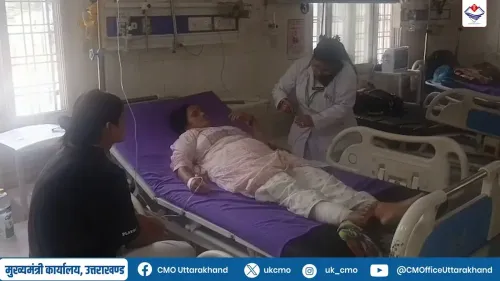
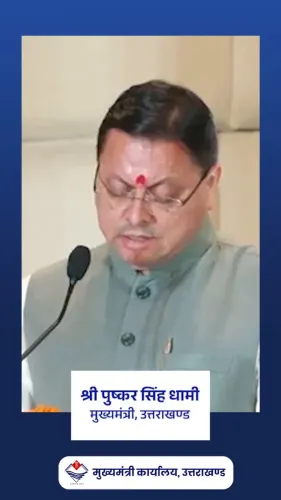
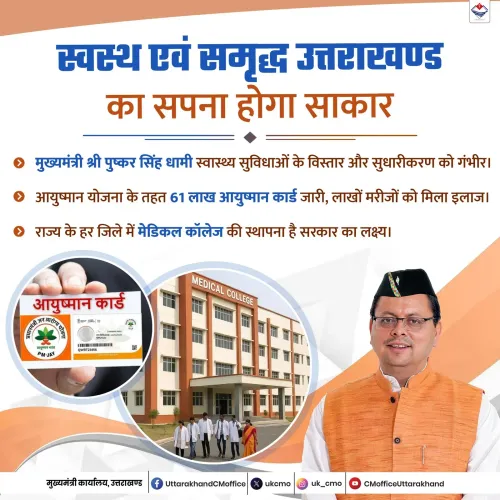
A Himalayan state long defined by its doctor shortages and difficult terrain is quietly rewriting its healthcare story. The Chief Minister's Office of Uttarakhand announced on Sunday, 18 October 2026, that under the sustained efforts of Chief Minister Pushkar Singh Dhami, Uttarakhand is fast emerging as a medical education hub — with a direct promise that health facilities across the state will grow significantly stronger.
The post, shared in Hindi, declared: 'मेडिकल एजुकेशन हब बन रहा उत्तराखण्ड' — 'Uttarakhand is becoming a medical education hub' — framing the transformation as a direct result of CM Dhami's continuous efforts.Why Uttarakhand's Doctor Shortage Made This Urgent
Uttarakhand's dispersed mountain population has historically struggled to access specialist care. Districts like Almora, Pauri, and Tehri have seen chronic shortages of trained doctors, with patients often forced to travel to the plains for secondary and tertiary care. The foundation of AIIMS Rishikesh in 2012 was the first major federal response — bringing a high-capacity training and tertiary care institution to the state for the first time. But one AIIMS was never going to be enough for a state this vast and this vertical. Successive state governments have worked to expand government medical colleges at the district level, a pattern that mirrors the national push since the mid-2010s to increase MBBS and postgraduate seats through new state institutions.Dhami's Sustained Push and What It Signals
Chief Minister Pushkar Singh Dhami, who has led the state since 2021, has consistently positioned healthcare access and educational infrastructure as twin pillars of his administration's human-development agenda. The framing of Uttarakhand as a 'medical education hub' signals ambition that goes beyond plugging gaps — it points toward a state that wants to export trained medical talent rather than simply import doctors from elsewhere. For medical students across the Himalayan region, this trajectory matters enormously. Expanded seats in government colleges mean lower costs and greater access. For rural patients, more trained doctors entering the system translates — over time — into shorter distances to care.What Comes Next: Seats, Colleges, and Regulatory Approvals
The real test of this vision will come in state budget allocations and in approvals from the National Medical Commission (NMC) for additional colleges or seat increases in the next academic cycle. Building a medical education hub requires not just announcements but sustained capital expenditure, faculty recruitment, and the grinding institutional work of earning regulatory clearance. Those benchmarks will determine whether this moment marks a genuine inflection point — or a milestone still in the making.Point of View
However, will be hard numbers: NMC-approved seats, functional colleges in hill districts, and recruitable faculty — none of which can be supplied by a post alone. The gap between aspiration and NMC paperwork is where this agenda will either consolidate or stall.
NationPress
18 Oct 2026
Frequently Asked Questions
Is Uttarakhand becoming a medical education hub?
The Chief Minister's Office of Uttarakhand stated on 18 October 2026 that the state is emerging as a medical education hub under CM Pushkar Singh Dhami's sustained efforts, though specific new colleges or seat numbers have not been officially detailed.
Which medical colleges are in Uttarakhand?
Uttarakhand has AIIMS Rishikesh — established in 2012 as the state's primary central medical institution — along with government medical colleges in districts including Almora, Pauri, and Tehri that have been expanded incrementally.
What is CM Pushkar Singh Dhami doing for healthcare in Uttarakhand?
CM Dhami, in office since 2021, has positioned healthcare access and medical education expansion as key priorities, with the CMO crediting his efforts for the state's push toward becoming a medical education hub.
How does AIIMS Rishikesh help Uttarakhand?
AIIMS Rishikesh, set up in 2012, provides high-capacity specialist training and tertiary care in the state, serving as the anchor institution around which the broader medical education expansion has been built.
What approvals are needed for new medical colleges in Uttarakhand?
Any new government medical college or increase in MBBS and postgraduate seats requires approval from the National Medical Commission (NMC), in addition to state budget allocations and faculty recruitment.