CM Dhami: Uttarakhand to set up India's first Agniveer Rojgar Cell
Synopsis
Uttarakhand CM Pushkar Singh Dhami announced the state will set up India's first Agniveer Rojgar Cell to coordinate guidance, skilling, rehabilitation and employment for Agniveers, while extending special homestay and self-employment grants to ex-servicemen and Agniveers.
Key Takeaways
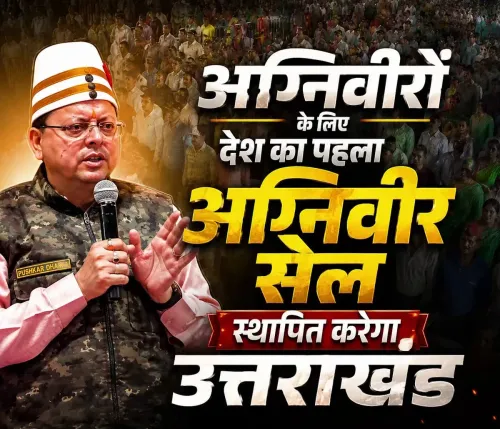
Uttarakhand will become the first state in India to establish a dedicated Agniveer Rojgar Cell .
The cell will coordinate guidance, skill development, rehabilitation and employment for Agniveers completing their four-year service.
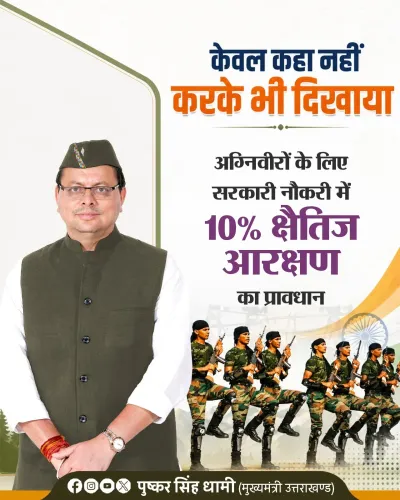
Ex-servicemen and Agniveers will receive special grants and priority under homestay and self-employment schemes .
The initiative was announced by CM Pushkar Singh Dhami on 17 July 2026 , crediting PM Narendra Modi's leadership.
The announcement builds on Uttarakhand's existing subsidised homestay policy for rural and ex-servicemen households.
Formal notification and budget allocation for the cell are pending in the Uttarakhand state assembly .
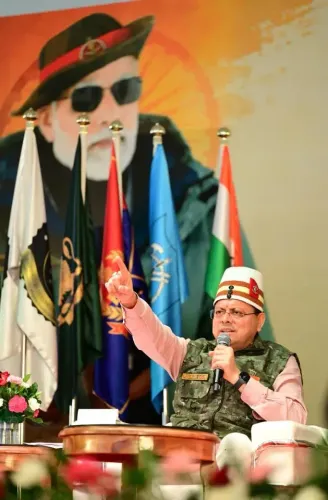
Uttarakhand Chief Minister Pushkar Singh Dhami announced on Friday, 17 July 2026 that Uttarakhand will become the first state in India to establish an Agniveer Rojgar Cell, a dedicated body to coordinate guidance, skill development, rehabilitation, and employment opportunities for Agniveers completing their service under the central government's Agnipath scheme.
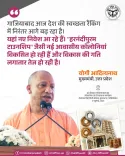
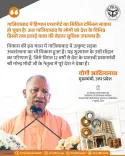
Posting on X, CM Dhami credited Prime Minister Narendra Modi's leadership for the initiative. In his words: 'आदरणीय प्रधानमंत्री श्री @narendramodi जी के कुशल नेतृत्व में उत्तराखंड देश का पहला राज्य बनेगा' ('Under the able leadership of respected Prime Minister Shri Narendra Modi, Uttarakhand will become the first state in the country'). He added that the cell will ensure 'effective coordination of guidance, skill development, rehabilitation and employment opportunities' for Agniveers, and that ex-servicemen and Agniveers will receive special grants and priority under homestay and self-employment schemes.
Context
The Agnipath scheme was launched by the Ministry of Defence in June 2022, replacing permanent military recruitment with four-year short-service contracts across the Army, Navy, and Air Force. Recruits under this model are designated Agniveers. The scheme triggered widespread protests at the time of its announcement, with concerns centred on post-service employment prospects for the large majority of Agniveers who do not get retained permanently.
Uttarakhand is a Himalayan state with one of India's highest per-capita densities of ex-servicemen, making the welfare of defence personnel a politically and socially significant issue in the region. The state has long maintained a culture of military service, with districts such as Pauri Garhwal and Lansdowne historically among the top contributors to the armed forces.
Policy Backdrop
Since the Agnipath scheme's rollout, several BJP-ruled states have introduced supplementary welfare packages for Agniveers to address employment concerns at the state level. Uttarakhand's proposed Agniveer Rojgar Cell goes a step further by institutionalising this support through a dedicated coordination body, rather than offering only one-off benefits.
The announcement also ties Agniveer welfare to Uttarakhand's homestay economy, which has been a policy priority for the state government. Existing schemes already provide subsidised homestay support to rural and ex-servicemen households; the new announcement extends and prioritises these benefits explicitly for Agniveers and ex-servicemen. This linkage reflects the state's broader strategy of connecting defence welfare with its rural tourism and self-employment ecosystem.
Stakeholders and Impact
Agniveers from Uttarakhand completing their four-year contracts stand to be the primary beneficiaries, gaining access to structured skilling, career counselling, and job placement support through the proposed cell. Ex-servicemen are also included in the expanded homestay and self-employment grant provisions, broadening the scheme's reach beyond current Agnipath recruits.
Homestay operators and rural self-employment ventures linked to Uttarakhand's tourism sector could see increased participation from trained ex-defence personnel, potentially raising the quality and scale of community-based tourism in the state. The initiative may also ease pressure on state government jobs, which have been a key demand from Agniveer cohorts across India.
What's Next
The formal establishment of the Agniveer Rojgar Cell will require a government notification and budget allocation, likely to be taken up in the Uttarakhand state assembly. Operational details — including the cell's staffing, nodal ministry, and tie-ups with industry or skilling bodies — are yet to be announced publicly.
Observers will also watch whether the central government issues complementary guidelines on inter-state recognition of Agniveer training certificates, which would determine how portable the skills and credentials of Uttarakhand-based Agniveers are across the country. If the model proves effective, other states may follow Uttarakhand's lead in establishing similar institutional frameworks.
Point of View
Uttarakhand is signalling a more durable policy response to the Agnipath scheme's employment gap — and positioning itself as a model for other BJP-governed states. The linkage to homestay and rural tourism also reveals a dual objective: absorbing trained ex-defence personnel into a growing economic sector while reinforcing the state's identity as both a military heartland and a tourism destination. Whether the cell delivers on its mandate will depend heavily on the budget and inter-departmental coordination that follows the announcement.
NationPress
17 Jul 2026
Frequently Asked Questions
What is the Agniveer Rojgar Cell announced by Uttarakhand?
The Agniveer Rojgar Cell is a proposed state government body in Uttarakhand that will coordinate guidance, skill development, rehabilitation and employment opportunities for Agniveers — recruits who complete four-year service contracts under the central Agnipath scheme. Uttarakhand has been announced as the first state in India to establish such a cell.
What is the Agnipath scheme and who are Agniveers?
The Agnipath scheme, launched by India's Ministry of Defence in June 2022, replaced permanent military recruitment with four-year short-service contracts across the Army, Navy and Air Force. Recruits under this scheme are called Agniveers. A small percentage are retained permanently; the majority complete their term and return to civilian life.
What benefits will Agniveers get under Uttarakhand's new scheme?
Under the announcement by CM Pushkar Singh Dhami, Agniveers will receive structured guidance, skill development and job placement support through the Agniveer Rojgar Cell. Additionally, ex-servicemen and Agniveers will be given special grants and priority access under Uttarakhand's existing homestay and self-employment schemes.
Why is Uttarakhand significant for ex-servicemen and Agniveers?
Uttarakhand has one of the highest per-capita densities of ex-servicemen in India, with districts like Pauri Garhwal historically contributing large numbers to the armed forces. Defence welfare is therefore a major political and social priority in the state, making it a natural candidate for pioneering Agniveer support measures.
When will the Agniveer Rojgar Cell become operational in Uttarakhand?
No operational date has been announced yet. The cell's formal establishment will require a government notification and budget allocation, expected to be taken up in the Uttarakhand state assembly. Details on staffing and institutional tie-ups are also pending.