CM Dhami Visits Injured Tunnel Workers in Gopeshwar
Synopsis
Uttarakhand CM Pushkar Singh Dhami visited injured workers at District Hospital Gopeshwar on August 14, 2026, after inspecting the Piplkoti tunnel site in Chamoli. He directed doctors and officials to ensure best-possible care and ordered heli-ambulance readiness for critical referrals.
Key Takeaways
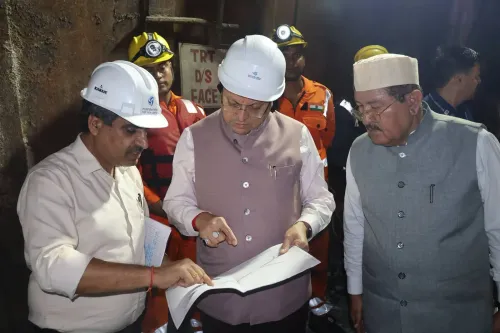
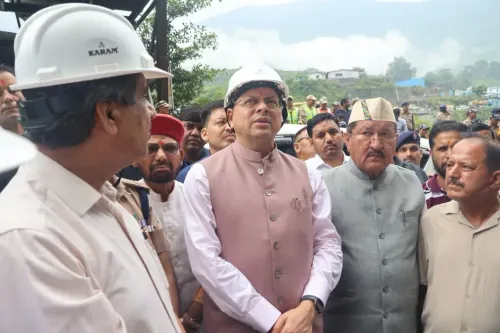
CM Dhami conducted a ground inspection of the affected tunnel site at Piplkoti, Chamoli before proceeding to District Hospital, Gopeshwar on August 14, 2026 .
He met rescued injured workers personally and consulted treating physicians on their medical status.
Dhami ordered that no gap in treatment be allowed at any stage and that workers be referred immediately to higher centres if needed.
Heli-ambulance and other emergency medical resources were directed to be kept on standby for critical cases.
Chamoli hosts major tunnel and road construction under the Char Dham Pariyojana , approved in 2016 , making it a high-risk zone for construction accidents.
The cause of the specific Piplkoti tunnel incident and any safety audit outcome remain to be officially determined.
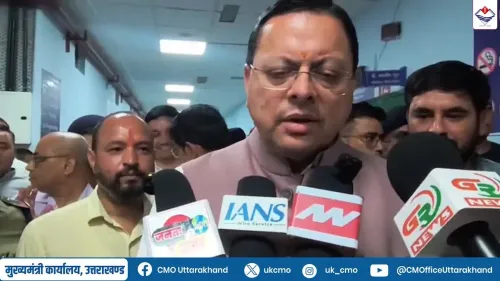
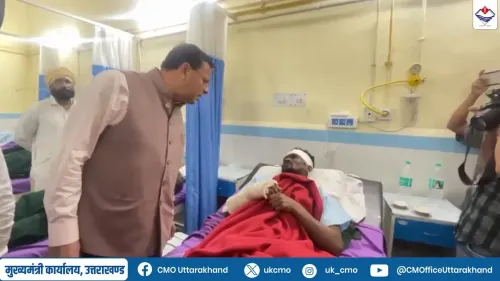
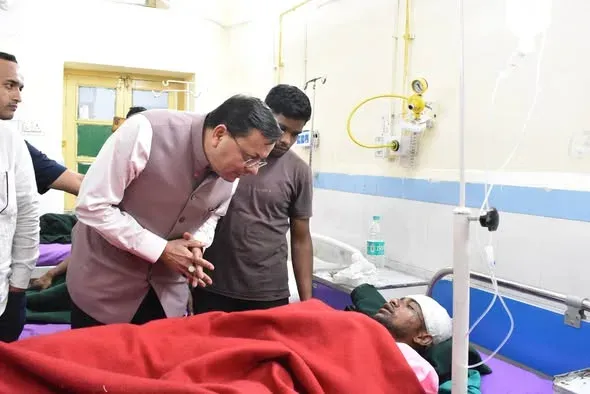
After inspecting the affected tunnel site at Piplkoti, Chamoli, Uttarakhand Chief Minister Pushkar Singh Dhami drove to District Hospital, Gopeshwar on Friday, August 14, 2026, to personally meet workers rescued from the incident — a direct signal that the state is watching every step of their recovery.
Dhami met the injured workers bedside, inquired about their condition, and separately consulted the treating physicians on the nature and progress of each case. He quoted a clear principle: 'Pratyek shramik ka jeevan amoolya hai' — 'Every worker's life is invaluable.'
Orders Issued: No Gap in Care, Heli-Ambulance on Standby
The Chief Minister issued on-the-spot directives to doctors and district officials: provide the best possible medical care to every injured worker, and allow no shortfall at any stage of treatment. Should any worker's condition deteriorate, he ordered immediate referral to a higher medical centre — with heli-ambulance and other emergency medical resources to be kept ready.
The instruction to pre-position aerial evacuation capacity is significant. Gopeshwar sits deep in the Himalayas; road access to tertiary hospitals in Dehradun or Rishikesh can take hours under normal conditions and far longer after a tunnel incident that may have disrupted local routes.
Chamoli's Infrastructure Burden — and Its Risks
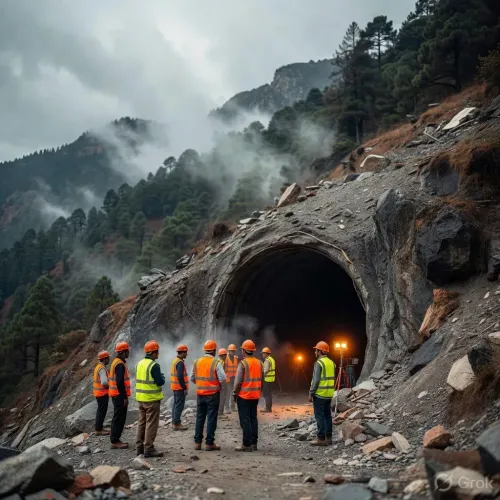
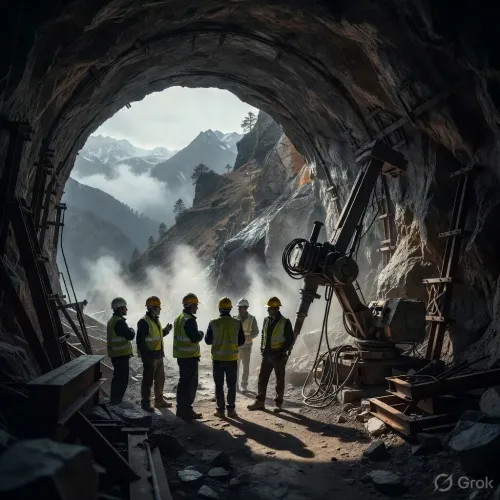
Chamoli district is one of the most construction-intensive corridors in Uttarakhand, hosting tunnel and road work tied to the Char Dham Pariyojana — the 2016-approved national highway upgrade project connecting the four sacred shrines, including Badrinath. The geology of the region — steep slopes, loose Himalayan rock, seasonal snowmelt — has made tunnel boring a recurring site of accidents across multiple projects over the years.
Chief ministerial visits to incident sites and hospitals after such accidents have become a recognisable pattern in Uttarakhand's crisis management playbook, combining on-ground oversight with public reassurance. What distinguishes this response is the explicit instruction on heli-ambulance preparedness — a detail that points to the administration's awareness of how quickly a remote mountain hospital can be overwhelmed.
What Comes Next for the Piplkoti Site
The immediate question is whether any of the injured workers will require transfer to higher facilities, and whether the Piplkoti tunnel itself will face a safety audit or operational pause. Uttarakhand has, after past incidents, ordered inquiry committees and temporary work stoppages at affected sites — though outcomes have varied. The workers' recovery, and any official finding on the cause of this incident, will be the next markers to watch.
Dhami closed with a prayer for the workers' swift recovery. The real test will be whether the medical infrastructure he mobilised today holds up if the most critical cases need to move.
Point of View
Swift chief-ministerial response to infrastructure accidents — especially in electorally and symbolically important Himalayan corridors like Chamoli. The Char Dham Pariyojana, a flagship national project, adds reputational pressure on the state to demonstrate that worker safety keeps pace with construction ambition. Whether this translates into a structural safety audit of ongoing tunnel projects, or remains a one-day optic, will define how seriously the administration treats the recurring geological risks that Himalayan construction inevitably carries.
NationPress
14 Aug 2026
Frequently Asked Questions
What happened at the Piplkoti tunnel in Chamoli?
A tunnel incident at Piplkoti in Chamoli district, Uttarakhand, led to workers being injured and subsequently rescued. CM Dhami inspected the site and visited the injured at Gopeshwar hospital on August 14, 2026. The exact cause and scale of the incident are yet to be officially confirmed.
Which hospital are the injured tunnel workers being treated at?
The rescued injured workers are being treated at District Hospital, Gopeshwar , the main government referral hospital in Chamoli district, Uttarakhand.
What orders did CM Dhami give for the injured workers?
Dhami directed doctors and officials to provide the best possible medical care with no shortfall at any stage, to immediately refer critical cases to higher medical centres, and to keep heli-ambulance and other emergency resources on standby.
Is the Piplkoti tunnel part of the Char Dham Pariyojana?
Chamoli district hosts tunnel and road construction under the Char Dham Pariyojana, the national highway upgrade project approved in 2016 that includes the Badrinath route. Whether this specific Piplkoti tunnel is directly under that scheme has not been officially confirmed in the post.
Why is heli-ambulance important for Chamoli tunnel accident victims?
Gopeshwar and the Piplkoti area are located deep in the Himalayas, where road access to tertiary hospitals can take many hours. A heli-ambulance allows critically injured workers to be airlifted rapidly to better-equipped facilities in Dehradun or Rishikesh.