CM Yogi: UP Grants Citizenship to Pakistan, Bangladesh Displaced
Synopsis
Chief Minister Yogi Adityanath announced on 14 August 2026 that Uttar Pradesh has granted citizenship to displaced victims from Pakistan and Bangladesh, and that a dedicated CAA-backed process is now active for Sikh families displaced from Pakistan in Rampur district.
Key Takeaways
CM Yogi Adityanath confirmed that Uttar Pradesh has granted citizenship to victims displaced from Pakistan and Bangladesh (East Pakistan) .
A formal citizenship process is underway specifically for the Sikh community displaced from Pakistan and residing in Rampur district .
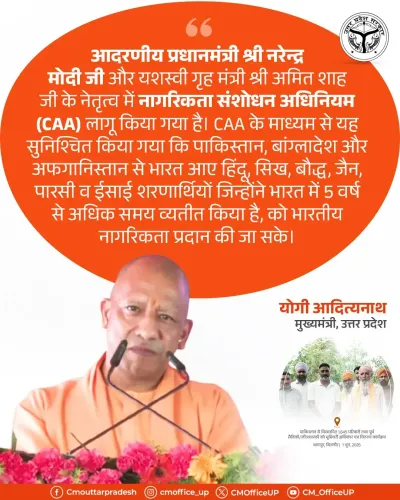
The legal basis is the Citizenship Amendment Act, 2019 , which fast-tracks citizenship for non-Muslim minorities from Pakistan, Bangladesh, and Afghanistan who entered India before 31 December 2014 .
The announcement was made on 14 August 2026 — Independence Day eve — by the Chief Minister's Office of Uttar Pradesh .
Rampur has a historically documented Sikh population with roots in Partition-era and post-Partition displacement from Pakistan.
On the eve of India's Independence Day, Chief Minister Yogi Adityanath announced that Uttar Pradesh has granted citizenship to displaced victims from Pakistan and Bangladesh (formerly East Pakistan) — and that a formal process is now underway to extend the same to Sikh families displaced from Pakistan and settled in Rampur.
What CM Yogi said — and who it covers
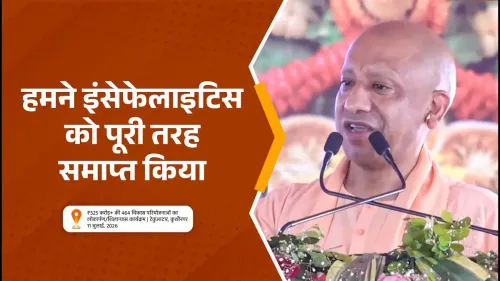
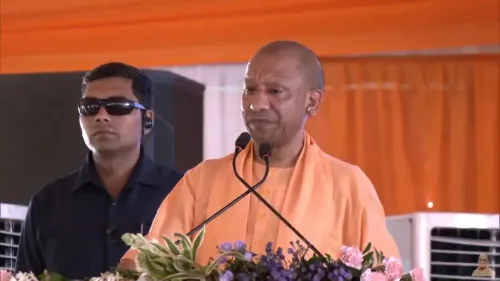
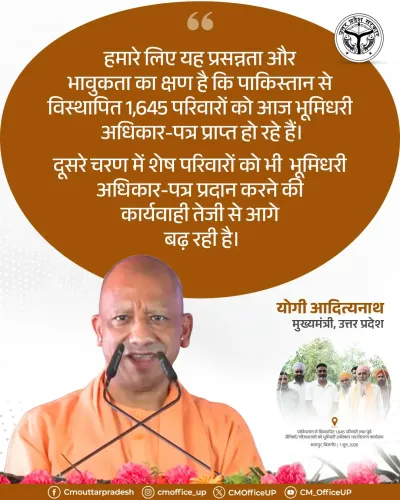
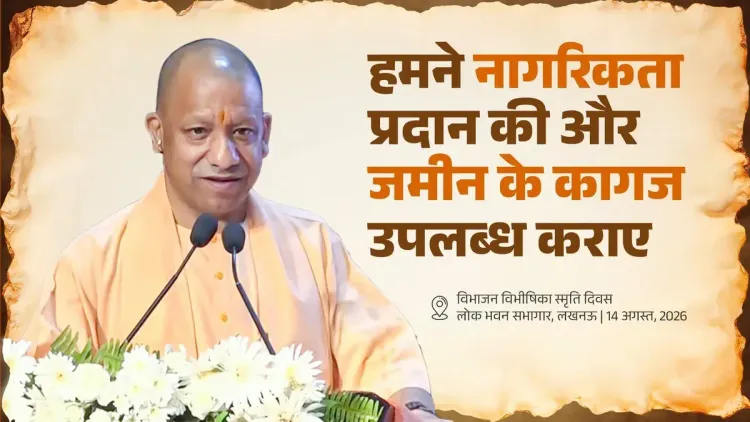
The Chief Minister's Office of Uttar Pradesh posted the statement on 14 August 2026, quoting CM Yogi directly: 'हमने पाकिस्तान और बांग्लादेश (पूर्वी पाकिस्तान) से विस्थापित पीड़ितों को नागरिकता प्रदान की है' — 'We have granted citizenship to victims displaced from Pakistan and Bangladesh (East Pakistan).' The statement added that a citizenship process is now being run specifically for the Sikh community displaced from Pakistan and residing in Rampur.
The timing — Independence Day eve — is pointed. For families whose displacement traces back to Partition in 1947, or to subsequent waves of religious persecution across the border, the announcement carries a weight that goes beyond administrative procedure.
The CAA framework powering Rampur's process
The legal scaffolding here is the Citizenship Amendment Act (CAA), enacted in December 2019, which amended the Citizenship Act of 1955 to create an accelerated pathway for non-Muslim minorities — including Sikhs, Hindus, Christians, Parsis, Jains, and Buddhists — from Pakistan, Bangladesh, and Afghanistan who entered India before 31 December 2014.
Rampur district in western Uttar Pradesh has historically been home to Sikh families who fled Pakistan across decades of displacement. That the state is now running a dedicated citizenship process there reflects the UP government's push to translate the CAA's central mandate into district-level action — moving the policy from Parliament to the ground.
UP's role in CAA implementation
Uttar Pradesh, under the BJP-led Yogi Adityanath government, has consistently positioned itself at the forefront of implementing central citizenship policy for non-Muslim minorities from neighbouring countries. Periodic state-level announcements — covering specific communities and districts with documented migration histories — have marked this alignment since the CAA's passage.
The reference to Bangladesh (East Pakistan) is deliberate: it signals that the state's citizenship grants cover not just Partition-era Sikh and Hindu displacements from undivided Pakistan, but also the communities uprooted during and after the 1971 Liberation War, when East Pakistan became Bangladesh.
For the Sikh families of Rampur, many of whom have lived in administrative limbo for years or even decades, a formalised citizenship process represents a concrete resolution — an address, a document, a country they can call theirs on paper as much as in lived reality. That is the story beneath the announcement.
Point of View
CM Yogi grounds an abstract policy in a real community, making it harder to dismiss as symbolic. The Independence Day eve timing amplifies the political resonance: citizenship granted to Partition's inheritors on the anniversary of Partition itself. Analysts will watch whether this triggers similar district-level announcements across UP, and whether the pace of processing matches the political signal.
NationPress
14 Aug 2026
Frequently Asked Questions
Who is being granted citizenship in Uttar Pradesh under CM Yogi's announcement?
Victims displaced from Pakistan and Bangladesh (formerly East Pakistan) have been granted citizenship by Uttar Pradesh. A dedicated process is also underway for Sikh families displaced from Pakistan and living in Rampur district.
What is the legal basis for granting citizenship to displaced Sikhs in Rampur?
The Citizenship Amendment Act (CAA), 2019 provides the legal framework. It creates an accelerated citizenship pathway for non-Muslim minorities — including Sikhs — from Pakistan, Bangladesh, and Afghanistan who entered India before 31 December 2014.
Why does Rampur have a displaced Sikh community from Pakistan?
Rampur district in western Uttar Pradesh has historically been home to Sikh families who migrated from Pakistan following Partition in 1947 and in subsequent decades due to religious persecution.
What does 'Bangladesh (East Pakistan)' mean in CM Yogi's statement?
It refers to the fact that present-day Bangladesh was formerly known as East Pakistan before the 1971 Liberation War. The CAA covers minorities displaced from both the pre-1971 and post-1971 territories, and CM Yogi's statement explicitly acknowledges both.
When did CM Yogi make this citizenship announcement?
The statement was posted by the Chief Minister's Office of Uttar Pradesh on 14 August 2026 , the eve of India's Independence Day.