CM Yogi defines Viksit Bharat: poor, artisans, farmers at centre
Synopsis
Chief Minister Yogi Adityanath defined the Viksit Bharat vision on 14 August 2026 as three human benchmarks: a poor person living with dignity, every artisan eager to become an entrepreneur, and every farmer achieving self-reliance — anchoring UP's policy direction to India's 2047 developed-nation goal.
Key Takeaways
The Chief Minister's Office of Uttar Pradesh shared a statement by CM Yogi Adityanath on 14 August 2026 defining the Viksit Bharat vision.
Adityanath identified three benchmarks: poverty exit with dignity, artisan entrepreneurship, and farmer self-reliance.
The statement aligns Uttar Pradesh 's priorities with PM Modi 's Viksit Bharat framework, first outlined in 2023 , targeting developed-nation status by 2047 .
The framing notably centres human outcomes — dignity, agency, self-reliance — over macroeconomic metrics.
Artisans are explicitly framed as aspiring entrepreneurs, not just beneficiaries, a departure from conventional inclusion narratives.
The word annadata ('giver of food') is paired with aatmanirbharta ('self-reliance'), signalling a shift from subsidy-dependence to market agency for farmers.
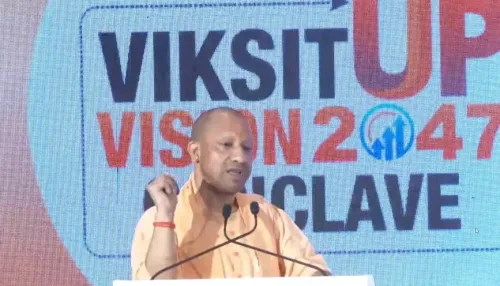
Three groups stand between India and its 2047 dream — and Chief Minister Yogi Adityanath named them plainly on 14 August 2026: the poor, the artisan, and the farmer. In a statement shared by the Chief Minister's Office of Uttar Pradesh, Yogi Adityanath laid out a human-scale definition of what a developed India must actually look like on the ground.
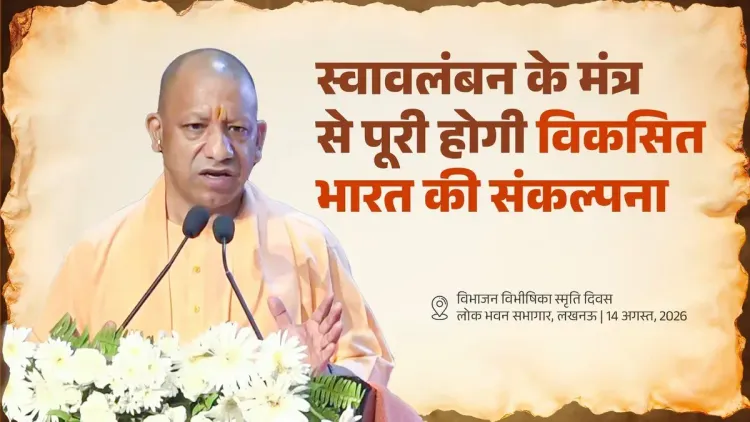
The Chief Minister's words, translated from Hindi: 'Viksit Bharat ki sankalpana tab sakaar hogi' — 'The vision of a Developed India will be realised when a poor person rises out of poverty and lives a dignified life as an ordinary citizen, every artisan is eager to become an entrepreneur, and every farmer who feeds the nation is achieving the goal of self-reliance.'
A three-part test for 2047
The statement is notable for what it does not say. It does not cite GDP figures or infrastructure targets. Instead, it anchors the Viksit Bharat vision — Prime Minister Narendra Modi's national framework, first outlined in 2023, for India to attain developed-nation status by 2047 — to three human conditions: dignity for the poor, entrepreneurship for artisans, and self-reliance for farmers. That framing is deliberate. It shifts the metric from macro aggregates to lived experience. Uttar Pradesh, India's most populous state, carries outsized weight in any national poverty or agricultural target. Progress here moves the national needle. By aligning the state's articulated priorities so explicitly with the Viksit Bharat framework, Yogi Adityanath signals that UP's policy calendar — artisan upskilling, farmer income programmes, poverty-exit schemes — will be read as direct contributions to the 2047 goal.Why artisans and farmers share the frame
Placing artisans alongside farmers in the same sentence is a quiet but pointed choice. Traditional craftspeople — weavers, potters, carpenters — have historically sat outside mainstream economic inclusion narratives that focus almost entirely on agriculture or formal employment. Calling them out as aspiring entrepreneurs, not just beneficiaries, reframes their role. The ambition is not charity; it is agency. For farmers, the word used — annadata, literally 'giver of food' — carries deep cultural weight in the Hindi belt. Pairing it with 'self-reliance' (aatmanirbharta) echoes the broader national vocabulary without reducing the farmer to a subsidy recipient. The aspiration is a farmer who does not need rescue, but commands the market. Watch the next budget cycle in Lucknow for whether these three groups — the poor, the artisan, the farmer — get distinct, measurable scheme allocations that match the rhetoric. That is where the vision meets the ledger.Point of View
Entrepreneurship, and self-reliance — rather than scheme names or budget numbers — he speaks to a cultural register that resonates deeply in the Hindi belt. The conspicuous absence of macroeconomic language is itself a message: development, in this framing, is personal and moral before it is statistical. Whether state budgets and scheme designs follow this human-scale framing will determine if the vision holds beyond the rhetoric.
NationPress
14 Aug 2026
Frequently Asked Questions
What is the Viksit Bharat vision?
Viksit Bharat is a national vision promoted by Prime Minister Narendra Modi for India to achieve developed-nation status by 2047, the centenary of independence. It encompasses economic growth, poverty reduction, and inclusive development across all sectors.
What did CM Yogi Adityanath say about Viksit Bharat?
CM Yogi Adityanath stated that the Viksit Bharat vision will be realised when a poor person rises out of poverty to live a dignified life, every artisan is eager to become an entrepreneur, and every farmer achieves self-reliance.
Who are the three groups CM Yogi identified for Viksit Bharat?
CM Yogi Adityanath identified three groups: poor citizens who must exit poverty with dignity, artisans who aspire to become entrepreneurs, and farmers (referred to as annadata) who must achieve self-reliance.
What is the significance of Uttar Pradesh in the Viksit Bharat framework?
Uttar Pradesh is India's most populous state, meaning its progress on poverty reduction, artisan development, and agricultural self-reliance has an outsized impact on national targets under the Viksit Bharat framework.
What does annadata mean in CM Yogi's statement?
Annadata is a Hindi word meaning 'giver of food' and is a culturally significant term for farmers in the Hindi belt. CM Yogi used it alongside the goal of aatmanirbharta, or self-reliance, to frame farmers as agents rather than subsidy recipients.