CM Dhami Warns Against Misuse of Social Media to Spread False Narratives
Synopsis
Uttarakhand Chief Minister Pushkar Singh Dhami on 25 May 2026 cautioned citizens to be vigilant against the misuse of social media to spread false narratives and confusion, calling the trend the work of a 'negative and frustrated mindset'. The advisory comes amid a broader national policy focus on digital platform accountability.
Key Takeaways
CM Pushkar Singh Dhami issued a public advisory on 25 May 2026 warning against social media misuse to fabricate false narratives.
Dhami acknowledged the positive role of social media while highlighting its exploitation by those with a 'negative and frustrated mindset'.
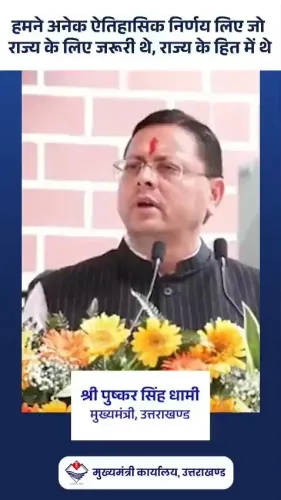
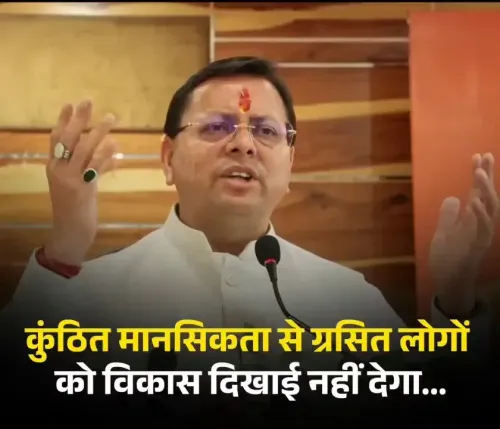
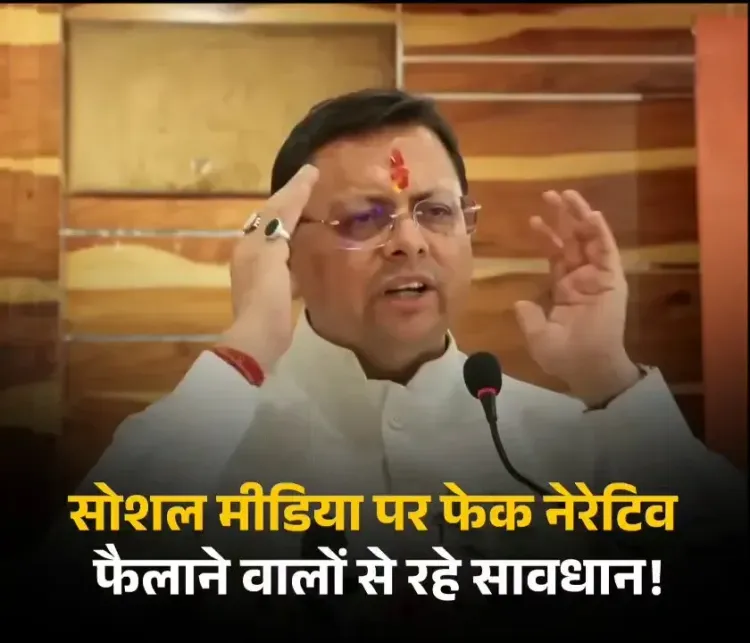
The post was accompanied by a video, reinforcing the message as a deliberate public communication effort.
The advisory aligns with the IT (Intermediary Guidelines and Digital Media Ethics Code) Rules, 2021 , which mandate platform accountability for false content.
The Uttarakhand assembly elections are due in 2027 , heightening the political salience of messaging around social media responsibility.
No specific incident or controversy was cited by Dhami, framing the caution as a broad civic appeal.
Uttarakhand Chief Minister Pushkar Singh Dhami on Monday, 25 May 2026, issued a public caution urging citizens to remain alert against individuals who misuse social media to spread confusion and fabricate false narratives. Posting on X, Dhami acknowledged the positive uses of digital platforms while drawing attention to what he described as a 'negative and frustrated mindset' exploiting these spaces to destabilise social harmony.
In his post, Dhami wrote — 'जहां एक ओर सोशल मीडिया का उपयोग विभिन्न सकारात्मक कार्यों के लिए किया जा रहा है, वहीं कुछ नकारात्मक और कुंठित मानसिकता से ग्रसित लोग समाज में भ्रम फैलाने और झूठे नैरेटिव गढ़ने के लिए भी इसका दुरुपयोग कर रहे हैं।' — translating broadly to: 'While social media is being used for various positive purposes, some people afflicted with a negative and frustrated mindset are also misusing it to spread confusion and construct false narratives in society. We need to be alert and cautious about such people.'
Context
Pushkar Singh Dhami has served as Chief Minister of Uttarakhand since 2021 and is a senior leader of the Bharatiya Janata Party (BJP). He has regularly used his social media presence to address governance issues, promote tourism in the Himalayan state, and comment on digital citizenship. This latest post is directed at the general public and social media users, urging civic vigilance against the deliberate spread of misinformation.
The post includes a video, the contents of which were not independently described in available information, but the accompanying text positions the message as a broader advisory on responsible social media use rather than a response to any single identified incident.
Policy Backdrop
The concern over social media misuse has a well-established policy lineage at both the central and state levels. The Information Technology (Intermediary Guidelines and Digital Media Ethics Code) Rules, 2021 introduced mandatory fact-checking mechanisms and due-diligence obligations for digital platforms operating in India. These rules were designed to create accountability for the spread of false content and to establish grievance-redressal channels for affected users.
Between 2019 and 2020, the Ministry of Electronics and Information Technology ran several public awareness campaigns targeting the circulation of fake news, particularly during periods of heightened social sensitivity. BJP-led governments at both the central and state levels have since periodically issued similar public cautions, framing the misuse of social media as a threat to social order and democratic discourse.
Stakeholders and Impact
The advisory is directed at the broad population of social media users across Uttarakhand and, by extension, the wider Indian digital public. Civil society organisations focused on digital literacy, platform safety advocates, and ordinary citizens who consume news and commentary through social media are all directly addressed by the Chief Minister's caution.
For the Uttarakhand government, which has invested significantly in positioning the state as a tourism and investment destination, the unchecked spread of false narratives carries reputational risks. Maintaining social harmony in a state with diverse religious and cultural communities remains a standing priority for the administration.
What's Next
Observers will watch for any follow-up administrative action from the Uttarakhand government, including possible directives on digital literacy programmes or coordination with central agencies for monitoring social media content. With Uttarakhand assembly elections due in 2027, the political and governance environment around digital information management is likely to receive increasing attention. Dhami's public messaging on this front signals that the administration intends to keep the issue of social media responsibility at the forefront of its public communication.
Point of View
Particularly during periods of social sensitivity or approaching electoral cycles. By framing the problem as the work of a 'negative and frustrated mindset', Dhami positions his administration as a defender of social harmony without naming a specific adversary — a rhetorical choice that broadens the appeal while keeping the message politically useful. With Uttarakhand's assembly elections on the horizon in 2027, such messaging also serves to pre-emptively delegitimise digital opposition narratives. The broader arc points toward incremental state-level coordination with central digital governance frameworks as the 2027 poll season approaches.
NationPress
9 Oct 2026
Frequently Asked Questions
What did Uttarakhand CM Pushkar Singh Dhami say about social media?
CM Dhami cautioned citizens on 25 May 2026 that while social media serves many positive purposes, some people with a 'negative and frustrated mindset' are misusing it to spread confusion and construct false narratives, urging the public to remain alert.
Why is CM Dhami warning about fake news on social media?
Dhami's warning reflects a broader concern shared by BJP-led governments about the deliberate spread of misinformation on digital platforms, particularly in the context of social harmony and the IT Rules 2021 framework.
What are India's rules against fake news on social media?
The Information Technology (Intermediary Guidelines and Digital Media Ethics Code) Rules, 2021 require social media platforms to exercise due diligence, establish grievance-redressal mechanisms, and comply with fact-checking requirements to curb the spread of false content.
Is Uttarakhand taking action against social media misinformation?
As of May 2026, CM Dhami has issued a public advisory urging vigilance. Any specific administrative follow-up, such as digital literacy programmes or coordination with central agencies, had not been announced at the time of the post.
When are the next Uttarakhand assembly elections?
The next Uttarakhand assembly elections are due in 2027, which adds political context to the administration's increasing focus on social media responsibility and digital governance.