CM Fadnavis Backs Modi@25 Governance Fellowship
Synopsis
Maharashtra CM Devendra Fadnavis has promoted Rambhau Mhalgi Prabodhini's 'Modi@25' fellowship, launched by Defence Minister Rajnath Singh, to document and analyse PM Narendra Modi's governance philosophy across 25 years as head of government, inviting scholars and policy practitioners to apply.
Key Takeaways
Rambhau Mhalgi Prabodhini has launched the 'Understanding Transformative Governance | Modi@25' fellowship initiative.
The programme was formally launched by Defence Minister Rajnath Singh .
PM Narendra Modi completes 25 years as head of government on 7 October 2026 , spanning Gujarat CM and two-plus terms as PM.
The fellowship focuses on institutional reform, strategic governance, and accountability — not biography.
Maharashtra CM Devendra Fadnavis amplified the initiative on X, urging followers to apply at utgf.rmponweb.org .
RMP is a long-standing BJP-affiliated policy and training institution based in Maharashtra.
Twenty-five years at the helm of government is a milestone most politicians only dream of — and on 7 October 2026, Maharashtra Chief Minister Devendra Fadnavis marked that milestone by amplifying a structured academic initiative designed to study exactly what those years have meant for India's institutions and governance architecture.
What the Modi@25 Fellowship Actually Is
Rambhau Mhalgi Prabodhini (RMP), a Thane-based policy research and training institution closely associated with the BJP's intellectual ecosystem, has launched a fellowship programme titled 'Understanding Transformative Governance | Modi@25'. The initiative was formally launched by Defence Minister Rajnath Singh and invites researchers, policy practitioners, and scholars to apply through its portal at utgf.rmponweb.org.
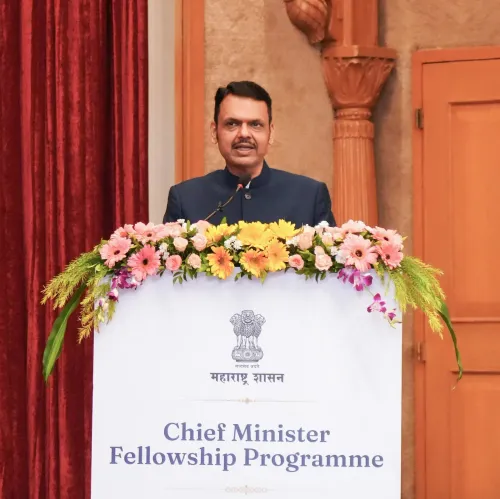
The fellowship is not a biography project. As Fadnavis described it, the programme moves beyond personal narrative to examine how vision, strategic thinking, decisive action, institutional reform, implementation and accountability have collectively shaped India's administrative systems over a quarter-century — drawing on rigorous research, comparative analysis, documentary evidence, and stakeholder perspectives.
Rambhau Mhalgi Prabodhini's Role in BJP's Policy World
Rambhau Mhalgi Prabodhini is one of the oldest BJP-affiliated training and research foundations in Maharashtra, named after the late party leader and parliamentarian Rambhau Mhalgi. It has historically run governance training programmes for elected representatives and party workers, and periodically publishes policy-oriented research. The Modi@25 fellowship represents its most high-profile academic initiative in recent memory, given the national stature of the subject.
The involvement of Rajnath Singh in the launch underscores the initiative's position as a party-sanctioned intellectual project rather than a purely academic one — a distinction worth noting for those evaluating the fellowship's eventual output.
The '25 Years as Head of Government' Milestone
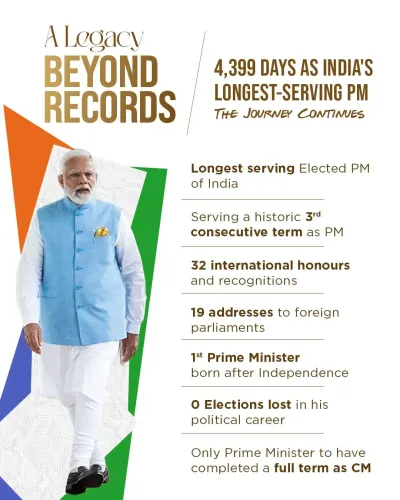
Narendra Modi became Chief Minister of Gujarat in October 2001, marking the start of an unbroken run as head of government — first across three consecutive terms in Gujarat, then as Prime Minister of India since May 2014. That cumulative span, reaching 25 years on 7 October 2026, is a rare feat in Indian democratic politics, where coalition volatility and anti-incumbency have historically cut careers short.
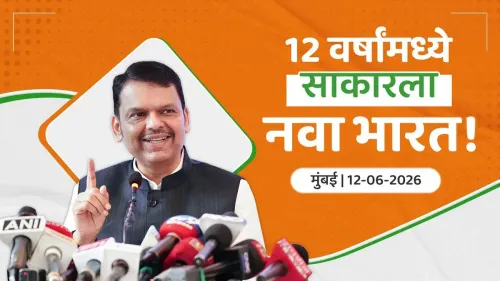
Fadnavis framed the longevity itself as evidence of a distinctive model: governance renewed 'repeatedly by the people's mandate despite intense scrutiny,' with an emphasis on 'performance and delivery' that, the initiative argues, shifted the terms of public discourse around what government is for.
What the Fellowship Seeks to Capture
The Modi@25 programme is designed to produce documented, research-backed assessments of how specific policies, institutions, and administrative systems evolved under this leadership philosophy. Applications are open, and the fellowship's output is expected to contribute to what its architects describe as 'enduring lessons' — a body of comparative governance knowledge rather than campaign material.
Whether independent scholars engage with the programme alongside party-affiliated researchers will determine how broadly its eventual findings are received in academic and policy circles.
For now, a sitting Chief Minister has placed the full weight of his platform behind the call to apply — and that signal, in BJP-governed Maharashtra, carries its own momentum.
Point of View
Giving the resulting research both credibility access and a clear ideological anchor. Fadnavis's endorsement is strategic: it positions Maharashtra's ruling establishment as an intellectual partner in a national BJP narrative ahead of any future electoral cycle. The fellowship's real test will be whether it attracts scholars outside the BJP ecosystem, since cross-partisan engagement would lend its findings genuine comparative weight. As opposition parties push their own governance narratives, the BJP is clearly investing in owning the terms of the historical debate about what the Modi era actually built.
NationPress
7 Oct 2026
Frequently Asked Questions
What is the Modi@25 fellowship?
The Modi@25 fellowship, formally titled 'Understanding Transformative Governance | Modi@25,' is a research initiative by Rambhau Mhalgi Prabodhini to study and document PM Narendra Modi's governance philosophy and its impact on India's institutions over 25 years. Applications are open at utgf.rmponweb.org.
Who launched the Modi@25 fellowship?
Defence Minister Rajnath Singh launched the Modi@25 fellowship initiative, which was promoted by Maharashtra CM Devendra Fadnavis on social media on 7 October 2026.
Why is 25 years significant for PM Modi?
Narendra Modi became Gujarat Chief Minister in October 2001 and has served as head of government continuously since — first as Gujarat CM and then as Prime Minister from May 2014 — making 7 October 2026 the completion of 25 unbroken years as head of government.
What is Rambhau Mhalgi Prabodhini?
Rambhau Mhalgi Prabodhini (RMP) is a Maharashtra-based BJP-affiliated policy research and governance training institution named after the late parliamentarian Rambhau Mhalgi. It runs training programmes for elected representatives and periodically publishes policy research.
How can someone apply for the Modi@25 fellowship?
Applicants can visit the official portal at utgf.rmponweb.org to submit their applications for the 'Understanding Transformative Governance | Modi@25' fellowship programme run by Rambhau Mhalgi Prabodhini.