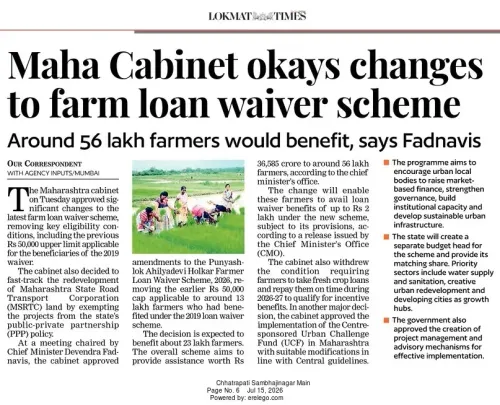
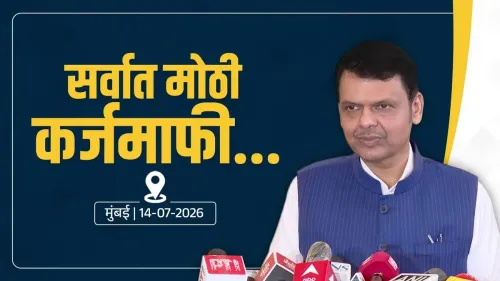
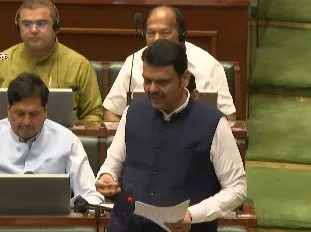
CM Fadnavis: Banks Must Lend to All Loan-Waiver Farmers
Synopsis
Maharashtra CM Devendra Fadnavis, at Amravati on 24 September 2026, directed banks to mandatorily extend fresh credit to all eligible farmers who received loan waivers, tackling a chronic post-waiver credit blockage that defeats debt-relief schemes.
Key Takeaways
CM Devendra Fadnavis issued a public directive from Amravati on 24 September 2026 ordering banks to lend to all loan-waiver beneficiary farmers.
Maharashtra's farm loan waiver, launched in 2017 , covered crop loans up to ₹1.5 lakh per eligible farmer.
A recurring problem across India sees banks refusing fresh credit to waiver beneficiaries, negating the scheme's purpose.
The directive comes as the kharif harvest and rabi sowing season coincide, making timely credit access critical for farmers.
Amravati in the Vidarbha region — a longstanding centre of farmer distress — was the symbolic location for the announcement.
A formal government order or bank circular will be needed to translate the CM's directive into enforceable credit-flow policy.
Banks cannot turn their backs on farmers who have already benefited from a loan waiver — that is the clear, unambiguous directive Maharashtra Chief Minister Devendra Fadnavis issued from Amravati on Thursday, 24 September 2026. Speaking in the heart of the Vidarbha region, one of Maharashtra's most agrarian and distress-prone belts, Fadnavis declared that banks are obligated to extend fresh credit to every eligible farmer who received debt relief.
Posting on X, Fadnavis stated in Marathi and Hindi: 'बँकांना कर्जमाफी झालेल्या सर्व पात्र शेतकऱ्यांना कर्ज द्यावे लागेल.' — 'Banks will have to give loans to all eligible farmers who have benefited from the loan waiver.' The message was pointed and unambiguous: debt relief is not the end of the road; renewed access to institutional credit is.The Bank-Credit Catch That Defeats the Purpose of Waivers
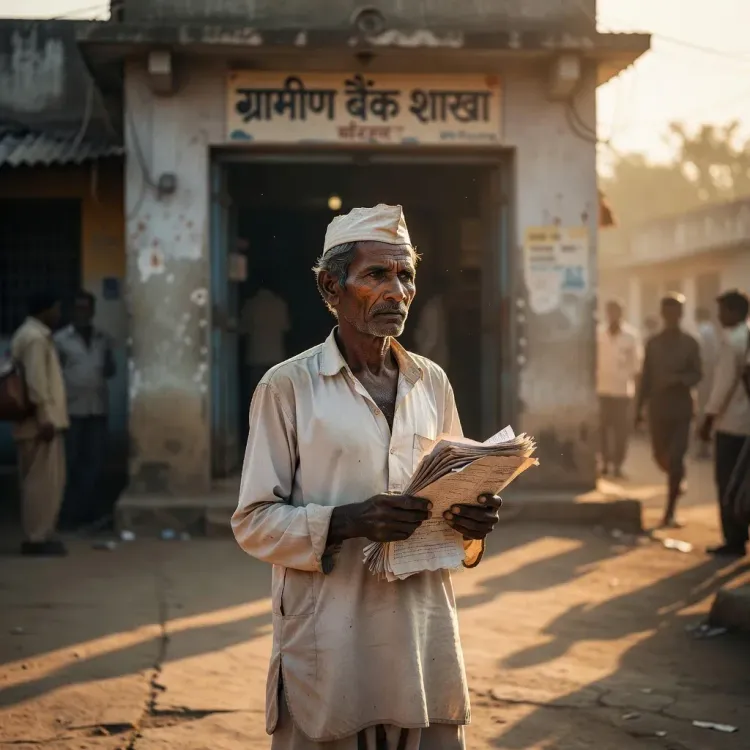
Maharashtra's farm loan waiver programme — launched in 2017 to cover crop loans up to ₹1.5 lakh per eligible farmer — was designed to pull struggling cultivators out of a debt trap. But a persistent, well-documented problem has shadowed such schemes across India: once a borrower's loan is written off, banks often classify them as risky and quietly refuse fresh lending.
The result is perverse. A farmer gets a waiver, wipes the slate clean — and then cannot access the next season's credit to buy seeds, fertiliser, or equipment. The waiver lifts the old burden but leaves the farmer without the capital to move forward. Fadnavis's statement from Amravati directly addresses this credit-flow blockage, signalling that the government will not allow banks to use debt-relief history as a pretext for denial.
Why Amravati, and Why Now
Amravati district, in Maharashtra's Vidarbha region, sits at the geographic and symbolic centre of India's farm distress debate. Vidarbha has for decades recorded some of the country's highest rates of farmer suicides, driven largely by cycles of crop failure, debt, and inadequate credit access. A directive issued from this district carries unmistakable political and policy weight — it is not routine administrative messaging.
The timing, too, matters. The kharif harvest season is underway and rabi sowing is imminent. For farmers dependent on institutional credit to finance the next crop cycle, a clear government signal that banks must lend — not hedge — is operationally consequential right now.
What Follows the Directive
The immediate question is enforcement. Fadnavis's statement is a public, on-record directive from the Chief Minister, which gives it significant moral and political weight. But a formal government order or a coordinated communication with scheduled commercial banks and regional rural banks will determine whether eligible farmers across Maharashtra's districts actually see credit flowing. Analysts tracking agricultural finance will watch for any follow-up circular from the state's Cooperation and Marketing Department or a coordinated push through the lead district managers of banks operating in Vidarbha. For Maharashtra's farming communities, the message from Amravati is straightforward: the loan waiver gave you a clean record — now the banks must honour it.
Point of View
Then must fight a second battle to ensure banks don't simply blacklist waiver beneficiaries from future credit. The fact that the CM had to issue this as a public, named directive — rather than a routine administrative order — suggests the credit-blockage problem is live and unresolved on the ground. For BJP in Maharashtra, where Vidarbha's farm distress has historically swung voter sentiment, keeping institutional credit flowing is as much electoral arithmetic as welfare policy. The real test will be whether a formal enforcement mechanism follows, or whether this remains a public signal without teeth.
NationPress
24 Sept 2026
Frequently Asked Questions
What did CM Devendra Fadnavis say about farm loans in Amravati?
CM Fadnavis directed that banks must provide fresh loans to all eligible farmers who have already benefited from Maharashtra's loan waiver scheme, stating this as an obligation on lenders, not a choice.
Why do banks refuse to lend to farmers after a loan waiver?
Banks often treat waiver beneficiaries as high credit risks, fearing repeat defaults, and quietly deny fresh loans — a widespread problem across Indian states that defeats the purpose of debt-relief programmes.
What is Maharashtra's farm loan waiver scheme?
Maharashtra announced a comprehensive farm loan waiver in 2017 covering crop loans up to ₹1.5 lakh for eligible farmers, aimed at relieving rural debt distress, particularly in regions like Vidarbha.
Why is Amravati significant in the Maharashtra farm distress debate?
Amravati is in the Vidarbha region, which has for decades reported some of India's highest farmer suicide rates due to debt cycles and inadequate credit access, making it the symbolic epicentre of agrarian distress in Maharashtra.
What needs to happen for banks to actually comply with Fadnavis's directive?
A formal government order or circular coordinated with commercial banks and regional rural banks across Maharashtra's districts would be needed to enforce the directive and ensure credit actually flows to eligible farmers.