CM Fadnavis Eyes Pune as India's Growth Engine by 2030
Synopsis
The Chief Minister's Office of Maharashtra has declared Pune will be India's 'growth engine' by 2030, spotlighting CM Devendra Fadnavis and Union Minister Nitin Gadkari. The vision builds on two decades of expressway, ring-road, and metro investments under Bharatmala and state urban mobility programmes.
Key Takeaways
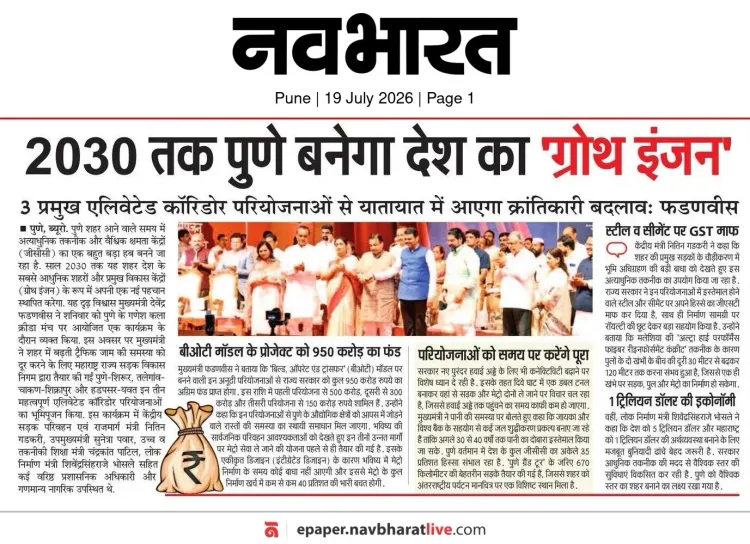
The Chief Minister's Office of Maharashtra officially branded Pune as India's future 'growth engine' by 2030 in a post on 19 July 2026 .
CM Devendra Fadnavis and Union Minister Nitin Gadkari were directly tagged, signalling coordinated state-centre intent on connectivity investment.
The Mumbai-Pune Expressway (opened 2001 ) and Bharatmala Pariyojana (launched 2015 ) form the policy backbone of Pune's infrastructure growth story.
The Pune Metro project, approved in 2018 , has two priority lines targeted for completion before 2030 .
Pune is Maharashtra's second-largest city and a major hub for IT and automobile manufacturing, making connectivity improvements high-stakes for industry and commuters alike.
Progress on the Pune ring-road and revised Bharatmala phases will be key indicators of whether the 2030 target is achievable.
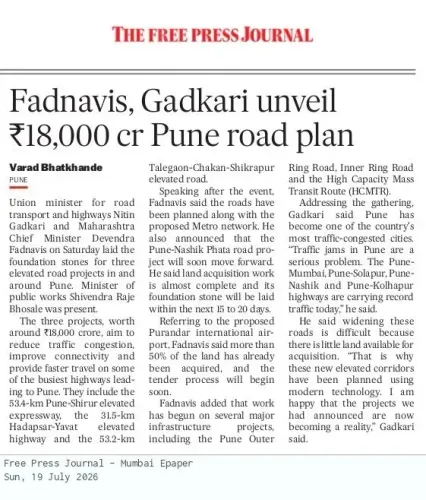
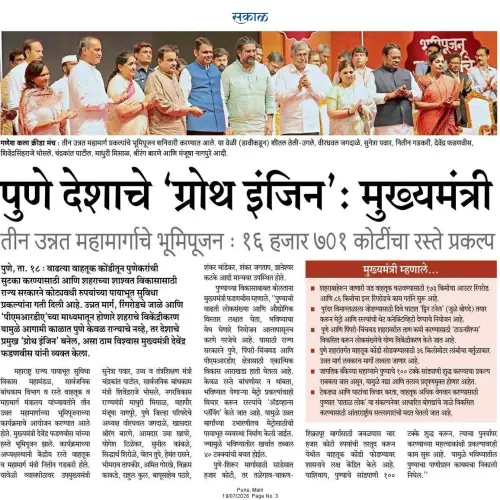
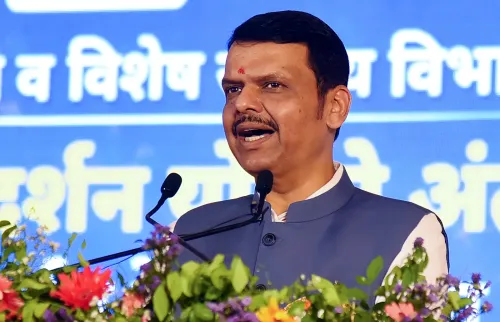
The Chief Minister's Office of Maharashtra on Sunday, 19 July 2026 amplified a vision positioning Pune as the country's foremost 'growth engine' by 2030, tagging Chief Minister Devendra Fadnavis and Union Minister Nitin Gadkari in a post that underscores the state's bet on connectivity-led economic expansion.
Context
The post, shared by the official @CMOMaharashtra handle, declares — '2030 tak Pune banega desh ka Growth Engine' ('By 2030, Pune will become the country's Growth Engine') — and links the ambition directly to Fadnavis and Gadkari, the two most consequential figures in Maharashtra's infrastructure push. The framing signals a coordinated state-centre messaging effort around Pune's economic trajectory ahead of what is expected to be a significant infrastructure spending cycle.
Policy Backdrop
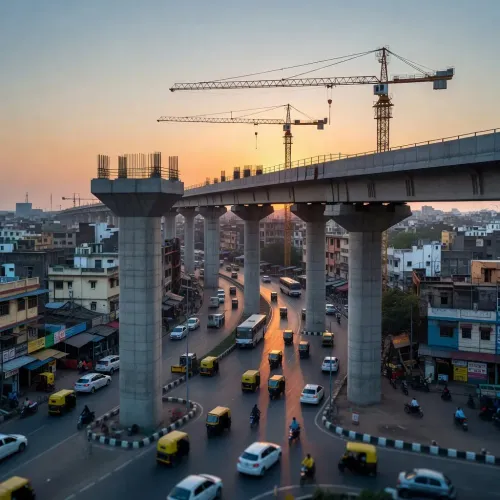
Pune has been the subject of sustained infrastructure investment for over two decades. The Mumbai-Pune Expressway, inaugurated in 2001 and subsequently widened, established the template for high-speed corridors serving the city. Under the Bharatmala Pariyojana — launched in 2015 — several Pune radial highways and ring-road segments were sanctioned to ease logistics bottlenecks and reduce urban congestion.
The Pune Metro project received final approval in 2018, with two priority lines targeted for completion before 2030 to complement road infrastructure. Together, these investments have positioned Pune as a multimodal hub connecting Maharashtra's industrial heartland to national markets.
Gadkari, as Union Minister for Road Transport and Highways, has been the driving force behind multiple national highway and expressway projects linking Pune to Mumbai and other regions. His involvement in the post's tagging reinforces the centre-state alignment underpinning the 2030 vision.
Stakeholders and Impact
Pune is Maharashtra's second-largest city and a significant hub for information technology and automobile manufacturing. Improved connectivity directly benefits IT firms seeking to attract talent from across the region, auto manufacturers dependent on efficient supply chains, and the city's urban commuters who bear the daily cost of inadequate infrastructure.
Maharashtra governments have consistently paired state-level urban mobility plans with central highway programmes to position Pune and Mumbai as twin growth poles. Successive Fadnavis and Gadkari-led initiatives have treated road density and multimodal connectivity as direct levers for attracting private investment and raising the state's share of national GDP.
What's Next
Attention will now focus on the progress of the Pune ring-road project and expressway spurs linked to the Nagpur-Mumbai corridor, both of which are critical to delivering on the 2030 promise. Any fresh allocations in the anticipated 2027-28 state budget or revised phases of Bharatmala will be closely watched as a measure of how seriously the government intends to back the rhetoric with capital outlay.
If the connectivity milestones are met on schedule, Pune could cement its place alongside Bengaluru and Hyderabad as one of India's premier investment destinations — reshaping the competitive map of the country's fastest-growing cities.
Point of View
Time-bound economic outcome. By tagging both Fadnavis and Gadkari, the messaging fuses state and central authority into a single accountability frame for Pune's 2030 trajectory. This mirrors a broader pattern in Maharashtra politics where infrastructure milestones are used to consolidate the ruling coalition's image as a delivery-oriented administration ahead of electoral cycles. The real test will be whether budgetary allocations and project timelines in the next two years match the ambition of the 'growth engine' label.
NationPress
20 Jul 2026
Frequently Asked Questions
Why is Pune called India's growth engine by 2030?
The Chief Minister's Office of Maharashtra used the phrase 'growth engine by 2030' to describe Pune's projected economic role, citing the city's IT and auto-manufacturing base alongside planned road and metro connectivity upgrades.
What infrastructure projects are driving Pune's growth?
Key projects include the Mumbai-Pune Expressway, the Pune ring-road under Bharatmala Pariyojana, and the Pune Metro whose two priority lines are targeted for completion before 2030.
What is Nitin Gadkari's role in Pune's development?
As Union Minister for Road Transport and Highways, Nitin Gadkari oversees national highway and expressway projects linking Pune to Mumbai and other regions, making him central to the connectivity push.
What is Bharatmala Pariyojana and how does it affect Pune?
Bharatmala Pariyojana is a central government highway development programme launched in 2015 under which several Pune radial highways and ring-road segments were sanctioned to reduce congestion and support logistics.
When was the Pune Metro project approved?
The Pune Metro project received final approval in 2018, with two lines prioritised for completion before 2030 to complement existing road infrastructure.