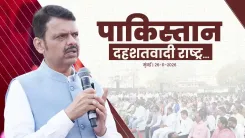
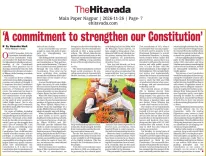
CM Fadnavis flags PM Modi article on Constitution Day
Synopsis
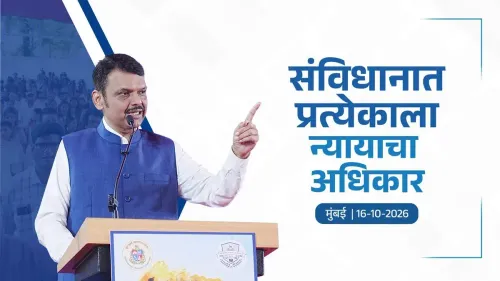
Maharashtra Chief Minister Devendra Fadnavis on Constitution Day asked citizens to read Prime Minister Narendra Modi's article 'A Commitment to Strengthen Our Constitution', stressing youth, unity and taking constitutional values beyond Parliament and the courts.
Key Takeaways
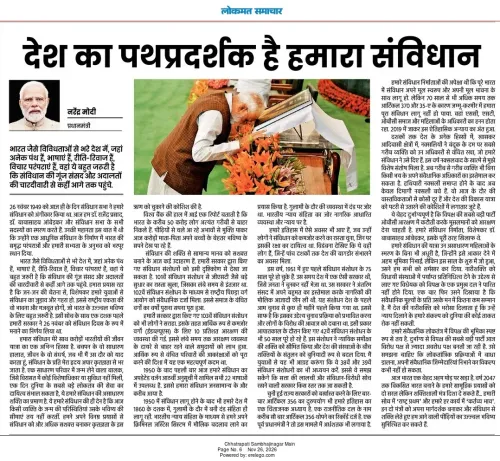
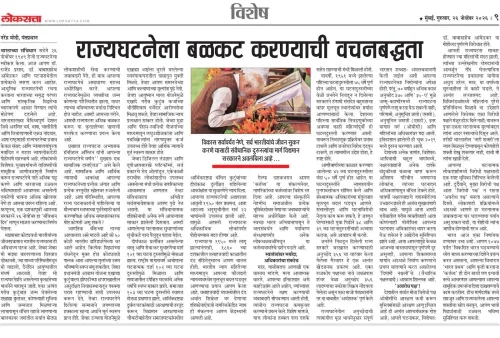
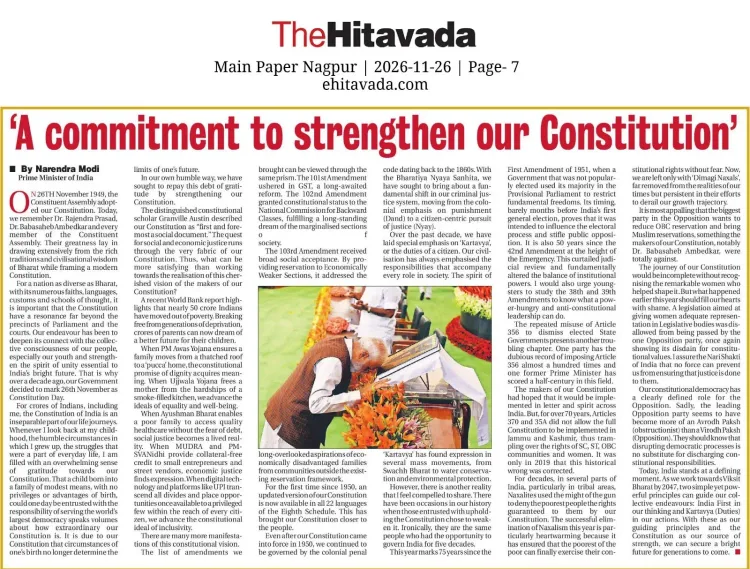
On 26 November 2026 , Maharashtra Chief Minister Devendra Fadnavis asked people to read PM Narendra Modi's article 'A Commitment to Strengthen Our Constitution'.
Fadnavis said the article argues for taking constitutional values beyond Parliament and the courts, especially to the youth.
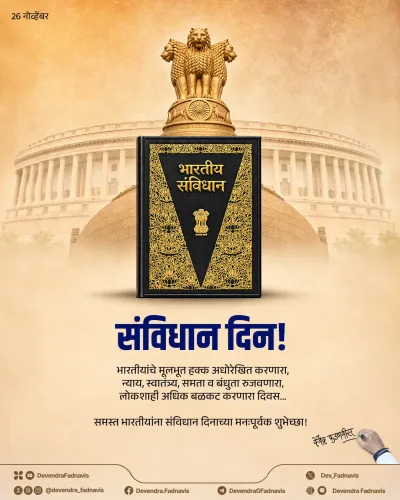
He linked observing 26 November as Constitution Day with strengthening unity across Bharat.
The Constituent Assembly adopted the Constitution on 26 November 1949 ; the Government of India declared it Constitution Day in 2015 .
Since 2015, governments have used the day for school, college and public awareness programmes on the Preamble and fundamental duties.
Maharashtra Chief Minister Devendra Fadnavis used Constitution Day not as a ritual greeting but as a reading list. On 26 November 2026, he asked people across Maharashtra to read an article by Prime Minister Narendra Modi titled 'A Commitment to Strengthen Our Constitution', and to treat the document as a living compact with the young, not a text locked inside Parliament and the courts.
In his post, Fadnavis called the piece insightful and summarised its core argument: the values and spirit of the Constitution must travel beyond legislatures and courtrooms and take root in the collective consciousness of the people, especially the youth. He also underlined why 26 November is observed as Constitution Day — to strengthen the spirit of unity across Bharat.
The 1949 adoption date that became a national observance
The Constituent Assembly adopted the Constitution of India on 26 November 1949. In 2015, the Government of India declared that date Constitution Day, turning an archival anniversary into an annual civic campaign. The intent, as later programmes have shown, was to push awareness of the Preamble and fundamental duties into schools, colleges and public life — not leave the document only to lawyers and lawmakers.
That is the lineage Fadnavis is tapping. Since 2015, both the Centre and the states have marked the day with public events, classroom activities and outreach that frame the Constitution as a source of national unity. Maharashtra's Chief Minister, tagging the Prime Minister and using the hashtags Maharashtra and ConstitutionDay, placed the essay inside that decade-long effort.
A civic brief aimed at the young
Fadnavis's emphasis tracks the audience these campaigns have always named: Indian youth and ordinary citizens. The post does not announce a new scheme. It does something more basic — it treats Constitution Day as a moment when a sitting Chief Minister tells his state to sit with the text, and with the Prime Minister's argument about why the text still matters.
Watch, now, for how Maharashtra actually marks the day on the ground: school assemblies, college programmes, and any fresh push on constitutional education. The article Fadnavis is amplifying argues, in his telling, that unity is not only a legal outcome. It is a habit the next generation has to practise.
Constitution Day is the annual stress-test of that habit — whether the document still lives in the public mind, or only in the statute book.
Point of View
Since 2015, given the Centre and the states a yearly platform to speak in the language of the founding document without passing a new law. Fadnavis amplifying a Prime Ministerial essay on 26 November fits that arc: Maharashtra's government aligning its civic messaging with the national observance rather than announcing a standalone legal reform. The political utility is obvious — constitutional values, youth and unity are hard to oppose — but the policy test is slower. If the campaign is more than a post, Maharashtra's classrooms and college programmes over the coming weeks will show whether the Constitution is being taught as a living text or recited as a seasonal slogan.
NationPress
26 Nov 2026
Frequently Asked Questions
When is Constitution Day in India?
Constitution Day is observed every year on 26 November. It commemorates the Constituent Assembly's adoption of the Constitution of India on 26 November 1949, and the Government of India declared the date Constitution Day in 2015.
What did Maharashtra CM Devendra Fadnavis post on Constitution Day?
He asked people to read Prime Minister Narendra Modi's article titled 'A Commitment to Strengthen Our Constitution'. Fadnavis said the piece reflects on taking constitutional values beyond Parliament and the courts, especially to the youth, and on observing 26 November to strengthen unity across Bharat.
Why did India start observing Constitution Day in 2015?
The Government of India declared 26 November as Constitution Day in 2015 to mark the adoption of the Constitution and to promote constitutional values. Since then, central and state governments have organised public programmes, school activities and campaigns around the Preamble and fundamental duties.
What is the title of the PM Modi article Fadnavis shared?
According to Maharashtra Chief Minister Devendra Fadnavis's post, the article is titled 'A Commitment to Strengthen Our Constitution'. He described it as an insightful reflection on connecting the Constitution with the collective consciousness of the people.
How is Constitution Day usually marked in India?
Since 2015, governments have marked the day with public events, classroom programmes and awareness campaigns. The focus is typically on the Preamble, fundamental duties and the Constitution's role in national unity, including among students.